How Do Urban Environments Influence Animal and Plant Adaptation?
TL;DR
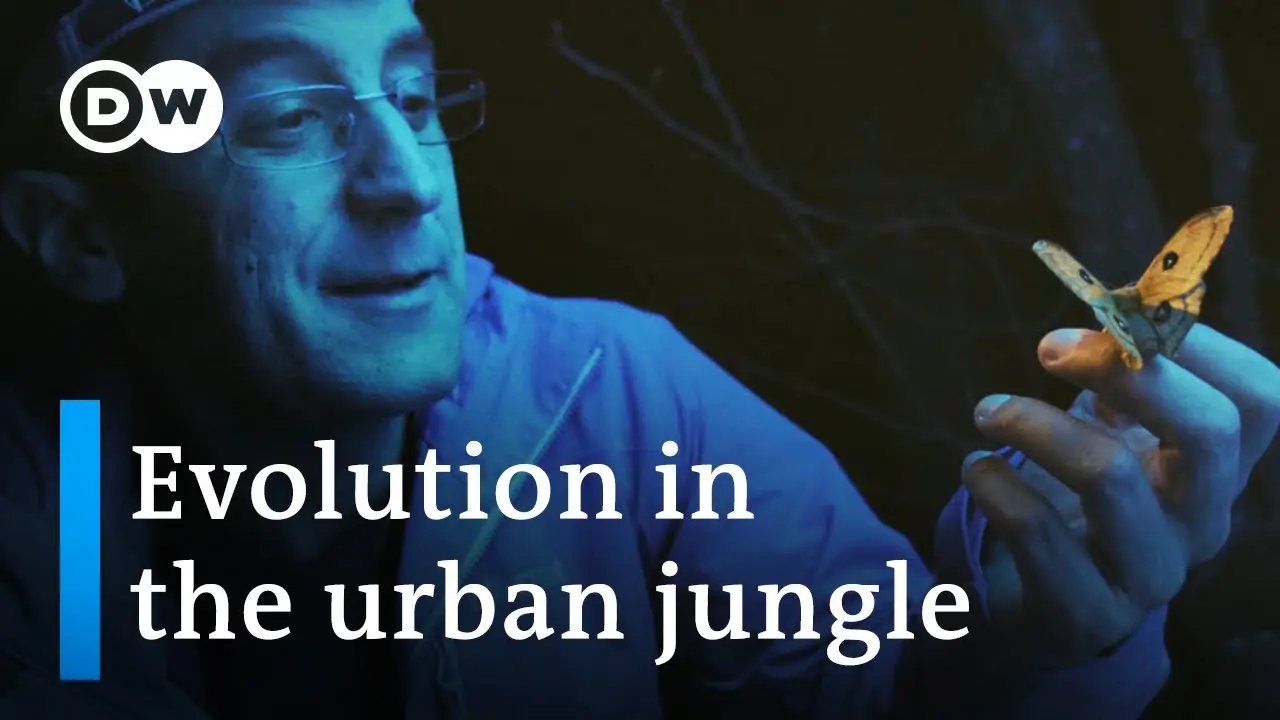
Urban environments present unique challenges and opportunities for wildlife, prompting rapid adaptation. Species like catfish have developed new hunting strategies, while plants like white clover alter their seed production to thrive. Studies show that urban-related stressors such as light pollution and pollution resistance can drive evolutionary changes across various species.
Transcript
In a lot of ways you can think of cities as one of the largest unplanned experiments of all time. Cities are places, we call them extreme habitats really, They are places, where there is a lot of opportunity and at the same time, there is also challenges. As our cities spread, how will nature respond? Will plants and animals dwindle, or will they a... Read More
Key Insights
- 🏙️ Cities are like vast unplanned experiments, providing opportunities and challenges for species to adapt.
- 🤍 Wildlife in cities, including catfish and white-footed mice, are evolving and developing new behaviors and traits.
- 🙂 Light pollution in cities is causing moths and other insects to adapt genetically.
- 🤍 Urban environments are altering the dispersal traits of plants, such as white clover.
- 🐟 Fish in polluted city harbors are developing resistance to toxins, enabling their survival.
- 💱 Urbanization and climate change pose threats to biodiversity.
- 💚 Understanding urban evolution can help in designing green cities that support wildlife adaptation.
Install to Summarize YouTube Videos and Get Transcripts
Explore YouTube Video Summarizer or Get YouTube Transcript Extractor
Questions & Answers
Q: How are cities challenging plants and animals to adapt?
Cities offer both opportunities and challenges for urban wildlife. Species like catfish adapt by preying on pigeons, while insects evolve to survive light pollution.
Q: How are white-footed mice adapting in urban environments?
White-footed mice in urban patches are evolving differently from their rural counterparts, potentially leading to the development of new species.
Q: How are plants adapting to urban environments?
Plants like white clover are adapting by producing cyanide, which offers protection against predators in city environments.
Q: How do fish like killifish resist pollution in urban areas?
Fish in polluted areas like New Bedford Harbor have developed genetic resistance to toxins like PCBs, allowing them to survive in contaminated waters.
Key Insights:
- Cities are like vast unplanned experiments, providing opportunities and challenges for species to adapt.
- Wildlife in cities, including catfish and white-footed mice, are evolving and developing new behaviors and traits.
- Light pollution in cities is causing moths and other insects to adapt genetically.
- Urban environments are altering the dispersal traits of plants, such as white clover.
- Fish in polluted city harbors are developing resistance to toxins, enabling their survival.
- Urbanization and climate change pose threats to biodiversity.
- Understanding urban evolution can help in designing green cities that support wildlife adaptation.
- Recognizing our connection to nature and preserving habitats outside cities is essential for the long-term survival of species.
Summary & Key Takeaways
-
Cities are like unplanned experiments, with abundant opportunities and challenges for species.
-
Biologists are observing how wildlife adapts to cities, such as catfish preying on pigeons in the city of Albi, France.
-
Insects, particularly moths, are adapting to light pollution in cities, showing signs of genetic changes.
-
Rodents like white-footed mice are evolving differently in isolated urban patches, operating like mini Galapagos islands.
-
Plants like white clover are adapting to urban environments by producing cyanide as a survival strategy.
-
Fish like the killifish in New Bedford Harbor can resist PCB pollution through genetic changes.
Read in Other Languages (beta)
Share This Summary 📚
Summarize YouTube Videos and Get Video Transcripts with 1-Click
Try YouTube Summary with ChatGPT & Claude or YouTube Transcript Generator
Explore More Summaries from DW Documentary 📚





Summarize YouTube Videos and Get Video Transcripts with 1-Click
Try YouTube Summary with ChatGPT & Claude or YouTube Transcript Generator