Will Central Banks Use QE to Prevent a Liquidity Crisis?
TL;DR
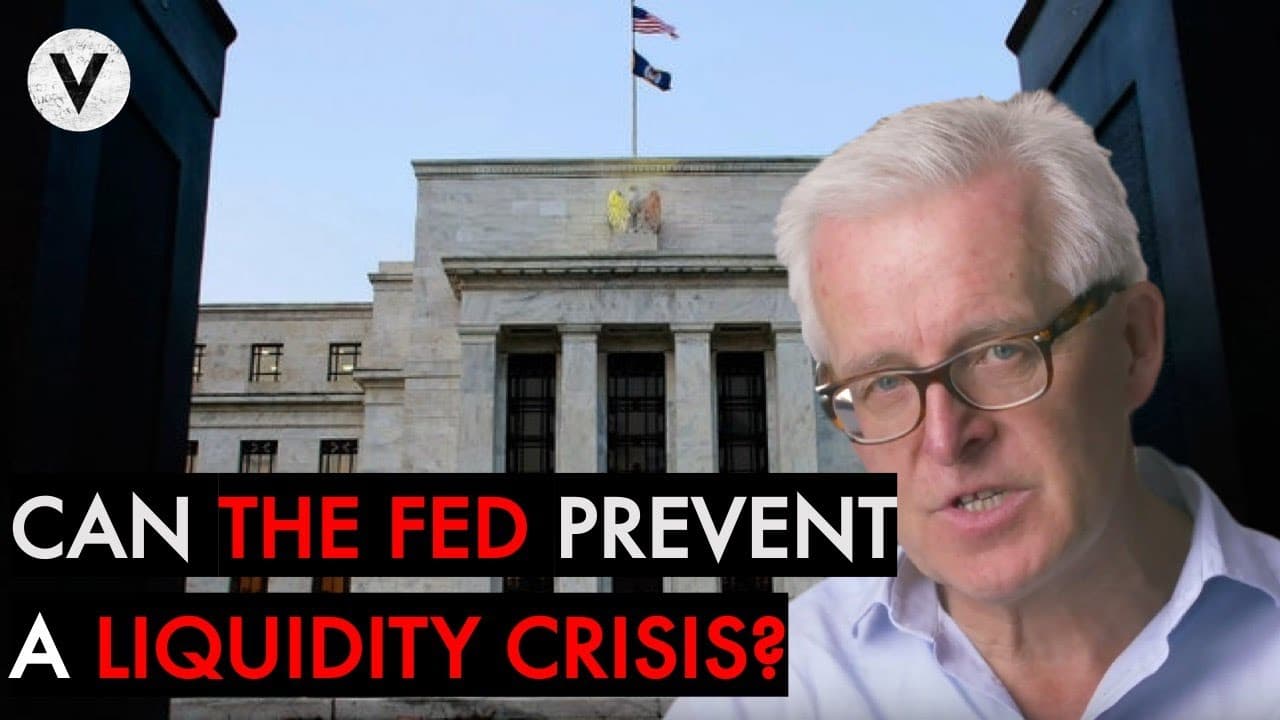
Central banks are likely to implement quantitative easing (QE) to stimulate the struggling global economy and avoid a liquidity crisis. With China's economic stimulus leading the way, other nations may follow suit, which could boost equity markets while benefiting gold and cryptocurrencies. As central banks ease monetary policy, market participants should watch liquidity indicators for signs of recovery.
Transcript
MICHAEL HOWELL: I'm Mike Howell. I'm Managing Director of Crossborder Capital. We're a fund management and research company based in London. My background prior to that was that I was at Salomon Brothers involved in research. And what we focus on almost entirely is global liquidity and capital flows worldwide. We think that the world economy is cle... Read More
Key Insights
- 😄 Central banks, particularly the People's Bank of China, are beginning to ease monetary policy to stimulate their respective economies.
- ™️ Liquidity injections and fiscal stimulus are being implemented by China to offset the effects of the trade dispute with the US.
- 🥺 The US dollar may face pressure to appreciate, leading to a currency war and increased monetary easing from other countries.
- 🏦 Equity markets tend to perform well when central banks are stimulating sluggish economies, and gold and cryptocurrencies are expected to benefit.
- 🥺 The US and China face political pressure to deliver growth ahead of upcoming elections, leading to a focus on trade and stimulus measures.
Install to Summarize YouTube Videos and Get Transcripts
Explore YouTube Video Summarizer or Get YouTube Transcript Extractor
Questions & Answers
Q: Why does the managing director believe central banks need to embark on a major easing program?
The world economy is stuttering, and central banks have been tightening too much in recent months. An easing program is necessary to provide a boost to the economy.
Q: What impact has the tariff dispute between the US and China had on the global economy?
The tariff dispute has led to a slowdown in Chinese manufacturing and a reduction in global exports. Manufacturing companies worldwide, particularly in Japan, Taiwan, Korea, and Germany, have been strongly affected.
Q: What is the market outlook and how can portfolios protect against sharp selloffs?
The market outlook suggests a generally rising stock market with risks of sharp selloffs. To protect against this, portfolios should have more bond convexity, meaning an increased focus on fixed income securities.
Q: How has the global financial system transformed since the 2008 Global Financial Crisis?
The global financial system has shifted from a money-raising system to a refinancing mechanism. The emphasis is now on balance sheet size and liquidity injections, with the private sector relying on central bank balance sheets for liquidity support.
Summary & Key Takeaways
-
The global economy is stuttering and needs a boost from central banks through a major easing program.
-
China's trade surplus and the US's decision to no longer accommodate it have led to a tariff dispute, impacting manufacturing companies worldwide.
-
The market outlook suggests a generally rising stock market with a risk of sharp selloffs, necessitating more bond convexity in portfolios.
-
The global financial system has transitioned from a money-raising system to a refinancing mechanism, requiring balance sheet size and liquidity injections to maintain stability.
Read in Other Languages (beta)
Share This Summary 📚
Summarize YouTube Videos and Get Video Transcripts with 1-Click
Try YouTube Summary with ChatGPT & Claude or YouTube Transcript Generator
Explore More Summaries from Real Vision 📚



Summarize YouTube Videos and Get Video Transcripts with 1-Click
Try YouTube Summary with ChatGPT & Claude or YouTube Transcript Generator