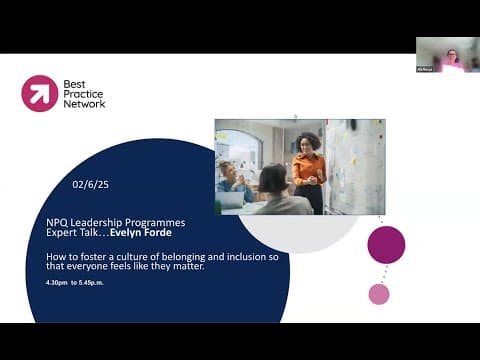
NPQLT Autumn Event 3 Recording

TL;DR
Building a culture of continuous improvement requires trust, respect, and mutual learning among educators, with a focus on effective professional development.
Transcript
uh and this is face-to-face event day three this is your last one of the three um and we've worked with all of you i think over all three days i don't think we've got anybody new and i think you've all been with us for the whole three days um so it's lovely to see you all again and on the friday before half term which is amazing um so in section on... Read More
Key Insights
- 🫡 Building a culture of trust, respect, and relationships is essential for effective professional development and continuous improvement.
- 🧑🎓 Professional development should be tailored to individual staff needs, driven by clear goals, and focused on improving student outcomes.
- 🧑🏫 Effective leaders of teaching in a culture of professional development model continuous learning, provide feedback, and prioritize collaboration and growth.
Install to Summarize YouTube Videos and Get Transcripts
Explore YouTube Video Summarizer or Get YouTube Transcript Extractor
Questions & Answers
Q: What is the importance of building a culture of trust and respect in schools?
Creating a culture of trust and respect among educators fosters effective relationships and supports mutual learning and growth. It creates an environment where professional development thrives and improves student outcomes.
Q: How can professional development be tailored to individual staff needs?
Professional development should be driven by clear goals and the specific needs of staff members. It should include ongoing support, feedback, and opportunities for collaboration to facilitate continuous improvement.
Q: What role does the leader of teaching play in a culture of professional development?
The ideal leader of teaching in a culture of professional development models continuous learning, provides constructive feedback, and promotes collaboration. They prioritize the growth and development of their colleagues and facilitate effective implementation of new practices.
Q: How does professional development contribute to continuous improvement?
Professional development provides educators with the knowledge, skills, and resources needed to continually improve their practice, resulting in better student outcomes. It supports the adaptation and implementation of evidence-based practices and fosters a culture of continuous improvement.
Key Insights:
- Building a culture of trust, respect, and relationships is essential for effective professional development and continuous improvement.
- Professional development should be tailored to individual staff needs, driven by clear goals, and focused on improving student outcomes.
- Effective leaders of teaching in a culture of professional development model continuous learning, provide feedback, and prioritize collaboration and growth.
- Professional development contributes to continuous improvement by providing educators with the necessary knowledge, skills, and resources to improve their practice over time.
Summary & Key Takeaways
-
Building a culture of trust, respect, and relationships is key to creating an environment conducive to continuous improvement and effective professional development.
-
Professional development should be tailored to the needs of individual staff, driven by a clear rationale, and focused on improving student outcomes.
-
The ideal leader of teaching in a culture of professional development is one who models continuous learning, provides constructive feedback, and promotes collaboration and growth.
Read in Other Languages (beta)
Share This Summary 📚
Summarize YouTube Videos and Get Video Transcripts with 1-Click
Try YouTube Summary with ChatGPT & Claude or YouTube Transcript Generator
Explore More Summaries from Best Practice Network 📚
Summarize YouTube Videos and Get Video Transcripts with 1-Click
Try YouTube Summary with ChatGPT & Claude or YouTube Transcript Generator