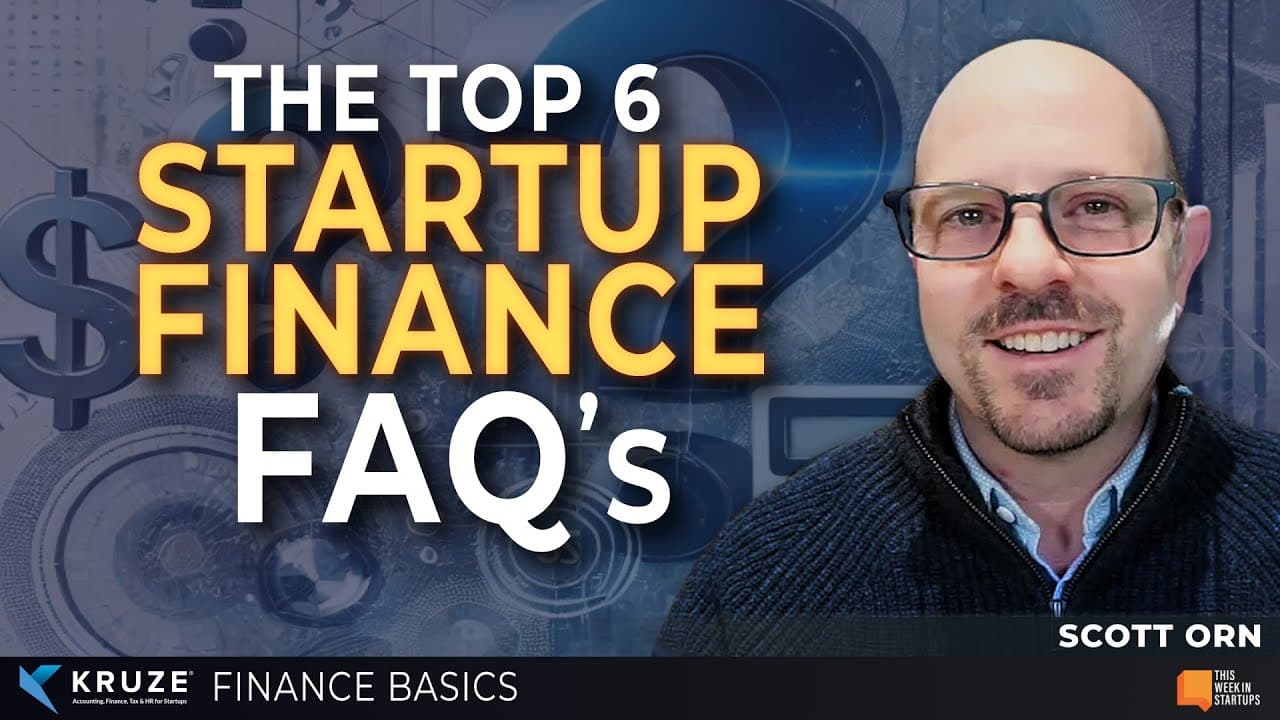
The Top 6 Startup Finance FAQ’s | Startup Finance Basics w/ Kruze's Scott Orn
TL;DR
Founders should prioritize business growth over payroll tax avoidance strategies.
Transcript
hey everybody welcome back to this week in startups we're doing our startup basic series it's a very simple series you can go to this weeken startups.com Basics to see all the different episodes we've done this is where we work with some of our top Partners service providers accountants legal and HR talent to help you Founders make sure you're doin... Read More
Key Insights
- 🚕 Startup founders are advised to focus on company growth rather than attempting to evade payroll taxes, as tax compliance is integral to sustainable operations.
- 😒 The use of professional payroll companies is recommended, allowing founders to automate tax withholdings and reduce personal financial liability.
- 📜 Transparency with investors during the shutdown process is essential for maintaining future relationships, and founders should document all attempts to salvage the company.
- 🥺 Misclassifying employees can lead to significant legal troubles, emphasizing the importance of understanding employment laws and IRS regulations.
- 🚕 Delaware's franchise tax system can generate exorbitant bills if not calculated correctly, highlighting the need for careful financial management.
- 🛟 Venture debt serves as a potential safety net for startups but should be approached cautiously, ensuring it is not relied upon as a primary funding source.
- 😚 It's crucial for founders to include ample cash for employee PTO payouts in their financial planning before closing their business to mitigate personal liability risks.
Install to Summarize YouTube Videos and Get Transcripts
Explore YouTube Video Summarizer or Get YouTube Transcript Extractor
Questions & Answers
Q: What common misconceptions do startup founders have about payroll tax avoidance?
A frequent misconception among startup founders is believing they can avoid payroll taxes by classifying themselves or their employees as contractors. However, the IRS closely scrutinizes such arrangements, especially if the founder owns significant shares in the company. Ultimately, trying to evade payroll taxes can lead to severe penalties and audits, negating any perceived savings.
Q: Why is it critical for founders to stay informed about employment classifications?
Understanding employment classifications is crucial because misclassifying employees as independent contractors can lead to hefty fines and legal repercussions. The IRS and state agencies have strict criteria for classifying workers correctly, and being labeled an employee when classified as a contractor can create liabilities for unpaid taxes. Knowledge of these classifications helps founders avoid significant financial and legal pitfalls.
Q: What should founders do before officially shutting down a company?
Founders should first exhaust all options to sell the company or find homes for employees and technology. It is crucial to maintain transparency with investors, providing a narrative of the company’s efforts to succeed. Properly winding down operations can preserve relationships for future endeavors and help ensure a smoother process for all stakeholders involved.
Q: How do Delaware franchise taxes work and how can they lead to unexpected costs?
Delaware franchise taxes can be calculated in several ways, often defaulting to the most expensive option unless the founder inputs relevant share counts and total assets. This can lead to alarming tax bills that can be significantly reduced with the correct information input. Founders must be vigilant in managing their franchise tax obligations to avoid financial surprises.
Q: What are the risks associated with venture debt for startups?
Venture debt presents risks, particularly if utilized as a last-resort funding option. Lenders can quickly identify cash flow issues and may be reluctant to provide funding for struggling startups. Overleveraging a startup can deter future investment or growth as funds intended for expansion may instead go toward repaying previous debts, creating a cycle of financial strain.
Q: What should be done with employee PTO before shutting down a company?
Founders must ensure they have sufficient cash reserves to pay out accrued paid time off (PTO) to employees. The law often holds directors and officers personally liable if they neglect these payouts, making it imperative to account for PTO obligations during the shutdown process to avoid potential legal issues.
Summary & Key Takeaways
-
The content emphasizes that startup founders often seek ways to avoid payroll taxes, but highlights that such efforts are typically misguided, as tax compliance is essential.
-
The discussion includes the importance of using payroll companies to manage tax withholdings, thus alleviating founders from direct tax handling responsibilities.
-
It also covers essential steps for officially shutting down a company, including notifying investors, addressing employee PTO liabilities, and handling franchise tax obligations in Delaware.
Read in Other Languages (beta)
Share This Summary 📚
Summarize YouTube Videos and Get Video Transcripts with 1-Click
Try YouTube Summary with ChatGPT & Claude or YouTube Transcript Generator
Explore More Summaries from This Week in Startups 📚





Summarize YouTube Videos and Get Video Transcripts with 1-Click
Try YouTube Summary with ChatGPT & Claude or YouTube Transcript Generator