A Rising AI Generation? No, not for languages | Candice Hua | TEDxYouth@HuiliShanghai
TL;DR
Language learning fosters cultural appreciation and personal growth, enhanced by AI technology.
Transcript
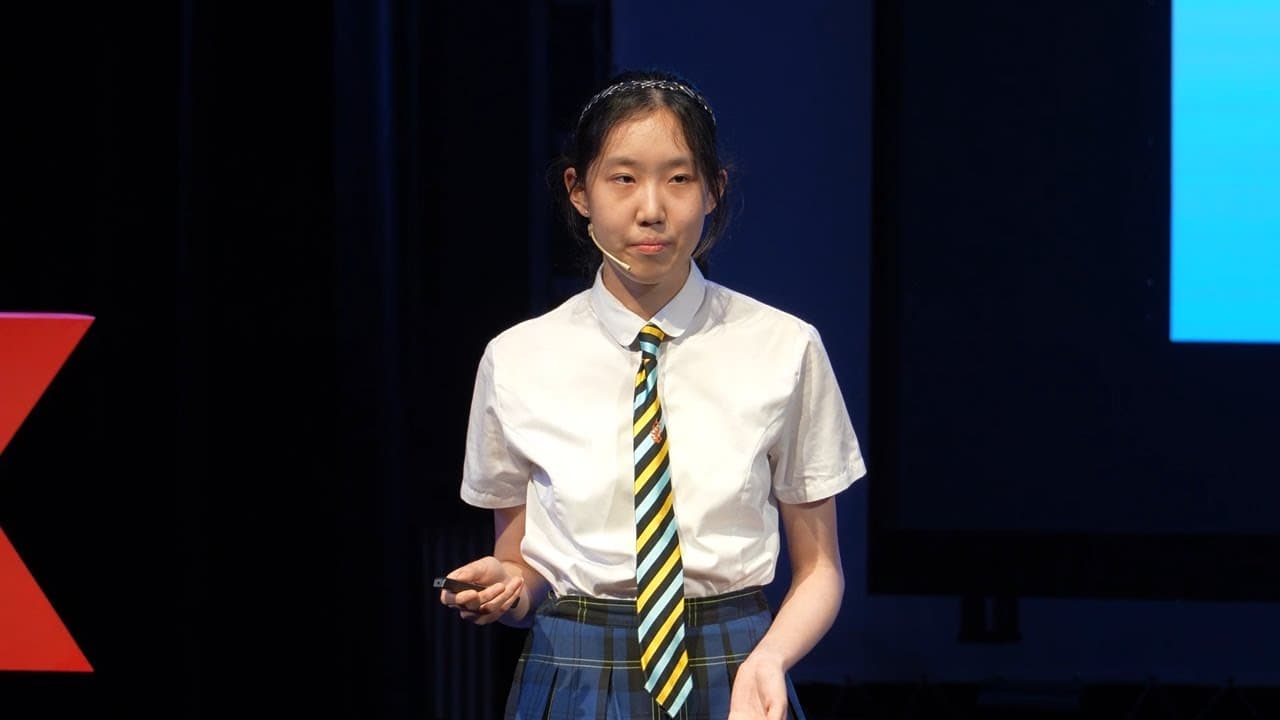
hi everyone I'm Candace and today I'm here to talk about how languages Empower us but before I start talking about anything I would like to do a quick experiment in this experiment I will want a few volunteers to give me some sentences in Chinese and chat jpt will be responsible for translating them into English so now let's welcome chat GPT in now... Read More
Key Insights
- 💡 Language learning is an empowering journey that connects individuals with diverse cultures and ideas, enriching their worldview.
- 😑 Cultural expressions in language reveal societal values and historical contexts, showcasing the intricate bond between language and human experience.
- 🫡 Honorifics in East Asian languages exemplify the importance of social dynamics in communication, affecting how respect is conveyed.
- ❓ Geographical features significantly influence dialect diversity, reflecting regional histories and communication practices in localized communities.
- 👻 AI technologies serve as valuable tools in language learning, allowing for efficient translation and practice, but human creativity remains paramount.
- 💅 Words often encapsulate cultural phenomena, as evidenced by terms that capture natural beauty or social concepts, enriching our understanding of language's role.
- 🌍 Each language embodies unique perspectives, transforming how individuals perceive the world and interact with others.
Install to Summarize YouTube Videos and Get Transcripts
Explore YouTube Video Summarizer or Get YouTube Transcript Extractor
Questions & Answers
Q: What personal experience motivated Candace to learn a new language?
Candace's motivation for learning Korean stemmed from the sudden quarantine during the pandemic two years ago. The lockdown provided her with the perfect opportunity to dedicate time to mastering a new language and exploring its culture, eventually enabling her to communicate at a basic conversational level.
Q: How do honorifics function in East Asian languages?
Honorifics in languages like Korean and Japanese are used to express respect and politeness, especially in formal situations. These additional auxiliary words are critical for demonstrating social hierarchy and relationships, differing from informal communication with friends or peers.
Q: Can you explain the significance of the word "ki" in Japanese culture?
The Japanese word "ki" represents beams of sunlight filtering through tree leaves and encapsulates an element of the natural world, reflecting cultural values tied to beauty and appreciation of nature. Its frequent usage during specific times highlights how language evolves to express the nuances of cultural experiences.
Q: What role does geography play in the development of dialects?
Geography significantly impacts dialect formation, as natural barriers like mountains or rivers isolate communities, leading to distinct communication systems. This results in variations in language within the same country, as seen in the example of the Wo dialect, which features historical expressions deeply connected to the local environment.
Q: How does AI influence language learning and communication?
AI technologies can enhance language learning by providing immediate translations or conversational practice. However, Candace argues that while AI can facilitate these processes, it cannot replicate the depth of human communication or the emotional connections fostered through language learning and cultural exchange.
Q: What is the takeaway message regarding language and culture?
The core message emphasizes that learning a language is more than mastering vocabulary; it involves understanding and appreciating the unique mindset shaped by that language. Each language offers insights into the cultures they represent, enhancing personal growth and fostering empathy towards different societies.
Summary & Key Takeaways
-
Candace discusses the empowering nature of language learning, emphasizing personal experiences with Korean, Japanese, and Chinese, and the cultural nuances involved in using different languages.
-
The presentation explores how languages reflect cultural contexts, with examples such as the Japanese word "ki" and the Inot term "iak" illustrating the connection between language, geography, and societal needs.
-
Candace concludes by asserting that while AI can assist in language translation and learning, the intrinsic value and creativity of human communication remain irreplaceable, enriching our understanding of different cultures.
Read in Other Languages (beta)
Share This Summary 📚
Summarize YouTube Videos and Get Video Transcripts with 1-Click
Try YouTube Summary with ChatGPT & Claude or YouTube Transcript Generator
Explore More Summaries from TEDx Talks 📚

Summarize YouTube Videos and Get Video Transcripts with 1-Click
Try YouTube Summary with ChatGPT & Claude or YouTube Transcript Generator