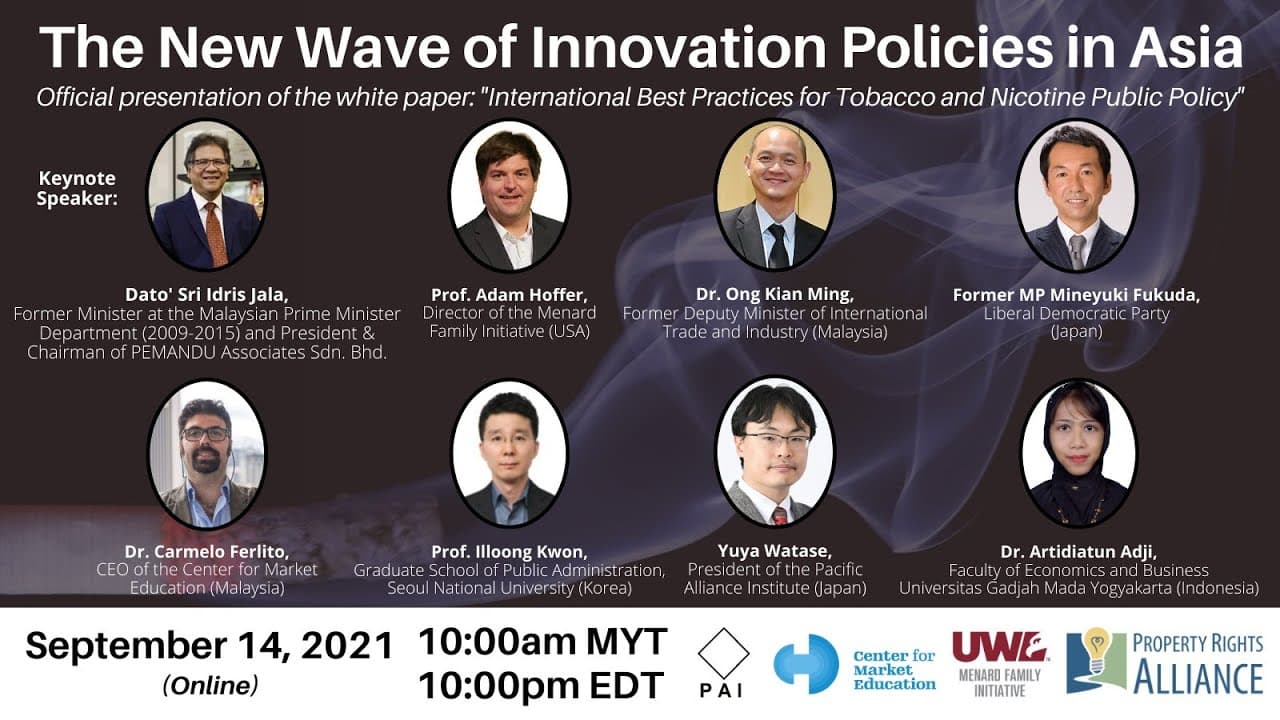
The New Wave of Innovation Policies in Asia (14/9/2021)
TL;DR
Harm reduction and innovative approaches to tobacco and nicotine public policy in Asia are necessary to reduce consumption, increase tax revenues, promote alternative products, and address the illicit cigarette market.
Transcript
[Applause] [Applause] welcome everyone to the property right alliance policy webinar the new wave of innovation policy in asia this is a an on-road record event and at the end of the presentation there will be space for q a i'm lorenzo montanari executive director of property right alliance is an international research and advocacy organization fou... Read More
Key Insights
- ✋ The traditional approach of high taxes on tobacco products has not been effective in reducing consumption and increasing revenues in Asia.
- ☸️ Harm reduction strategies, such as promoting less harmful alternatives and differentiated taxation, have the potential to achieve better outcomes.
- 🧑⚕️ Cooperation between stakeholders, including government, health authorities, and the industry, is crucial in implementing effective tobacco and nicotine public policies.
- 🚬 Addressing the illicit cigarette market and supporting alternative employment for those involved in illicit trade are important considerations in policy development.
- 🥅 The role of innovation in developing less harmful products and promoting sustainable development goals should be prioritized in tobacco and nicotine public policies.
- 🧑⚕️ Behavioral factors, cultural differences, and health concerns should be taken into account in designing effective policies.
Install to Summarize YouTube Videos and Get Transcripts
Explore YouTube Video Summarizer or Get YouTube Transcript Extractor
Questions & Answers
Q: Why have traditional approaches, like high taxes, not been effective in reducing tobacco consumption in Asia?
Traditional approaches have not been effective in reducing consumption because they often result in the growth of illicit cigarette markets and limited behavioral change. High taxes can also disproportionately affect low-income populations.
Q: What are some examples of less harmful alternatives to traditional cigarettes?
Less harmful alternatives include vaping devices, e-cigarettes, heated tobacco products, and nicotine replacement therapies. These products have been shown to have fewer harmful effects than traditional cigarettes.
Q: How can harm reduction strategies be implemented effectively?
Harm reduction strategies can be implemented effectively by providing education and information about the relative risks of different products, promoting the use of alternatives, and offering incentives for smokers to switch to less harmful options.
Q: How can differentiated taxation help reduce tobacco consumption?
Differentiated taxation involves setting different tax rates for different categories of tobacco products. By increasing taxes more on traditional cigarettes and less on alternatives like e-cigarettes, the goal is to incentivize the adoption of less harmful alternatives and discourage the use of traditional cigarettes.
Key Insights:
- The traditional approach of high taxes on tobacco products has not been effective in reducing consumption and increasing revenues in Asia.
- Harm reduction strategies, such as promoting less harmful alternatives and differentiated taxation, have the potential to achieve better outcomes.
- Cooperation between stakeholders, including government, health authorities, and the industry, is crucial in implementing effective tobacco and nicotine public policies.
- Addressing the illicit cigarette market and supporting alternative employment for those involved in illicit trade are important considerations in policy development.
- The role of innovation in developing less harmful products and promoting sustainable development goals should be prioritized in tobacco and nicotine public policies.
- Behavioral factors, cultural differences, and health concerns should be taken into account in designing effective policies.
- Education, dissemination, and incentives can play a significant role in influencing behavioral change and reducing tobacco consumption.
Summary & Key Takeaways
-
The prevalence of tobacco smoking in Asian countries remains high, despite efforts to reduce it.
-
Traditional approaches to tobacco control, such as high taxes, have had limited success in reducing consumption and increasing revenues.
-
The adoption of harm reduction strategies, differentiated taxation, and incentives for less harmful alternatives could potentially lead to better outcomes in reducing tobacco consumption and increasing revenues.
Read in Other Languages (beta)
Share This Summary 📚
Summarize YouTube Videos and Get Video Transcripts with 1-Click
Try YouTube Summary with ChatGPT & Claude or YouTube Transcript Generator