Micro strip transmission lines | Microwave Engineering | Lec-44
TL;DR
Microstrip transmission lines are integral to microwave communication, offering various advantages and disadvantages.
Transcript
hi everyone in this video I am going to discuss about microstrip transmission lines microstrip transmission lines are also like your rectangular waveguides but the shape is quite different from the conventional waveguids okay in the conventional waveguide the waveguide does not have any other uh shape differences in the uniform cross sectional area... Read More
Key Insights
- 🫥 Microstrip transmission lines are essential for modern microwave communication, particularly in integrated circuits.
- 🏂 They enable the mounting of active components directly on the board, enhancing circuit design efficiency and functionality.
- 🫥 The choice of dielectric material significantly influences the performance characteristics of microstrip lines.
- 🫥 Compared to strip lines, microstrips provide greater accessibility for component bonding but may require additional shielding for certain applications.
- 📡 Signal dispersion in microstrip lines might affect multi-frequency signal processing and necessitates consideration during design.
- 🫥 These lines can operate effectively up to frequencies around 300 gigahertz, marking a vital threshold for microwave applications.
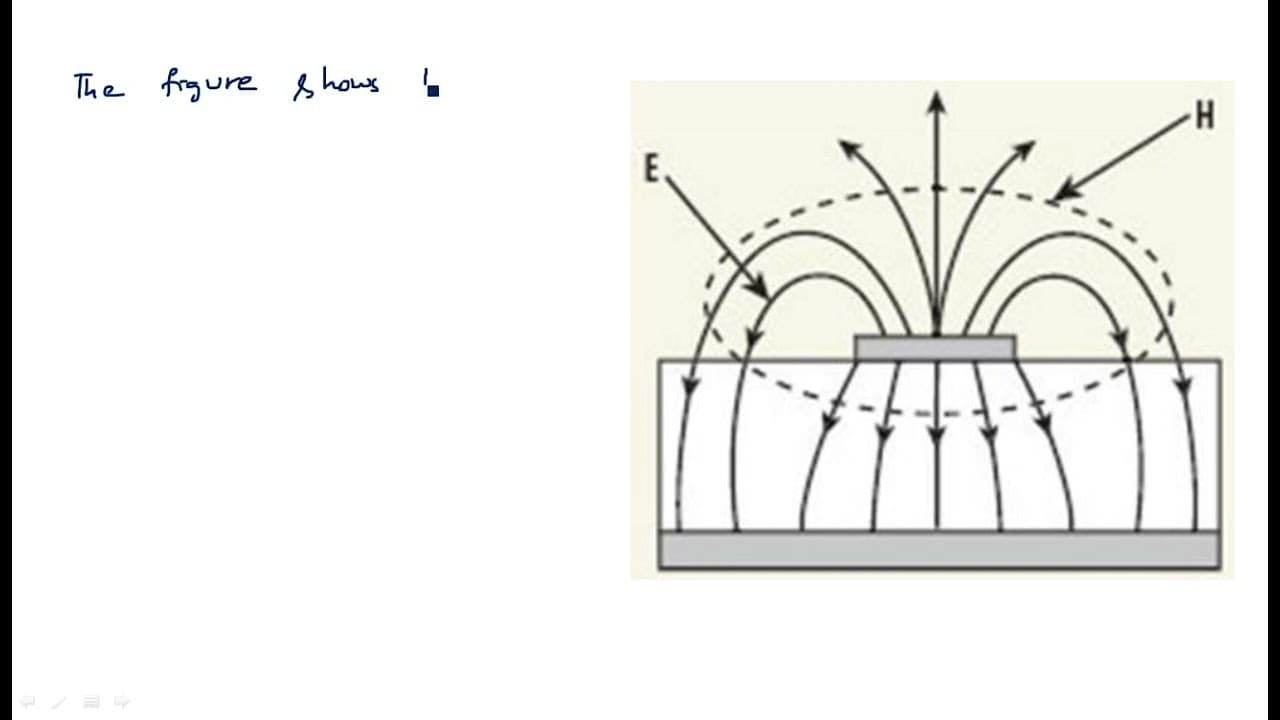
- 🫥 Microstrip transmission lines exhibit a quasi-TEM mode of propagation under specific conditions, allowing for efficient signal transmission within limited dimensions.
Install to Summarize YouTube Videos and Get Transcripts
Explore YouTube Video Summarizer or Get YouTube Transcript Extractor
Questions & Answers
Q: What are the main components of a microstrip transmission line?
A microstrip transmission line consists of a conductive strip of defined width and thickness, a dielectric layer, and a conductive base. The copper strip acts as the conductor, while the dielectric layer separates it from the ground plane, enabling the transmission of microwave signals effectively.
Q: How do microstrip transmission lines compare to conventional waveguides?
Unlike conventional waveguides, which maintain a uniform cross-section, microstrip transmission lines are more versatile due to their varying widths and the ability to incorporate active components directly on the board. This design leads to a more compact and manageable system for microwave integrated circuits.
Q: What are some challenges associated with using microstrip transmission lines?
One of the key challenges is maintaining high isolation for specific applications, such as filters and switches, which may require external shielding. Additionally, signal dispersion in microstrip lines can lead to different frequency signals traveling at varied speeds, affecting overall signal integrity.
Q: Why are microstrip transmission lines popular in microwave integrated circuits?
They allow for easy integration of active components on top of the circuit board, which streamlines manufacturing and improves circuit performance. Their rugged construction also makes them suitable for high-voltage applications, enhancing their usability in various advanced communication systems.
Q: What is the significance of the dielectric layer in a microstrip transmission line?
The dielectric layer plays a crucial role in electrically isolating the conductive strip from the ground plane while facilitating the propagation of electromagnetic waves. The dielectric material's characteristics affect the line's performance, including bandwidth, signal speed, and transmission efficiency.
Q: How does signal dispersion affect the performance of microstrip transmission lines?
Signal dispersion leads to signals with different frequencies traveling at varying speeds, which can distort the timing and quality of the transmitted signal. This issue can complicate applications requiring precise signal synchronization, although it is generally manageable for single-frequency transmissions.
Summary & Key Takeaways
-
Microstrip transmission lines function similarly to rectangular waveguides but differ in shape, allowing for signal transmission with varying characteristics and components.
-
The most notable advantages include the ability to mount active components directly on the board and rugged construction to handle high voltages and power levels.
-
Disadvantages include potential issues with high isolation requirements, necessitating additional shielding, and signal dispersion causing different speeds for various frequencies.
Read in Other Languages (beta)
Share This Summary 📚
Summarize YouTube Videos and Get Video Transcripts with 1-Click
Try YouTube Summary with ChatGPT & Claude or YouTube Transcript Generator