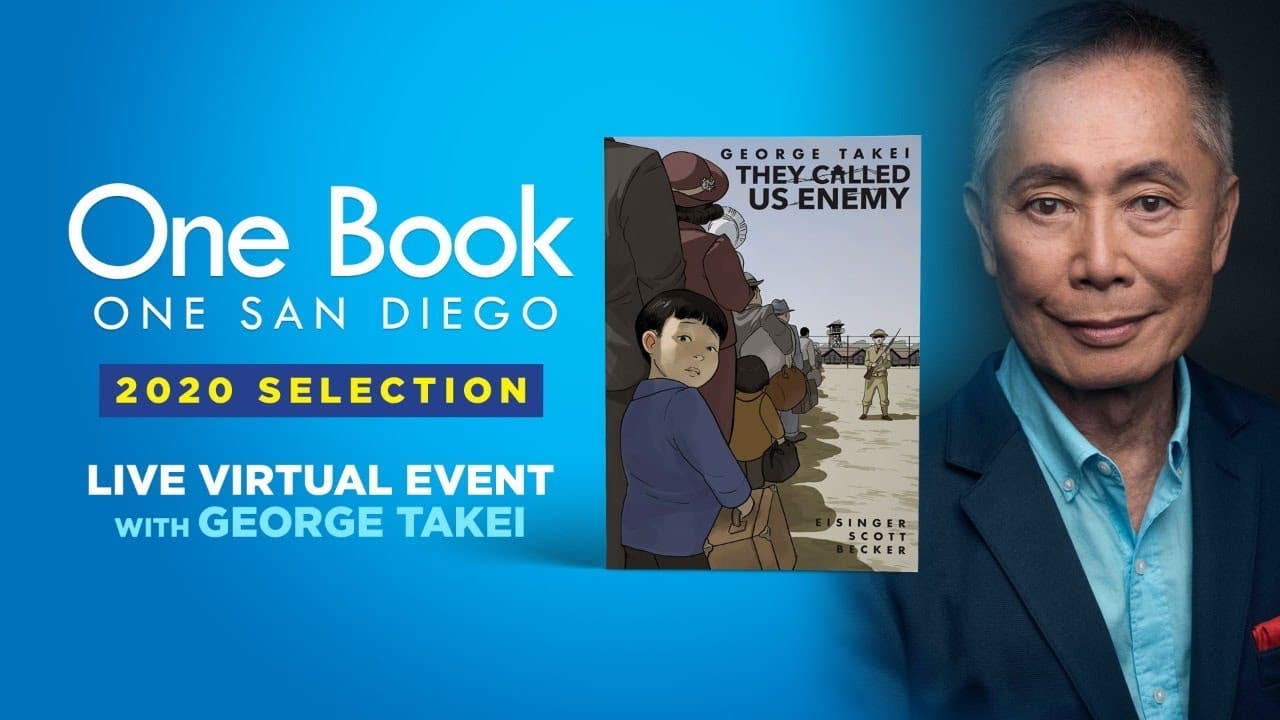
One Book, One San Diego Live Virtual Author Event: Rise Up with George Takei
TL;DR
- George Takei discusses activism, identity, and history in a powerful, educational session.
Transcript
good evening i'm cindy martin superintendent of san diego unified school district on behalf of the more than 120 000 students i want to thank the san diego library san diego county library and kpbs for hosting this event and providing students educators and families this incredible opportunity to engage in meaningful dialogue around literacy we are... Read More
Key Insights
- 🙂 George Takei's graphic novel memoir "They Called Us Enemy" sheds light on the historical injustice of Japanese American internment during WWII, aiming to educate and engage young readers.
- 🗯️ Personal experiences and activism have shaped George Takei's advocacy for social justice, LGBTQ rights, and equal representation, inspiring individuals to stand up for what they believe in.
- 💱 The importance of civic engagement, participatory democracy, and voting is emphasized by George Takei as crucial steps towards fostering positive change in society and achieving equality.
- 😀 Reflecting on past injustices and societal challenges, George Takei encourages individuals, especially youth, to remain optimistic, courageous, and resilient in the face of adversity to shape a better future.
Install to Summarize YouTube Videos and Get Transcripts
Explore YouTube Video Summarizer or Get YouTube Transcript Extractor
Questions & Answers
Q: What inspired George Takei to bring his story to a graphic novel memoir format?
George Takei was motivated to reach young people through a graphic memoir to educate them on the neglected history of Japanese American internment during WWII and embed this story in American minds.
Q: Why was the imprisonment of Japanese American civilians during WWII against American principles according to George Takei?
The internment violated American ideals of due process, equal justice, and democratic values by imprisoning innocent citizens based on ethnicity, not evidence.
Q: How did George Takei's family's experience in internment camps influence his understanding of American democracy?
Through his father's teachings, George Takei learned the importance of participatory democracy, taking responsibility for democracy, and actively engaging in the political process to effect change.
Q: How did George Takei navigate identity struggles as a gay person of color, and what advice does he offer to individuals facing similar challenges?
George Takei acknowledges challenges faced by LGBTQ individuals of color, emphasizes the importance of knowing and being proud of one's identity, and encourages active engagement in the fight for equality.
Q: What impact did President Franklin D. Roosevelt's decision on Japanese American internment have on his legacy, according to George Takei?
While acknowledging Roosevelt's role in addressing the Great Depression, George Takei reflects on the mistake Roosevelt made with Executive Order 9066 and the detrimental impact it had on Japanese American citizens.
Q: In the face of injustice, what advice does George Takei offer to young people seeking to make a difference in the world?
George Takei encourages youth to stand up, speak out for justice, and be informed about American principles to participate actively in democracy and fight for equality.
Q: How does George Takei suggest young people can maintain optimism and work towards a better future, despite challenging circumstances?
George Takei emphasizes the importance of remaining optimistic, taking the hard route to drive change, and being committed, courageous, and passionate about making a difference in society.
Q: In light of current social issues and political activism, what steps does George Takei recommend for young adults to positively impact their communities?
George Takei advocates for youth to stand up against injustices, speak out for their beliefs, and exercise their right to vote as informed citizens to create a better future and make positive change in their communities.
Summary & Key Takeaways
-
San Diego Unified School District promotes literacy through "One Book One San Diego" event featuring "They Called Us Enemy" by George Takei.
-
Vanessa Gempis hosts George Takei for an engaging discussion on activism, democracy, and Japanese American internment.
-
George Takei shares personal insights on activism, identity, and history, encouraging participation in democracy and social justice.
Read in Other Languages (beta)
Share This Summary 📚
Summarize YouTube Videos and Get Video Transcripts with 1-Click
Try YouTube Summary with ChatGPT & Claude or YouTube Transcript Generator
Explore More Summaries from San Diego Public Library 📚





Summarize YouTube Videos and Get Video Transcripts with 1-Click
Try YouTube Summary with ChatGPT & Claude or YouTube Transcript Generator