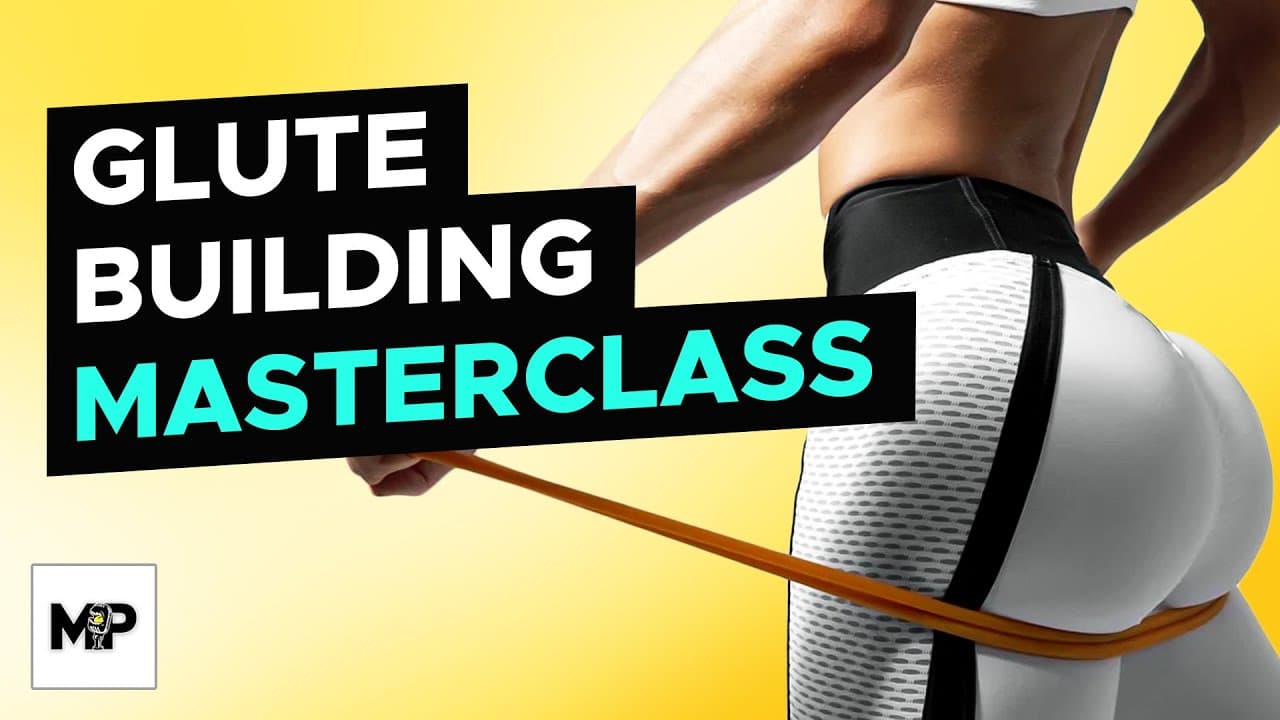
How to Build Strong, Round, & Athletic GLUTES | Mind Pump 2065
TL;DR
Discusses exercises and strategies to build strong, round glutes.
Transcript
all right today's episode we're going to talk about the glutes what they do why they're so important to develop and what things you could do to give yourself strong round amazing glute muscles that's the butt muscles let's talk about that hands down the single most common muscle that people asked to be developed and higher history like the last 10 ... Read More
Key Insights
- Glutes are highly sought after by both men and women due to their association with power, stability, and attractiveness.
- Developing strong glutes is crucial for athletic performance, as they are key for locomotion, speed, and strength.
- Glutes are among the most challenging muscles to develop due to modern lifestyles that lead to underdeveloped muscles.
- Effective glute training involves understanding and targeting the three main muscles: gluteus maximus, medius, and minimus.
- The best exercises for glutes include barbell squats, deadlifts, and hip thrusts, with an emphasis on load and range of motion.
- Unilateral exercises like single-leg deadlifts help address muscle imbalances and can improve overall strength and stability.
- A well-rounded glute program should incorporate varying rep ranges and phases to optimize muscle growth and strength.
- Diet plays a crucial role in muscle development, requiring a caloric surplus and high protein intake for optimal results.
Install to Summarize YouTube Videos and Get Transcripts
Explore YouTube Video Summarizer or Get YouTube Transcript Extractor
Questions & Answers
Q: Why are strong glutes considered attractive?
Strong glutes are attractive because they are associated with power, stability, and athleticism. From an evolutionary perspective, they signify health and capability in both men and women. Strong glutes also contribute to better posture and movement, which are appealing traits. Furthermore, they are a key muscle group for athletic performance, enhancing speed and strength.
Q: What makes glutes challenging to develop?
Glutes are challenging to develop due to modern lifestyles that often lead to underuse and poor muscle activation. Many people have difficulty connecting with their glutes, which can hinder muscle growth. Additionally, exercises that effectively target the glutes, such as squats and deadlifts, require proper form and technique, which can be difficult for beginners to master.
Q: What are the best exercises for glute development?
The best exercises for glute development include barbell squats, deadlifts, and hip thrusts. These exercises allow for significant load and range of motion, which are crucial for muscle growth. Unilateral exercises like single-leg deadlifts can also be beneficial for addressing muscle imbalances and improving overall strength and stability.
Q: How should a glute training program be structured?
A glute training program should incorporate a variety of exercises that target all three main glute muscles. It should include phases with different rep ranges to optimize muscle growth and strength. A typical program might include barbell squats, hip thrusts, and deadlifts, performed on different days of the week, with a focus on proper form and progressive overload.
Q: Why are unilateral exercises important for glute development?
Unilateral exercises are important for glute development because they help address muscle imbalances between the left and right sides of the body. By focusing on one side at a time, these exercises can improve stability and strength, reduce the risk of injury, and enhance overall muscle activation and growth.
Q: What role does diet play in glute development?
Diet plays a crucial role in glute development by providing the necessary nutrients and energy for muscle growth. A caloric surplus is needed to fuel muscle building, while a high protein intake supports muscle repair and growth. Without adequate nutrition, even the best training program will not yield optimal results.
Q: How can someone improve their connection with their glutes?
Improving connection with the glutes involves focusing on exercises that enhance muscle activation. Isolation exercises like glute bridges or donkey kicks can help individuals feel and engage their glutes before moving on to compound lifts. Practicing proper form and technique during exercises like squats and deadlifts is also essential for effective muscle engagement.
Q: What is the recommended frequency for glute training?
The recommended frequency for glute training is typically two to four times per week, depending on individual recovery ability and training experience. A common approach is to train glutes three times a week, using exercises like squats, hip thrusts, and deadlifts, with sufficient rest and recovery between sessions to allow for optimal muscle growth.
Summary & Key Takeaways
-
The episode highlights the importance of glutes for both aesthetics and athletic performance, emphasizing their role in locomotion and stability. It discusses the evolutionary and functional reasons why strong glutes are attractive and desirable.
-
Developing glutes is challenging due to lifestyle factors that lead to underdeveloped muscles. The discussion covers effective exercises like squats, deadlifts, and hip thrusts, highlighting the need for load and range of motion.
-
The conversation stresses the importance of a tailored program with varying rep ranges and phases, along with a supportive diet high in protein and calories, to achieve optimal glute development.
Read in Other Languages (beta)
Share This Summary 📚
Summarize YouTube Videos and Get Video Transcripts with 1-Click
Try YouTube Summary with ChatGPT & Claude or YouTube Transcript Generator
Explore More Summaries from Mind Pump Show 📚




Summarize YouTube Videos and Get Video Transcripts with 1-Click
Try YouTube Summary with ChatGPT & Claude or YouTube Transcript Generator