What are star forts? - Bastion Forts - #OddWorld
TL;DR
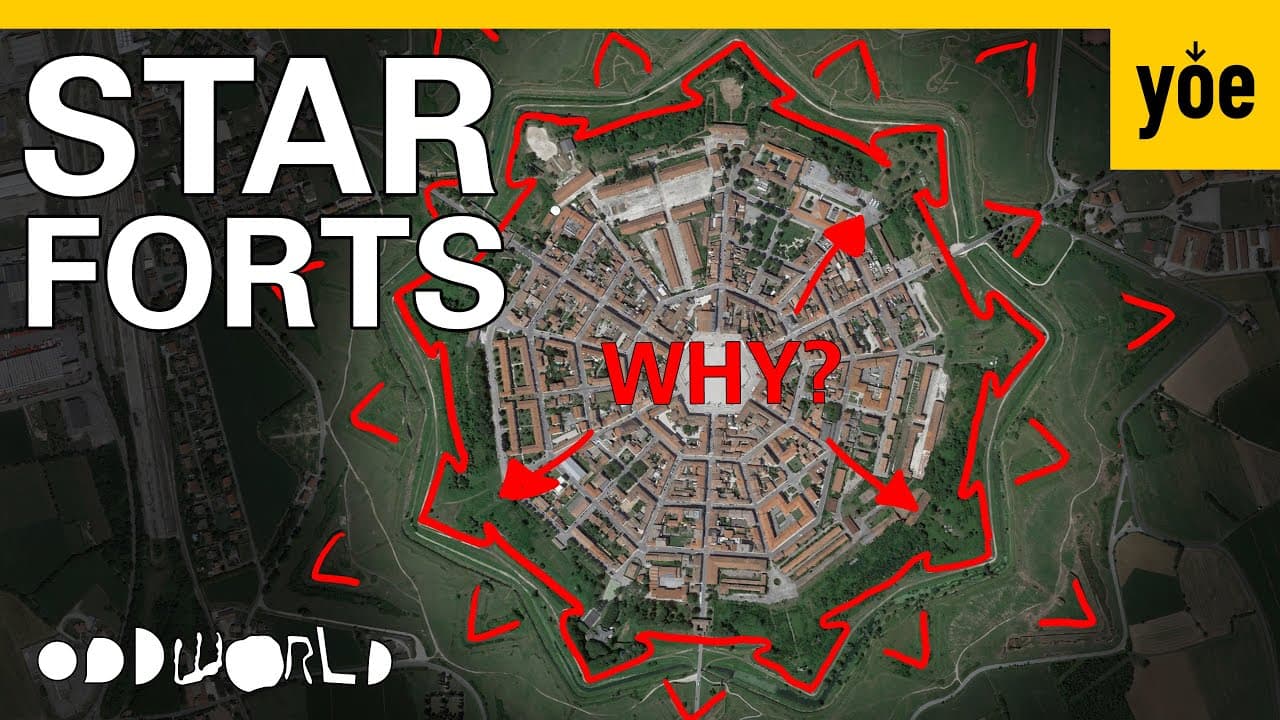
Cannons revolutionized fort design, leading to the development of bastion forts with low, sloped walls and jutting bastions to eliminate dead zones and protect against cannon fire.
Transcript
With centuries of kingdoms, duchies, religious and cultural differences and strife... ...Europe is packed with historical sites. And places like these... ...are the result of the most destructive invention up until that time: Cannons. My name is Sebastiaan. This is Odd World. [♫ Land's End - Underbelly ♫] Medieval fortresses were usually built hig... Read More
Key Insights
- ❤️🔥 Cannons revolutionized fort design by rendering traditional medieval fortresses with high curtain walls vulnerable to cannon fire.
- 😘 Bastion forts, with their low, sloped walls and jutting bastions, were a response to the threat of cannons and offered better protection against artillery attacks.
- 🏙️ The design principles of bastion forts had a lasting impact on European cities and landmarks, as seen in the defensive works of cities like Naarden and the preserved examples in Amsterdam, Vienna, and Barcelona.
Install to Summarize YouTube Videos and Get Transcripts
Explore YouTube Video Summarizer or Get YouTube Transcript Extractor
Questions & Answers
Q: How did the invention of cannons impact medieval fort design?
Cannons made traditional high curtain walls ineffective, prompting the development of bastion forts with low, sloped walls that were more resistant to cannon fire.
Q: What were some key features of bastion forts?
Bastion forts featured glacis, which were sloped earthen banks that made it difficult for cannons to damage the citadel. They also had outworks like ravelins and hornworks for additional protection.
Q: Who were some influential figures in the development of bastion forts?
Michelangelo, Menno van Coehoorn, and Vauban were key figures who contributed to the development and improvement of bastion fort design.
Q: Were bastion forts effective in defending against attacks?
Yes, centuries of use and examples like the defence of Pisa in 1500 suggest that bastion forts were effective in defending against attacks.
Key Insights:
- Cannons revolutionized fort design by rendering traditional medieval fortresses with high curtain walls vulnerable to cannon fire.
- Bastion forts, with their low, sloped walls and jutting bastions, were a response to the threat of cannons and offered better protection against artillery attacks.
- The design principles of bastion forts had a lasting impact on European cities and landmarks, as seen in the defensive works of cities like Naarden and the preserved examples in Amsterdam, Vienna, and Barcelona.
- The decline of bastion forts came with the advent of artillery, explosive shells, and modern warfare technologies, making fortresses as a concept obsolete.
Summary & Key Takeaways
-
The invention of cannons in the 9th century introduced a new threat to medieval fortresses and prompted the development of more effective defensive structures.
-
Medieval fort design, characterized by high curtain walls, proved vulnerable to cannon fire, leading to the rise of bastion forts in the late 15th century.
-
Bastion forts featured low, sloped walls, glacis, and outworks such as ravelins and hornworks to provide extra protection and split incoming forces.
Read in Other Languages (beta)
Share This Summary 📚
Summarize YouTube Videos and Get Video Transcripts with 1-Click
Try YouTube Summary with ChatGPT & Claude or YouTube Transcript Generator