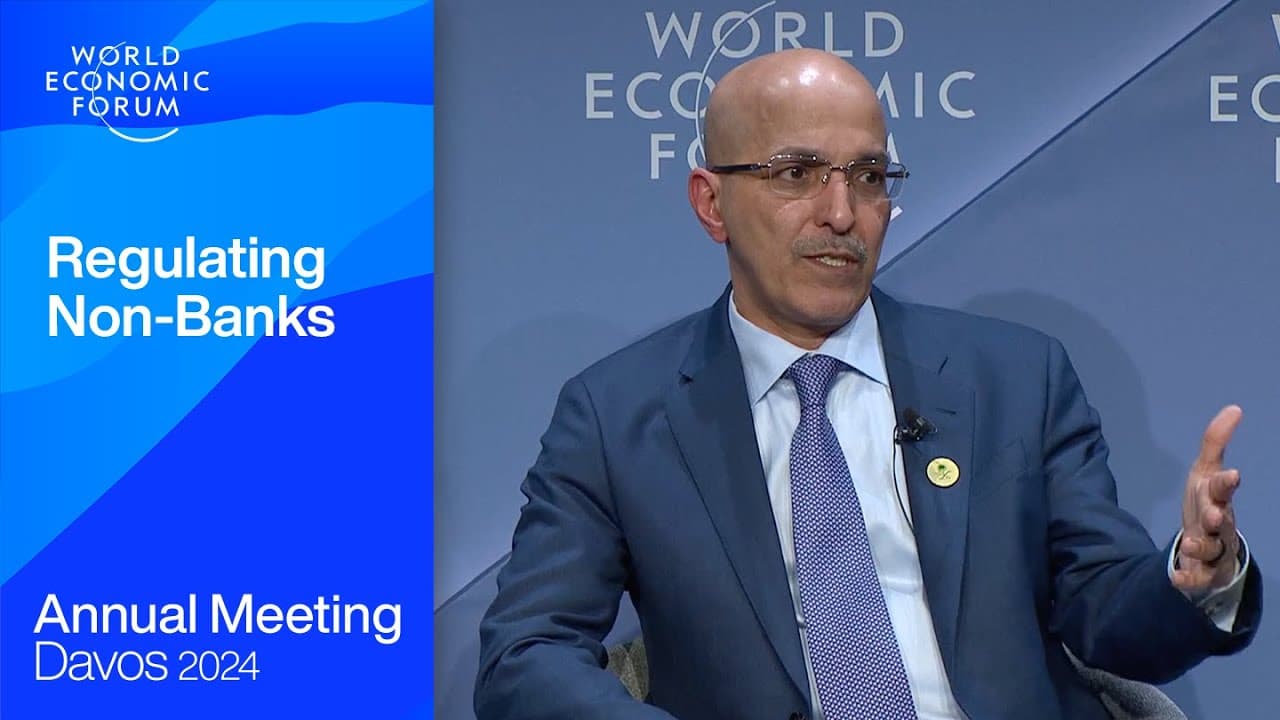
Regulating Non-Banks | Davos 2024 | World Economic Forum
TL;DR
Private markets exceed commercial bank assets, posing both benefits and risks in the non-bank financial sector.
Transcript
excellent thank you very much for coming uh this afternoon so the uh the panel today we're going to talk about um regulating nonbank financial institutions well what are non-bank financial institutions surely one of the worst acronyms anybody could come up with just designed to like put uh your relatives and friends to sleep but in fact you know um... Read More
Key Insights
- 🏦 Non-bank financial institutions, such as private markets, outpace traditional banks in assets.
- ✳️ The growth of these institutions offers opportunities for innovation but also poses significant risks.
- ✳️ Regulation is crucial to manage risks and ensure stability in the financial sector.
- 💳 Private credit markets can support Emerging Markets by providing innovative lending solutions for debt restructuring and economic development.
- 🪡 Collaboration between private and public sectors, along with multilateral institutions, is essential to address the capital needs of Emerging Markets.
- ✳️ Transparency and regulatory oversight are necessary to prevent systemic risks and ensure responsible practices in the financial industry.
- 🥹 Private credit plays a critical role in liability management, infrastructure financing, and asset-backed lending, contributing to economic growth and development.
Install to Summarize YouTube Videos and Get Transcripts
Explore YouTube Video Summarizer or Get YouTube Transcript Extractor
Questions & Answers
Q: How do non-bank financial institutions compare to traditional banks in terms of assets?
Non-bank financial institutions, particularly private markets, have exceeded commercial bank assets in the U.S., indicating their significant role in the financial sector.
Q: What are the benefits and risks associated with non-bank financial institutions?
While offering tremendous opportunities for innovation and growth, these institutions also pose risks due to their complexity and potential systemic impact, as seen during the global financial crisis.
Q: How can regulators address the challenges posed by non-bank financial institutions?
Regulators must strike a balance between promoting innovation and managing risks through smart regulation tailored to the unique characteristics of these institutions.
Q: How can the private credit market assist Emerging Markets in addressing their capital requirements?
Private credit offers innovative lending solutions that can support Emerging Markets in restructuring debt, accessing assets, and fostering economic development, especially in low-income countries.
Summary & Key Takeaways
-
Non-bank financial institutions like private markets surpass commercial banks in assets.
-
These institutions offer opportunities but also present significant risks due to their rapid growth and complexity.
-
Regulation is critical to ensure stability and manage potential systemic risks.
Read in Other Languages (beta)
Share This Summary 📚
Summarize YouTube Videos and Get Video Transcripts with 1-Click
Try YouTube Summary with ChatGPT & Claude or YouTube Transcript Generator
Explore More Summaries from World Economic Forum 📚

Summarize YouTube Videos and Get Video Transcripts with 1-Click
Try YouTube Summary with ChatGPT & Claude or YouTube Transcript Generator