Fuelling the Debate: The Corn Law Returns - D'Maris Coffman
TL;DR
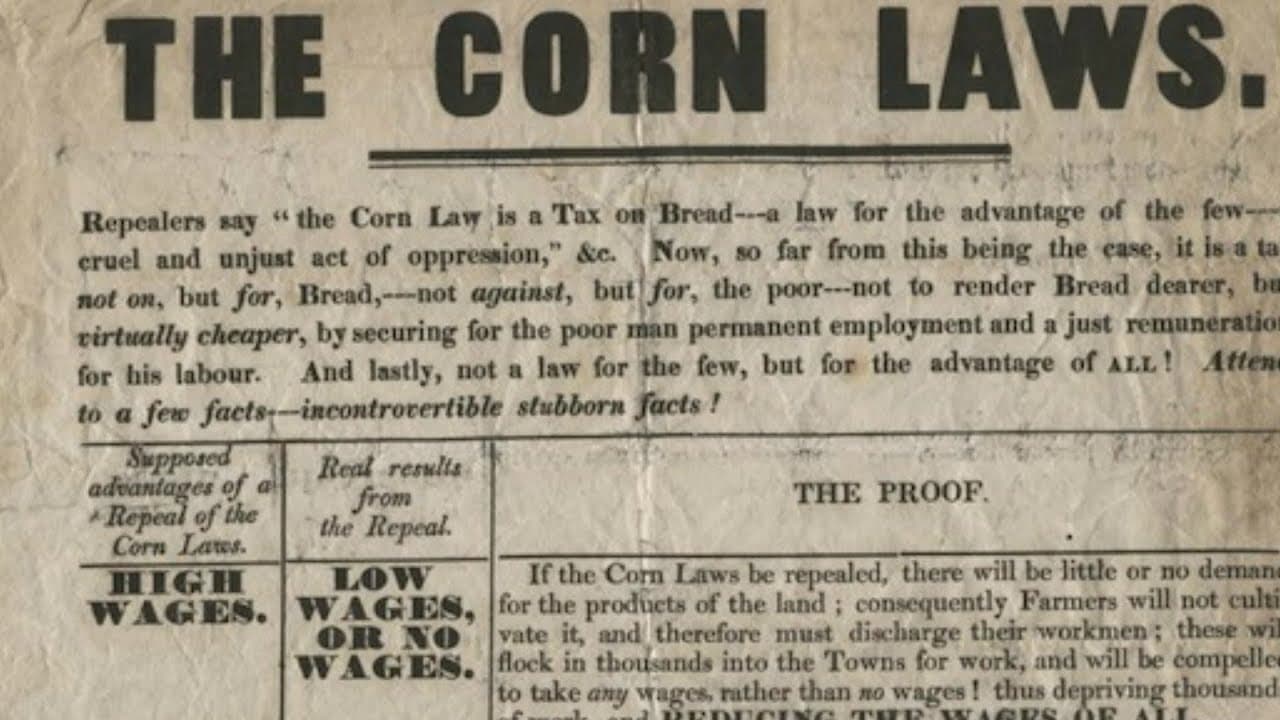
Corn returns were a crucial resource for the British state in the 17th-19th centuries, allowing them to monitor and regulate grain markets, determine tariffs and bounties, and inform policies on excise taxation and the commutation of tithes.
Transcript
and thank you as well for coming to spend your lunch hour to hear about the corn returns and the corn laws I can imagine most of you would probably prefer to be eating bread rather than hearing about the ingredients but nonetheless I'm here today to talk about the corn laws but particularly the corn returns which is the raw data resource that the B... Read More
Key Insights
- 🦄 Corn returns were an expensive and extensive undertaking by the early modern British state, costing thousands of pounds annually to administer.
- 💁 They were used for purposes beyond monitoring corn markets, including regulating excise taxation, informing market decisions, and mediating disputes over tithes.
- 🖐️ Corn returns played a crucial role in the debate and repeal of the Corn Laws, providing empirical evidence on agricultural prices, rents, and the impact on industry.
- 💁 Early political economists, like Adam Smith and David Ricardo, used the corn returns to inform their theories on economic rent, taxation, and the relationship between agriculture and industry.
- 🖐️ Corn returns laid the foundation for evidence-based policy in early political economy, challenging the notion that theory alone drove economic reasoning.
- 🎁 The digitization of corn returns provides a way to explore big data and apply machine learning tools to understand past market structures and inform present-day economic research.
Install to Summarize YouTube Videos and Get Transcripts
Explore YouTube Video Summarizer or Get YouTube Transcript Extractor
Questions & Answers
Q: How did the British state use corn returns to enforce corn laws?
The state relied on corn returns to regulate corn markets, monitor prices, and ensure that tariffs and bounties on imported and exported grain were set correctly. This allowed them to enforce corn laws and protect domestic agriculture.
Q: How did corn returns inform debates over the repeal of the Corn Laws?
Corn returns provided empirical evidence on agricultural prices, rents, and the effects of the Corn Laws on industry. They showed that agricultural rents were increasing faster than prices, indicating that the laws potentially favored farmers at the expense of industrialists.
Q: What role did corn returns play in the commutation of tithes?
Corn returns helped negotiate fair and equitable commutation agreements between landowners and commissioners. By providing data on the value of agricultural produce, the corn returns helped resolve disputes and facilitate the transition from tithes in kind to monetary equivalents.
Q: How did corn returns impact the understanding of early political economy?
Corn returns demonstrated that early political economists, such as Adam Smith, David Ricardo, and Thomas Malthus, relied on empirical evidence when formulating theories. The corn market data influenced their thinking on economic rent, taxation, and the relationship between agriculture and industry.
Summary & Key Takeaways
-
Corn returns were extensive and expensive to administer, costing the British state thousands of pounds yearly to monitor corn markets and enforce corn laws.
-
They were used for a range of purposes, including setting tariffs, regulating excise taxation, informing market decisions for grain merchants, and mediating disputes over equitable commutation of tithes.
-
The corn returns played a key role in the debate and repeal of the Corn Laws, as they provided empirical evidence on agricultural prices, rents, and the economy's impact on industry.
Read in Other Languages (beta)
Share This Summary 📚
Summarize YouTube Videos and Get Video Transcripts with 1-Click
Try YouTube Summary with ChatGPT & Claude or YouTube Transcript Generator
Explore More Summaries from Gresham College 📚


Summarize YouTube Videos and Get Video Transcripts with 1-Click
Try YouTube Summary with ChatGPT & Claude or YouTube Transcript Generator