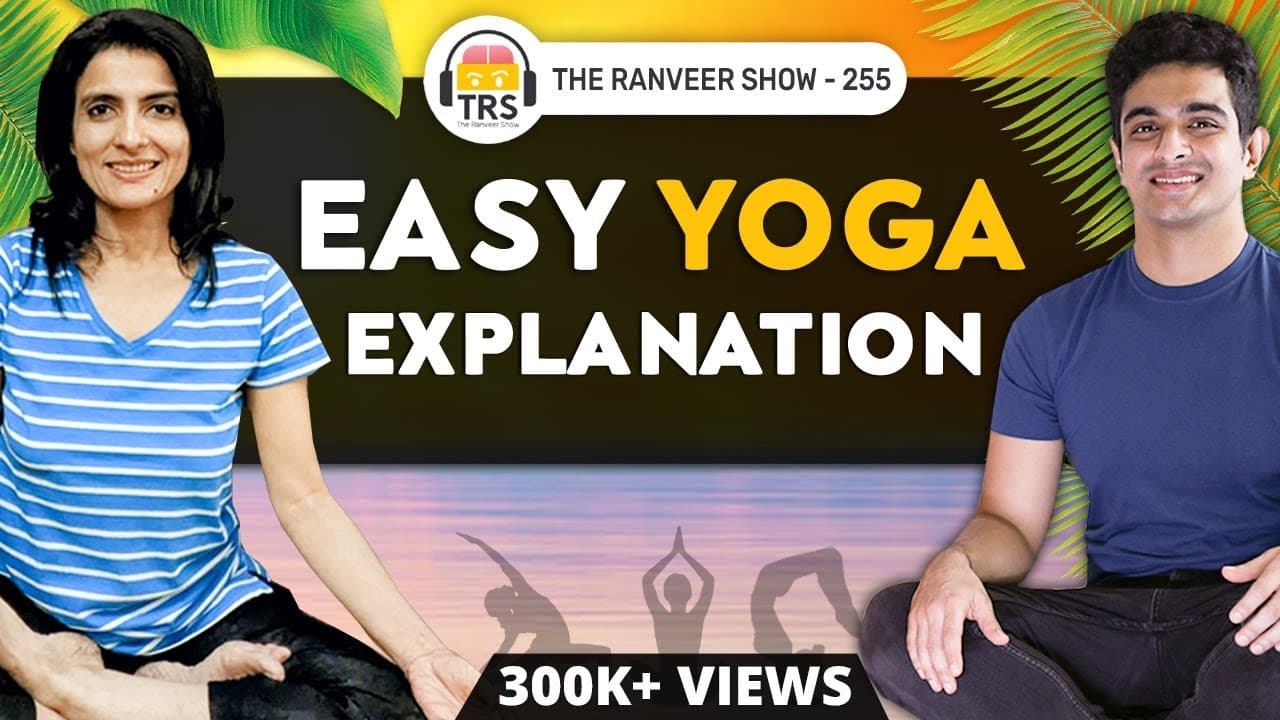
Ami Ganatra Special: Yoga For Better Skin, Hair & Life Explained | The Ranveer Show 255
TL;DR
This content explores the philosophical foundations of yoga beyond physical exercises.
Transcript
is as I said yoga is a school of philosophy which perceives reality so what he says is only when your mind is quiet will you be settled in your actual truth where you will see the real truth what will happen when the mind doesn't set up your emotions correct you will see your reality according to those withis with a biased lens what is getting cont... Read More
Key Insights
- 🤳 Yoga is fundamentally about achieving mental clarity and self-realization rather than just physical fitness.
- 🤭 A quiet mind is crucial for perceiving reality accurately and understanding one's true self.
- 🫚 The philosophical roots of yoga are deeply embedded in ancient Indian scriptures and teachings by the rishis.
- 🧘 The practice of yoga includes various components like ethical guidelines, physical postures, and meditation to promote holistic well-being.
- 🛟 The eight limbs of yoga serve as a structured framework designed to enrich both individual practice and overall life experiences.
- ❓ Emotional disturbances significantly affect one’s perception, demonstrating the importance of emotional regulation through practices such as yoga.
- 🤑 Historical practices associated with yoga also include rich contributions in mathematics and science by ancient thinkers, revealing its multidisciplinary roots.
Install to Summarize YouTube Videos and Get Transcripts
Explore YouTube Video Summarizer or Get YouTube Transcript Extractor
Questions & Answers
Q: What is the primary philosophical view of yoga as presented in the content?
The content presents yoga not merely as a series of physical exercises but as a comprehensive philosophy that emphasizes the necessity of a quiet mind for perceiving reality. It suggests that only when we still our thoughts can we access our true selves and understand the deeper truths of existence.
Q: How does emotional disturbance affect our perception of reality according to the discussion?
Emotional disturbances influence our perception by creating a biased lens through which we view the world. When our minds are cluttered with thoughts and feelings, we often misinterpret reality. The discussion emphasizes that calming the mind helps strip away these biases, allowing for a clearer understanding of ourselves and our surroundings.
Q: What role do the ancient rishis play in the context of yoga?
Ancient rishis, or sages, are portrayed as profound thinkers who pursued knowledge and truth through meditation. They explored both existential questions and practical disciplines like mathematics and health sciences, ultimately laying the philosophical foundations for practices such as yoga. Their efforts provide a historical context for the understanding of yoga beyond mere physical postures.
Q: Can you explain the eight limbs of yoga as mentioned in the content?
The eight limbs of yoga, defined by Patanjali, include ethical guidelines (Yama and Niyama), physical postures (Asana), breath control (Pranayama), sensory withdrawal (Pratyahara), concentration (Dharana), meditation (Dhyana), and contemplation (Samadhi). Together, they form a comprehensive framework for achieving balance and self-realization within the practice of yoga.
Q: Why is meditation considered essential in the yoga practice described?
Meditation is integral to the practice of yoga because it facilitates the quieting of the mind, enabling practitioners to attain deeper focus and understanding. By engaging in meditation, individuals can train their minds to reach a state of clarity and calm, essential for personal growth and self-awareness.
Q: What are some misconceptions about yoga that the content addresses?
The content addresses the misconception that yoga is solely about physical exercises or asanas. It emphasizes that yoga encompasses a broader philosophical framework, including mental stillness, meditative practices, and ethical living, aiming to foster a well-rounded journey toward self-discovery and well-being.
Summary & Key Takeaways
-
The discussion highlights the deeper meanings of yoga, emphasizing that it is a philosophy focused on achieving mental and emotional balance rather than merely physical postures.
-
It explains the significance of quieting the mind to perceive reality clearly, suggesting that a calm mind allows for true understanding and self-realization.
-
The content mentions the historical roots of yoga in ancient Indian scriptures and the importance of meditation and self-awareness in achieving overall well-being.
Read in Other Languages (beta)
Share This Summary 📚
Summarize YouTube Videos and Get Video Transcripts with 1-Click
Try YouTube Summary with ChatGPT & Claude or YouTube Transcript Generator
Explore More Summaries from The Ranveer Show - All Episodes 📚

Summarize YouTube Videos and Get Video Transcripts with 1-Click
Try YouTube Summary with ChatGPT & Claude or YouTube Transcript Generator