Alkene + HBR + ROOR - Reaction Mechanism
TL;DR
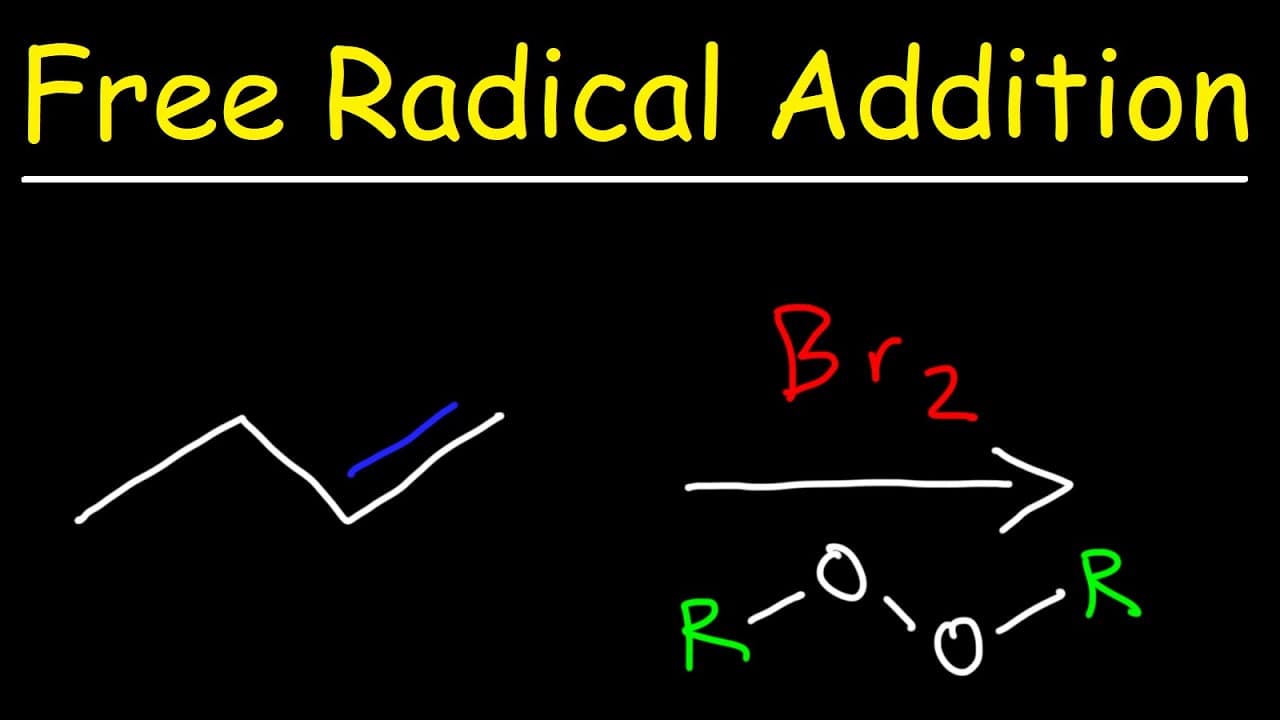
When an alkene is mixed with HBr in the presence of peroxides, the bromine atom will attach to a primary carbon instead of a secondary carbon.
Transcript
in this video we're going to talk about what happens when we mix an alkene with hbr in the presence of peroxides but first let's see what happens when we mix hbr in the absence of an organic peroxide now there's two carbon atoms that we need to pay attention to it's the two carbon atoms that are part of the double bond one is primary the other is s... Read More
Key Insights
- ❓ Alkene reactions with HBr can result in different products depending on the presence or absence of peroxides.
- 🪜 Without peroxides, HBr adds to the alkene's double bond, resulting in the attachment of bromine to the more substituted carbon.
- 🥺 Peroxides activate the reaction and facilitate anti-Markovnikov carbocation chemistry, leading to bromine attachment on a primary carbon.
- ❓ The stability of carbocations determines the regioselectivity of the reaction.
- ⛓️ The presence of peroxides initiates a chain reaction involving oxygen radicals and hydrobromic acid.
- 🖐️ Carbocation stability plays a crucial role in determining the reaction products.
- 💁 The reaction mechanism involves nucleophilic behavior of the alkene, carbocation formation, and bromide ion attacking the carbocation.
Install to Summarize YouTube Videos and Get Transcripts
Explore YouTube Video Summarizer or Get YouTube Transcript Extractor
Questions & Answers
Q: What happens when HBr reacts with an alkene in the absence of peroxides?
Without peroxides, HBr adds across the alkene's double bond, resulting in the formation of a carbocation. The bromine atom attaches to the more substituted carbon atom.
Q: Why does HBr add to a secondary carbon in the absence of peroxides?
The primary carbocation is less stable than the secondary carbocation. Carbocation stability determines where the hydrogen goes, and it prefers to go on a primary carbon, leading to the attachment of the bromine on a secondary carbon.
Q: What is the difference in reaction products when HBr is mixed with peroxides?
With peroxides, the reaction proceeds with anti-Markovnikov carbocation chemistry, leading to the bromine atom attaching to a primary carbon instead of a secondary carbon.
Q: How do peroxides affect the reaction mechanism?
The presence of peroxides leads to the formation of oxygen radicals, which react with hydrobromic acid and initiate the reaction. This initiates a chain reaction and ultimately leads to the attachment of the bromine atom to a primary carbon.
Summary & Key Takeaways
-
Mixing HBr with an alkene in the absence of peroxides results in an electrophilic addition reaction, where HBr adds across the double bond.
-
In the presence of peroxides, the reaction proceeds with anti-Markovnikov carbocation chemistry, leading to the bromine atom attaching to a primary carbon.
-
The mechanism involves the alkene behaving as a nucleophile, carbocation formation, and bromide ion attacking the carbocation.
Read in Other Languages (beta)
Share This Summary 📚
Summarize YouTube Videos and Get Video Transcripts with 1-Click
Try YouTube Summary with ChatGPT & Claude or YouTube Transcript Generator
Explore More Summaries from The Organic Chemistry Tutor 📚



Summarize YouTube Videos and Get Video Transcripts with 1-Click
Try YouTube Summary with ChatGPT & Claude or YouTube Transcript Generator