Stages of Central Planning and Marxism in the Soviet Union
TL;DR
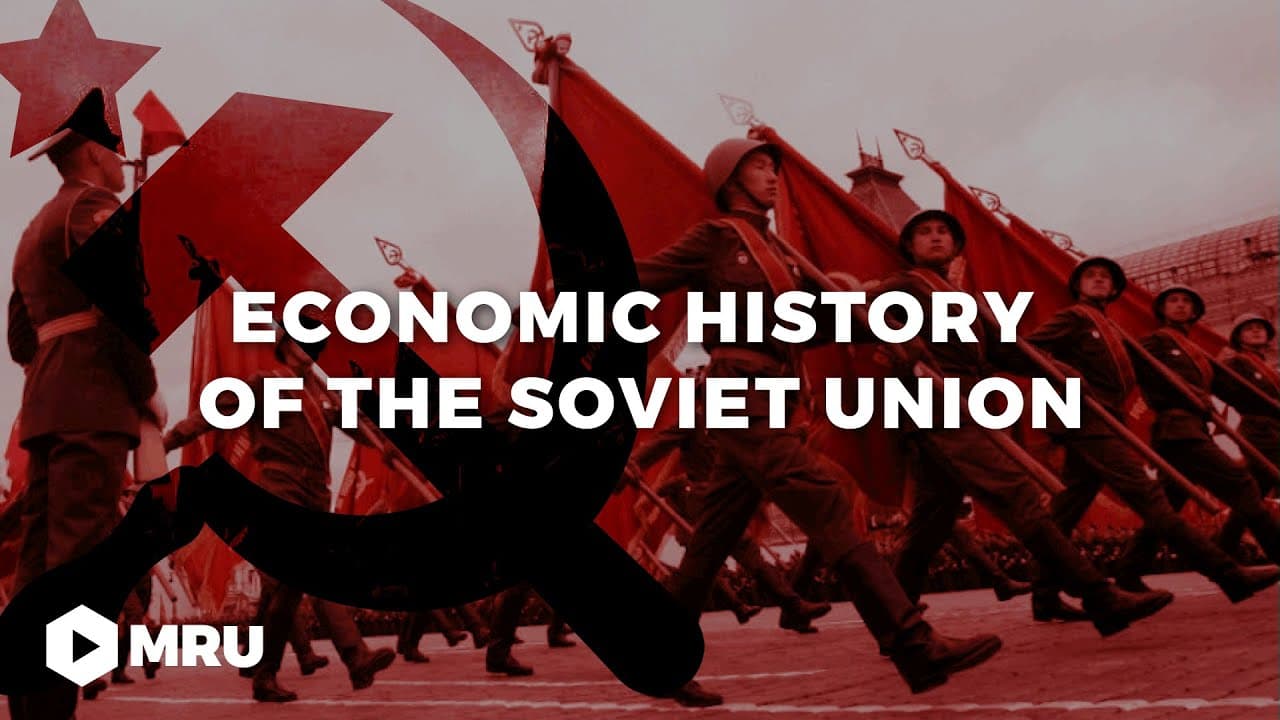
Examines Soviet Union's planning, reforms, and Marxist interpretations.
Transcript
So, how does one go about learning from the Soviet experiment with socialism? And what are some of the caveats and how should we learn from specific policies such as the 1965 reforms and how should we go about learning from planning overall? From one of the papers I just showed you, the recent paper by Karovich of 2001, he speaks about some of the ... Read More
Key Insights
- The Soviet Union's economic planning involved systematic rule-guided behavior, but arbitrary decisions by rulers played a significant role, as seen in the cancellation of projects post-Stalin.
- The 1965 reforms highlighted the tension between self-seeking behaviors and the imposed rules, showing the complexities of planned economies.
- Debate exists on whether the Soviet Union's system degenerated from Marxist ideals to arbitrary rule under Stalin, questioning the inevitability of such a progression.
- Different stages in Soviet history, like war communism and NEP, challenge the notion of a singular Marxist approach, suggesting potential for varied outcomes.
- Hayek's argument about power struggles suggests Stalin's rise was inevitable, highlighting the role of individual personalities in shaping state policies.
- The balance between economic priorities, such as military versus consumer production, and rights like free speech, were critical in Soviet planning.
- The role of state-controlled media in potentially becoming a state voice box raises questions about the feasibility of free speech under state ownership.
- Studying the Soviet Union provides insights into whether Marxism could lead to different, potentially more democratic outcomes in modern developed economies.
Install to Summarize YouTube Videos and Get Transcripts
Explore YouTube Video Summarizer or Get YouTube Transcript Extractor
Questions & Answers
Q: What role did arbitrary decisions play in Soviet economic planning?
Arbitrary decisions played a significant role in Soviet economic planning, often overriding systematic rule-guided procedures. An example is the cancellation of construction projects after Stalin's death, highlighting how personal preferences of rulers could drastically alter economic directions, emphasizing the impact of individual authority in planned economies.
Q: How did the 1965 reforms impact Soviet economic planning?
The 1965 reforms in the Soviet Union highlighted the tension between self-seeking behaviors and imposed rules. These reforms aimed to address inefficiencies by refining planning procedures, pricing formulas, and bonus schemes, but also underscored the challenges of aligning individual motivations with state objectives, illustrating the complexities inherent in planned economies.
Q: Was the degeneration of the Soviet system from Marxist ideals inevitable?
The degeneration of the Soviet system from Marxist ideals is debated. Some argue it was inevitable due to the concentration of power, while others believe different stages, like war communism and NEP, indicate potential for varied outcomes. This debate questions whether a singular Marxist approach existed or if alternative democratic outcomes were possible.
Q: What does Hayek's argument suggest about Stalin's rise to power?
Hayek's argument suggests Stalin's rise to power was inevitable due to the nature of power struggles, where the most ruthless individuals prevail. This perspective highlights the influence of individual personalities in shaping state policies and the potential for such dynamics to lead to authoritarian rule, as seen in Stalin's Soviet Union.
Q: How did economic priorities influence Soviet planning?
Economic priorities, such as choosing between military and consumer production, significantly influenced Soviet planning. These priorities determined resource allocation and reflected broader state objectives. Balancing these priorities with rights like free speech was crucial, as it impacted both economic outcomes and the extent of state control over societal aspects.
Q: What challenges did state-controlled media present in the Soviet Union?
State-controlled media in the Soviet Union presented challenges by potentially becoming a voice box for the state, limiting free speech. This raised questions about the feasibility of maintaining free speech under state ownership and whether a worker state could balance media control with democratic principles, highlighting tensions between state control and individual rights.
Q: What insights can be gained from studying the Soviet Union's economic history?
Studying the Soviet Union's economic history provides insights into the complexities of planned economies, the role of individual authority, and the balance between economic priorities and rights. It also offers perspectives on whether Marxism could lead to different, potentially more democratic outcomes in modern developed economies, challenging assumptions about its implementation.
Q: Could Marxism lead to democratic outcomes in modern economies?
The potential for Marxism to lead to democratic outcomes in modern economies is debated. While the Soviet experience suggests challenges, the varied stages in its history imply that different, potentially more democratic outcomes could be possible if implemented in more developed contexts, questioning assumptions about Marxism's inherent authoritarian tendencies.
Summary & Key Takeaways
-
The Soviet Union's economic planning involved both systematic rule-guided behavior and arbitrary decisions by powerful rulers, impacting the overall outcomes. The 1965 reforms highlighted the complexities of navigating self-seeking behaviors within imposed rules, revealing the nuanced nature of planned economies.
-
Debates surround the Soviet Union's deviation from Marxist ideals, particularly under Stalin. This raises questions about whether such a progression was inevitable and challenges the notion of a singular Marxist approach, suggesting varied outcomes were possible.
-
The role of individual personalities, as seen in Stalin's rise, and the balance between economic priorities and rights like free speech, were critical in Soviet planning. Studying these dynamics provides insights into potential democratic outcomes of Marxism in modern economies.
Read in Other Languages (beta)
Share This Summary 📚
Summarize YouTube Videos and Get Video Transcripts with 1-Click
Try YouTube Summary with ChatGPT & Claude or YouTube Transcript Generator
Explore More Summaries from Marginal Revolution University 📚

Summarize YouTube Videos and Get Video Transcripts with 1-Click
Try YouTube Summary with ChatGPT & Claude or YouTube Transcript Generator