SpaceX International Space Station Pre Launch Science Tech Briefing from NASA's Kennedy Space Center

TL;DR
SpaceX is launching its seventh cargo mission to the International Space Station, carrying out various experiments including gene expression, studying meteors, growing plants, and testing implants for drug delivery.
Transcript
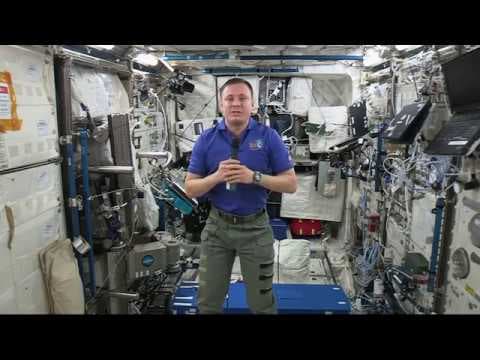
GOOD AFTERNOON. I'M JOHN YEMBRICK. WELCOME TO THE SCIENCE RESEARCH AND TECHNOLOGY BRIEFING FOR THE INTERNATIONAL SPACE STATION. WE'LL BE TALKING ABOUT SOME OF THE CARGO LAUNCHING TO THE INTERNATIONAL SPACE STATION ABOARD SpaceX RESUPPLY MISSION. THE LAUNCH IS SUNDAY AT 10:21 A.M. EASTERN TIME. AND WE BROADCAST LIVE ON NASA TELEVISION. FOR THOSE... Read More
Key Insights
- 🚀 The cargo mission will involve launching approximately 35 different experiments to the ISS, supporting over 250 active investigations.
- 😑 Research areas include gene expression, meteor composition analysis, plant growth in space, microbial tracking, commercial objectives, and earth benefits.
- 😑 The Wet Lab facility enables the study of gene expression, while the Meteor instrument will analyze the chemical composition of meteors.
- 🥬 The VEGGIE experiment aims to provide fresh leafy greens for the crew members, improving their nutrition.
- 💁 Yeast communication experiments can provide insights into the coordination of stem cells, which are important in understanding tumor formation.
- 😘 Investigations conducted on the ISS can have benefits for both space exploration and advancements in medical applications on Earth.
- 😷 Experiments on drug delivery systems have the potential for long-term medical applications, reducing the need for multiple injections or administration.
- 👾 There is ongoing research into understanding the effects of long-duration space missions on the human body, such as changes in ocular structure and vision issues.
- 👾 Prioritization of experiments is based on NASA's exploration goals, economic benefits back on Earth, and the need to be prepared for future deep space missions.
Install to Summarize YouTube Videos and Get Transcripts
Explore YouTube Video Summarizer or Get YouTube Transcript Extractor
Questions & Answers
Q: How many investigations are currently active on the ISS?
There are over 250 active investigations on the ISS.
Q: What is the purpose of the Wet Lab facility?
The Wet Lab facility enables the study of gene expression in organisms, providing insights into the effects of space flight on genes.
Q: How will the Meteor instrument be used to study meteors?
The Meteor instrument is specially designed to analyze the chemical composition of meteors by detecting specific wavelengths of light emitted by elements such as iron, calcium, magnesium, and sodium.
Q: What is the purpose of the VEGGIE experiment?
The VEGGIE experiment aims to grow plants on the ISS, starting with lettuce and now cabbage, to provide fresh leafy greens for the crew members, improving their nutrition and mental health.
Q: How does microbial tracking help design safer environments for the crew members?
Microbial tracking investigates the different ways bacteria contaminate closed environments, such as the surfaces where crew members eat. Understanding these patterns allows for the design of future studies to create safer environments for crew members.
Q: What does the yeast communication experiment aim to study?
The yeast communication experiment investigates how yeast cells communicate when forming a colony. This research provides insights into how stem cells might communicate with each other during the formation of tumors or other growths.
Q: What are some examples of experiments focused on commercial and earth benefit objectives?
One such experiment is the investigation of corella algae, examining changes in photosynthesis between space and Earth. Another experiment focuses on testing different materials for radiation shielding, potentially benefiting future space missions.
Q: How are experiments prioritized for the ISS?
Experiments are prioritized based on a variety of factors, including NASA's exploration objectives, economic benefits on Earth, and the need to be prepared for deep space missions. There is a backlog of experiments, and automated experiments are given priority over experiments requiring significant crew time.
Summary & Key Takeaways
-
Approximately 35 different experiments are being launched on SpaceX's seventh cargo mission, supporting over 250 already active investigations on the International Space Station (ISS).
-
Some notable experiments include studying gene expression using a new facility called the Wet Lab, analyzing the chemical composition of meteors with the Meteor instrument, and growing plants in space with the VEGGIE experiment.
-
Other experiments focus on understanding microbial tracking on surfaces, studying communication between yeast cells, and testing the effectiveness of shielding materials against radiation.
Read in Other Languages (beta)
Share This Summary 📚
Summarize YouTube Videos and Get Video Transcripts with 1-Click
Try YouTube Summary with ChatGPT & Claude or YouTube Transcript Generator
Explore More Summaries from NASA 📚

Summarize YouTube Videos and Get Video Transcripts with 1-Click
Try YouTube Summary with ChatGPT & Claude or YouTube Transcript Generator