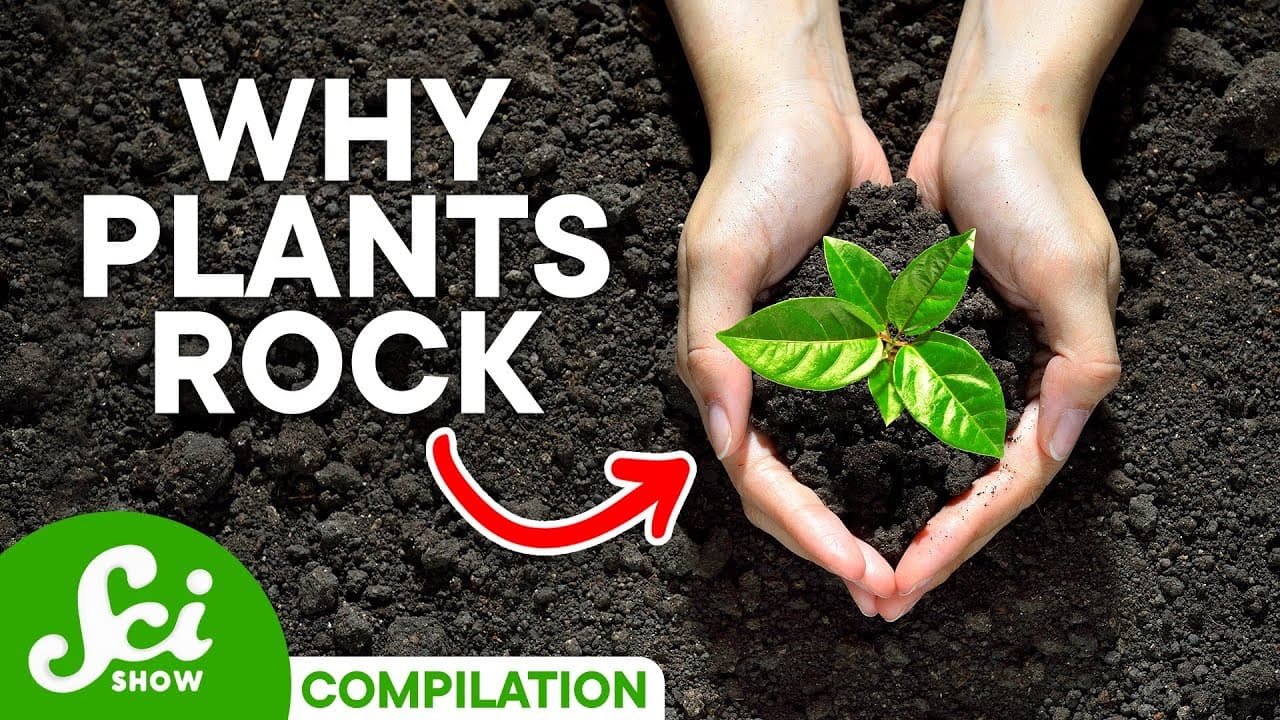
The Incredible World of Plants | SciShow Compilation
TL;DR
Plants have fascinating abilities, from being able to tell time to capturing and digesting insects. Some can even communicate with each other through underground networks.
Transcript
there's a good chance you know the cats and dogs on your block better than you know the trees and flowers and hey that makes sense no judgment here after all plants don't greet you on the sidewalk getting fights with raccoons or sneak up on you when you're walking home in the dark they keep a low profile but really plants are amazing they give us f... Read More
Key Insights
- 😟 Plants can exhibit movement and reactions without a brain, muscles, or nervous system.
- 🙂 Nastic movements, heliotropism, and other mechanisms allow plants to respond to temperature and light changes.
- 🙂 Phytochrome, a molecule that absorbs light, plays a role in nyctinasty, or the folding of leaves at night.
- 🤙 Plant communication occurs through an interconnected network of fungi called mycorrhizae.
- 🌱 Carnivorous plants have developed various trapping and digestion mechanisms to acquire nutrients from animal tissue.
- 👻 Counting in plants involves electrical signals called action potentials, allowing them to monitor and respond to stimulation.
- 🖐️ Plant communication and cooperation play a crucial role in forest ecology and can aid in conservation efforts.
Install to Summarize YouTube Videos and Get Transcripts
Explore YouTube Video Summarizer or Get YouTube Transcript Extractor
Questions & Answers
Q: How do plants know when to fold their leaves at night without a brain or muscles?
The process, called nyctinasty, involves chemical reactions triggered by temperature changes. A molecule called phytochrome plays a role, switching between two forms depending on light conditions, causing leaves to tuck in or open.
Q: How do plants count the number of times trigger hairs are bumped?
While plants don't have brains or conscious thought, they can generate and transmit electrical signals called action potentials. Each trigger hair bump generates an action potential, which determines when the Venus flytrap should close and secrete enzymes.
Q: How do plants communicate with each other?
Plants use a network of fungi called mycorrhizae to communicate. Fungi absorb nutrients from the soil and exchange them with plants for carbon in the form of sugars. Plants release chemicals through the fungi to warn nearby plants of potential threats.
Q: Can plants absorb nutrients from dead animals?
Yes, carnivorous plants have adaptations to capture and digest insects and even small mammals. They often grow in nutrient-poor environments like swamps, where they absorb nitrogen and other nutrients from animal tissue.
Summary & Key Takeaways
-
Plants can move and react to their surroundings without a brain or muscles.
-
Some plants, like the Venus flytrap, can count the number of times trigger hairs are bumped before closing and secreting enzymes to digest prey.
-
Plants have developed various mechanisms, such as nastic movements and heliotropism, to respond to temperature changes, light conditions, and maximize sunlight absorption.
-
Plants can communicate with each other through an interconnected network of fungi, sharing nutrients and warning neighboring plants of impending threats.
Read in Other Languages (beta)
Share This Summary 📚
Summarize YouTube Videos and Get Video Transcripts with 1-Click
Try YouTube Summary with ChatGPT & Claude or YouTube Transcript Generator
Explore More Summaries from SciShow 📚


Summarize YouTube Videos and Get Video Transcripts with 1-Click
Try YouTube Summary with ChatGPT & Claude or YouTube Transcript Generator