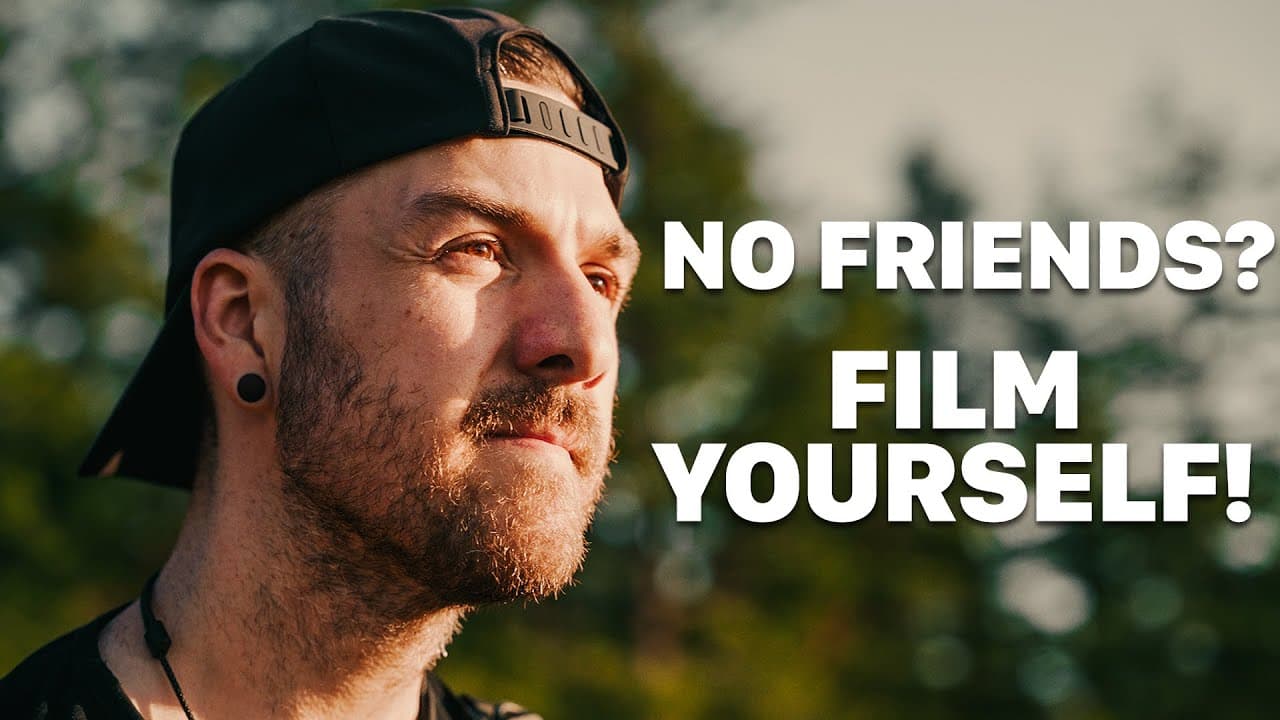
Tips For HOW TO FILM YOURSELF - Immediately Make Better Videos With Your Own Hands!
TL;DR
Learn valuable tips and advice for filming yourself solo, including knowing what you're shooting, understanding your limitations, bringing the right gear, getting balanced coverage, using manual focus and aperture, reviewing each shot, and being creative.
Transcript
so it seems like you've got no friends available to help you shoot that great idea that you had but instead of calling the whole thing off you've decided to just do it yourself you're going to be the director you're going to be the talent you're going to be the producer and of course you're going to be the person who gets the coffee but filming you... Read More
Key Insights
- 🧠 Knowing what you're shooting is crucial when filming solo, as your brain is occupied with multiple roles and responsibilities.
- ⛽ Accepting the limitations of solo filming can fuel creativity and innovative problem-solving.
- 🥺 Bringing the right gear for the job, considering factors like location, lighting, and camera movement requirements, leads to a smoother filming experience.
- 🏣 Reviewing each shot before moving on saves time in post-production and ensures you capture the desired footage.
- 🧑🦽 Utilizing manual focus and adjusting the aperture can improve focus control and depth of field in your shots.
- 🤝 Exploring creative techniques in post-production, such as adding fake camera movement and shake, can enhance the overall aesthetic of the footage and compensate for the absence of a crew.
- 🎥 Being mindful of shot balance and variety helps maintain audience engagement and adds visual interest to your solo-filmed content.
Install to Summarize YouTube Videos and Get Transcripts
Explore YouTube Video Summarizer or Get YouTube Transcript Extractor
Questions & Answers
Q: How should I plan my shots when filming myself solo?
Planning your shots depends on the project. For simple concepts, a basic idea of what you want to capture may suffice. However, for more complex projects, consider scripting, shot lists, or creating a checklist of important shots to ensure you don't miss anything crucial.
Q: What are the limitations of solo filming, and how can I overcome them?
Some limitations of solo filming include carrying all the gear by yourself, limited ability to incorporate movement within shots, and time constraints. To overcome these challenges, accept the limitations and let them spark your creativity. Optimize your gear to be lightweight, plan shots that require minimal movement, and be mindful of time limitations during the shoot.
Q: What gear should I bring for solo filming?
The gear you bring depends on the nature of your shoot and personal preference. Consider the location, lighting conditions, audio requirements, and the importance of camera movement. Bring essential items like a tripod, memory cards, batteries, lenses that cover a wide focal range, and additional gear such as lighting, a monitor, a gimbal, or a motorized slider if necessary.
Q: How can I ensure balanced coverage in my shots when filming solo?
Achieving balanced coverage involves capturing a variety of wide shots, mediums, and close-ups. Also, balance shots of the main subject with shots of the surroundings or b-roll. This variety prevents shots from feeling repetitive and keeps the audience engaged.
Key Insights:
- Knowing what you're shooting is crucial when filming solo, as your brain is occupied with multiple roles and responsibilities.
- Accepting the limitations of solo filming can fuel creativity and innovative problem-solving.
- Bringing the right gear for the job, considering factors like location, lighting, and camera movement requirements, leads to a smoother filming experience.
- Reviewing each shot before moving on saves time in post-production and ensures you capture the desired footage.
- Utilizing manual focus and adjusting the aperture can improve focus control and depth of field in your shots.
- Exploring creative techniques in post-production, such as adding fake camera movement and shake, can enhance the overall aesthetic of the footage and compensate for the absence of a crew.
- Being mindful of shot balance and variety helps maintain audience engagement and adds visual interest to your solo-filmed content.
- Creativity is essential when filming solo to ensure the final result is on par with films created with a crew, as the audience's judgment is based solely on the quality of the content.
Summary & Key Takeaways
-
Filming yourself requires careful planning and consideration of various factors, such as knowing what you're shooting, whether it's a simple concept or a detailed script or shot list.
-
Understand and accept the limitations of solo filming, which include carrying all the gear yourself, limited movement within shots, and time constraints.
-
Choose the right gear for the job, considering factors like location, lighting, audio needs, and the importance of camera movement.
-
Aim for balanced coverage by capturing a variety of wide shots, mediums, and close-ups, as well as shots of the main subject and the surroundings or b-roll.
-
Utilize manual focus to have more control over what the camera focuses on, creating visually pleasing shots where the subject moves in and out of focus.
-
Consider using a slightly higher aperture to increase depth of field and ensure more of the frame is in focus, especially helpful when nailing focus is challenging.
-
Always review each shot before moving on, ensuring settings are correct and the shot came out as expected to avoid headaches in post-production.
-
Explore creative techniques in post-production, such as adding fake camera movement and shake, to enhance the overall aesthetic of the footage.
Read in Other Languages (beta)
Share This Summary 📚
Summarize YouTube Videos and Get Video Transcripts with 1-Click
Try YouTube Summary with ChatGPT & Claude or YouTube Transcript Generator
Explore More Summaries from Dunna Did It 📚
Summarize YouTube Videos and Get Video Transcripts with 1-Click
Try YouTube Summary with ChatGPT & Claude or YouTube Transcript Generator