Why Do Quality Frauds Occur in Manufacturing?
TL;DR
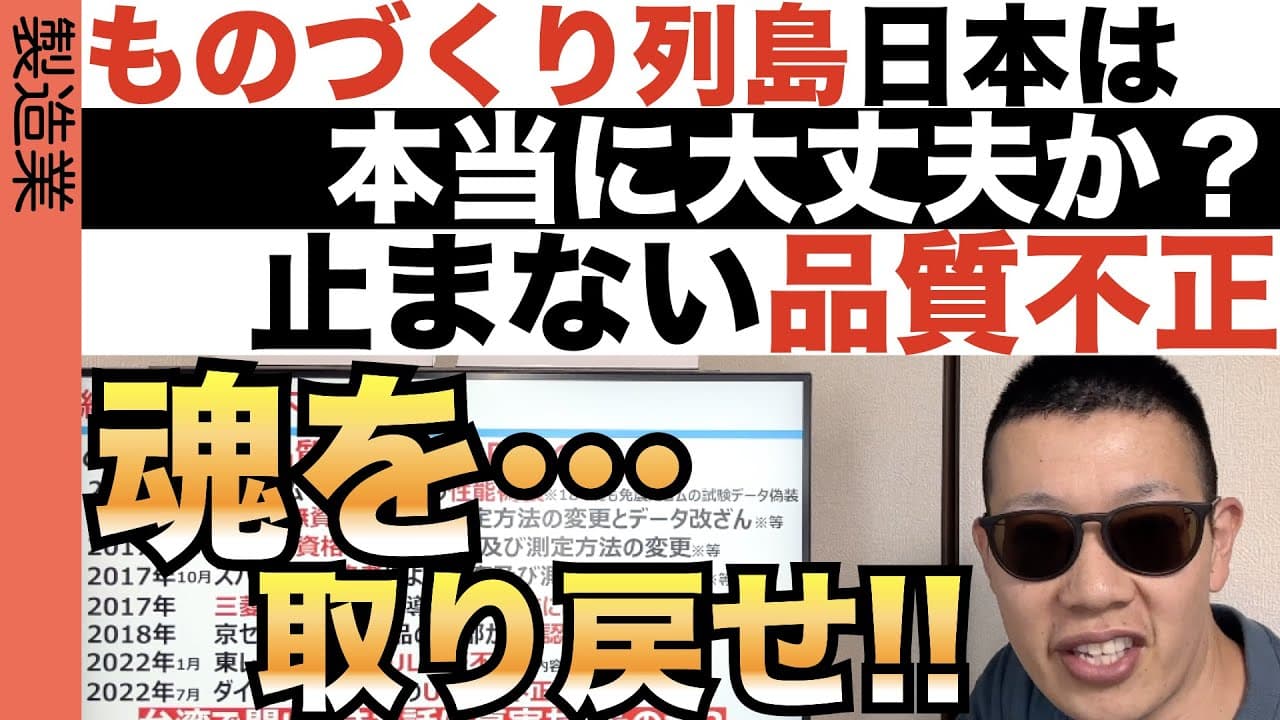
Quality frauds in manufacturing, especially in Japan, occur due to a complex interplay of factors such as departmental disparities, cost-cutting pressures, and management issues. These frauds have significant impacts on supply chains and can result in severe financial and reputational damage for companies involved.
Transcript
Hello. I'm Manufacturing man from Manufacturing man Channel . Today I will talk about quality fraud. This story is not flashy. When I was making this story, I thought, "This story is very interesting. I'm a genius." I think this story will be interesting. Why Do Quality Frauds Happen? And then there is the subtitle. I would like you to watch this v... Read More
Key Insights
- Quality fraud in manufacturing is often driven by departmental disparities and cost pressures.
- Japan, once renowned for its quality assurance, faces frequent quality fraud incidents.
- Major companies like Mitsubishi Electric and Hino Motors have been involved in significant fraud cases.
- Fraud impacts supply chains heavily, affecting production and financial stability.
- The Triangle of Fraud—opportunity, motivation, and justification—explains why fraud occurs.
- Management pressure and performance-linked pay can incentivize fraudulent behavior.
- Reforming corporate culture and management practices is essential to prevent fraud.
- Public and media scrutiny play roles in uncovering and addressing fraudulent practices.
Install to Summarize YouTube Videos and Get Transcripts
Explore YouTube Video Summarizer or Get YouTube Transcript Extractor
Questions & Answers
Q: Why do quality frauds occur in manufacturing?
Quality frauds in manufacturing occur due to a combination of factors including departmental disparities, cost-cutting pressures, and management issues. The Triangle of Fraud—opportunity, motivation, and justification—explains how these elements create an environment conducive to fraudulent behavior. Additionally, management pressures and performance-linked pay can incentivize employees to engage in fraud to meet targets and improve financial performance.
Q: What impact does quality fraud have on supply chains?
Quality fraud significantly impacts supply chains by disrupting production processes and causing financial instability. When fraud is detected, it often leads to halted production, loss of certifications, and recalls, which can severely affect the company's supply chain partners. These disruptions can lead to a ripple effect, causing financial losses not only for the company involved but also for its suppliers and distributors.
Q: How does the Triangle of Fraud explain quality fraud?
The Triangle of Fraud consists of three elements: opportunity, motivation, and justification. Opportunity arises when there are weak controls or oversight, allowing fraudulent actions to occur. Motivation is driven by pressures to meet financial targets or production goals. Justification occurs when individuals rationalize their fraudulent actions as necessary or beneficial for the company, often due to perceived unfair treatment or expectations.
Q: What role does management pressure play in quality fraud?
Management pressure plays a significant role in quality fraud by creating an environment where employees feel compelled to meet unrealistic targets or deadlines. This pressure can lead to cutting corners or falsifying data to achieve desired outcomes. Additionally, performance-linked pay and bonuses can further incentivize employees to engage in fraudulent behavior to secure financial rewards.
Q: How can corporate culture reforms prevent quality fraud?
Corporate culture reforms can prevent quality fraud by promoting transparency, accountability, and ethical behavior. Establishing clear guidelines, encouraging open communication, and implementing robust oversight mechanisms can reduce opportunities for fraud. Additionally, fostering a culture that values integrity and ethical conduct over short-term gains can help align employee behavior with the company's long-term goals and ethical standards.
Q: What are some examples of companies involved in quality fraud?
Examples of companies involved in quality fraud include Mitsubishi Electric, Hino Motors, and Suzuki. These companies have been implicated in scandals involving falsified data, improper testing methods, and violations of certification standards. Such incidents have resulted in significant financial losses, reputational damage, and disruptions to their supply chains.
Q: How does public scrutiny help address quality fraud?
Public scrutiny helps address quality fraud by bringing attention to unethical practices and holding companies accountable for their actions. Media coverage and public awareness can pressure companies to investigate and rectify fraudulent activities. This scrutiny also encourages transparency and accountability, prompting companies to implement reforms and improve their quality control processes to regain public trust.
Q: Why is the manufacturing industry particularly vulnerable to quality fraud?
The manufacturing industry is particularly vulnerable to quality fraud due to its complex supply chains, high production targets, and cost-cutting pressures. These factors create an environment where cutting corners or falsifying data can seem like viable options to meet demands. Additionally, disparities between departments and management pressures can exacerbate the risk of fraud, making it crucial for companies to implement strong oversight and ethical practices.
Summary & Key Takeaways
-
Quality frauds in Japan's manufacturing sector are prevalent due to complex factors like departmental disparities and cost pressures. Major companies such as Mitsubishi Electric and Hino Motors have been involved in these scandals, leading to severe impacts on supply chains and financial losses. The Triangle of Fraud—opportunity, motivation, and justification—explains why such frauds occur, and reforming corporate culture is essential to prevent them.
-
The video highlights the significant financial and reputational damage caused by quality frauds in the manufacturing industry. It discusses how management pressures and performance-linked pay can incentivize fraudulent actions. The video also stresses the importance of public and media scrutiny in uncovering these fraudulent practices and calls for corporate culture reforms to address the root causes.
-
Through examples from companies like Hino Motors and Mitsubishi Electric, the video illustrates the widespread issue of quality fraud in Japan's manufacturing industry. It emphasizes the need for structural reforms and a shift in management practices to foster transparency and prevent fraud, ultimately aiming for long-term company strength and ethical business conduct.
Read in Other Languages (beta)
Share This Summary 📚
Summarize YouTube Videos and Get Video Transcripts with 1-Click
Try YouTube Summary with ChatGPT & Claude or YouTube Transcript Generator
Explore More Summaries from ものづくり太郎チャンネル 📚

Summarize YouTube Videos and Get Video Transcripts with 1-Click
Try YouTube Summary with ChatGPT & Claude or YouTube Transcript Generator