F1 Aerodynamics - 1: The Basics
TL;DR
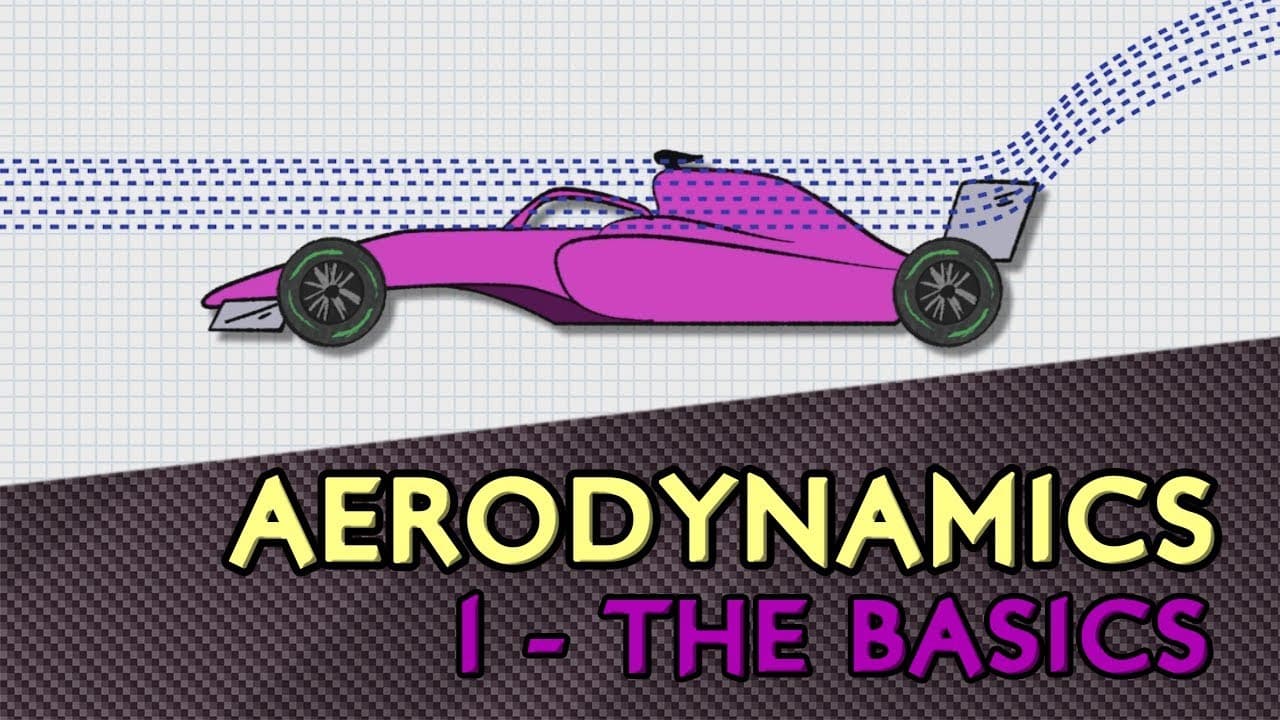
This video provides an introduction to the fundamentals of aerodynamics, including an explanation of air pressure, airflow, and Newton’s third law of motion.
Transcript
I'm gonna cover aerodynamics over a series of videos I think it's best to get a real understanding of the fundamentals before getting our teeth into aerodynamic effects and tricks so in this video that's what we're going to do we're going to look at the building blocks of aerodynamics a lot of it will at first seem removed from directly what you he... Read More
Key Insights
- 🇲🇻 Understanding the fundamentals of aerodynamics is crucial before diving into advanced topics.
- 👱 Air pressure is determined by the number of air molecules, the volume of air, and the temperature.
- 😘 Airflow can be controlled by creating differences in pressure, such as using a wing profile to generate downforce.
- 👾 The venturi effect explains how air flows faster through narrower spaces.
- 🫷 Newton's third law of motion applies to aerodynamics, with the air pushing back on objects based on the forces applied to it.
- 👱 Manipulating air movement is essential in aerodynamics, whether it's forcing air upwards to create downforce or controlling airflow for efficiency.
- 😘 Wing profiles shape the airflow, with the air moving faster underneath the wing, resulting in lower pressure and downforce.
Install to Summarize YouTube Videos and Get Transcripts
Explore YouTube Video Summarizer or Get YouTube Transcript Extractor
Questions & Answers
Q: What is air pressure and how does it affect the inflation of a balloon?
Air pressure refers to the busyness of air molecules in a specific volume of air. When the particles inside a balloon collide with its skin, they create a force that inflates and holds the balloon. The number of molecules, the volume of air, and the temperature all contribute to the level of pressure.
Q: How does air flow from high pressure areas to low pressure areas?
Air flows from high pressure to low pressure areas through a space or a hole. This principle, described as the venturi effect, states that the smaller the space, the faster the air flows. For example, squeezing the end of a hose increases the speed of water flow.
Q: What is Newton's third law of motion and how does it apply to aerodynamics?
Newton's third law of motion states that every action has an equal and opposite reaction. In the context of aerodynamics, when a wing forces air upwards, the air reacts by pushing the wing downwards. This downward force is known as downforce and is essential for generating stability and traction in racing cars.
Q: How do wing profiles shape and control air movement?
Wing profiles are shaped to manipulate the airflow over and under the wing. At high speeds, the air hits the wing and splits into two paths: over the wing and under the wing. The air under the wing accelerates and follows the curve of the wing, creating a lower pressure area. This pressure difference results in a downward force, known as downforce.
Key Insights:
- Understanding the fundamentals of aerodynamics is crucial before diving into advanced topics.
- Air pressure is determined by the number of air molecules, the volume of air, and the temperature.
- Airflow can be controlled by creating differences in pressure, such as using a wing profile to generate downforce.
- The venturi effect explains how air flows faster through narrower spaces.
- Newton's third law of motion applies to aerodynamics, with the air pushing back on objects based on the forces applied to it.
- Manipulating air movement is essential in aerodynamics, whether it's forcing air upwards to create downforce or controlling airflow for efficiency.
- Wing profiles shape the airflow, with the air moving faster underneath the wing, resulting in lower pressure and downforce.
- This video serves as an introduction to aerodynamics, with further discussions on topics such as stall, drag, turbulence, and vortices to come in future parts.
Summary & Key Takeaways
-
The video discusses the building blocks of aerodynamics, emphasizing the importance of understanding the fundamentals before diving into aerodynamic effects and tricks.
-
The content covers topics such as air pressure, how it moves around, how it creates forces, and the relationship between air molecules and pressure.
-
The video also touches upon the principles of airflow, the venturi effect, and how differences in pressure can be used to manipulate air movement.
Read in Other Languages (beta)
Share This Summary 📚
Summarize YouTube Videos and Get Video Transcripts with 1-Click
Try YouTube Summary with ChatGPT & Claude or YouTube Transcript Generator