The Real Reason Peppers are Spicy
TL;DR
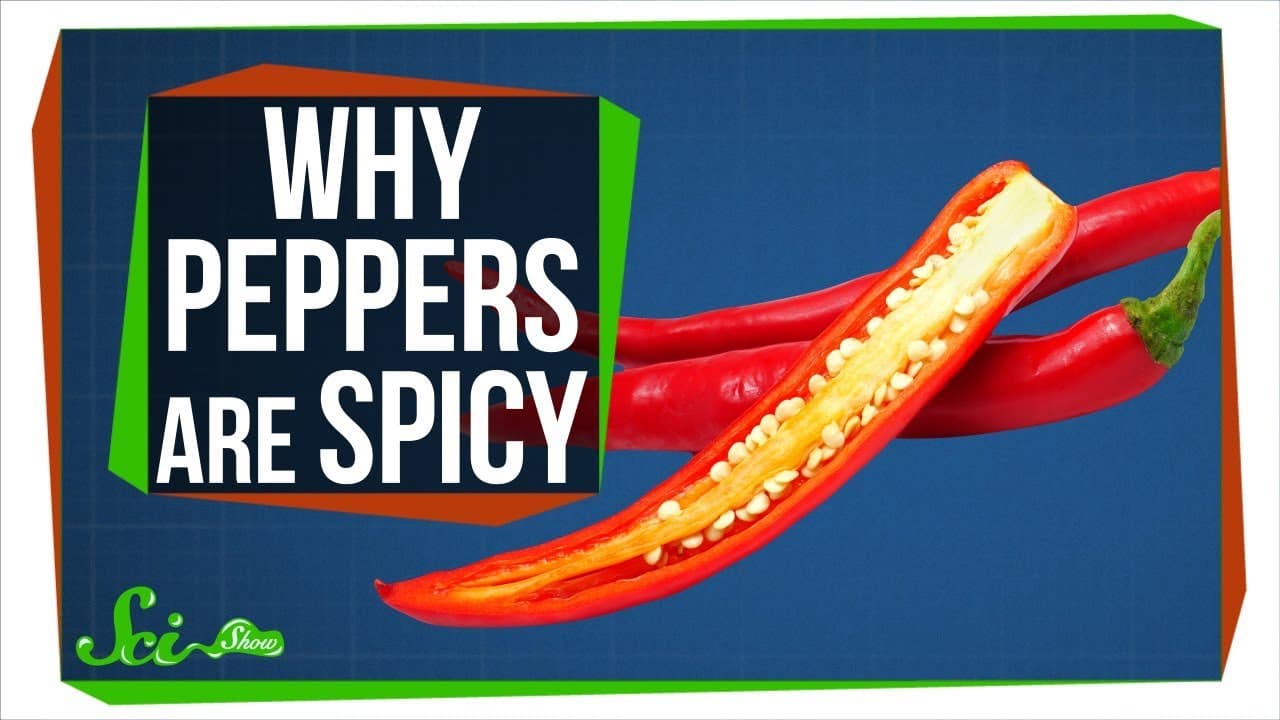
Peppers are spicy not to deter mammals like us, but primarily to defend against insects and mold.
Transcript
If you’ve ever taken a bite out of a habanero, you might think the purpose of its spiciness is obvious. Eating it hurts. A lot. So for a plant, spice is a great way to tell us to not eat that. At first, that’s what scientists thought, too: that pepper plants evolved spiciness to deter mammals like us from eating their fruits. Joke’s on them! But ca... Read More
Key Insights
- 😅 Spiciness in peppers primarily evolved to defend against insects and mold, not to deter mammals from eating them.
- 🥵 Birds' heat-sensing nerves are not sensitive to capsaicin, making them ideal seed dispersers for peppers.
- 🎯 Mammals, including humans, have developed a tolerance for spiciness but are not the primary targets of the deterrent.
- 🌱 Wild pepper plants show natural variation in spiciness, with mammalian plant-eaters not significantly influencing pepper spiciness.
- 💗 Spicier peppers tend to grow in areas with more rainfall and have been associated with fungal damage.
- ✋ Capsaicin effectively stops the growth of fungus and deters insects.
- 🌶️ Peppers become spicier as they ripen to defend against potential fungal attacks.
- 🍄 The increase in spiciness over time is a defense mechanism against insects and the fungi they facilitate.
Install to Summarize YouTube Videos and Get Transcripts
Explore YouTube Video Summarizer or Get YouTube Transcript Extractor
Questions & Answers
Q: Why are peppers spicy?
Peppers are spicy because of a compound called capsaicin, which binds with heat-sensing receptors on nerves, creating a burning sensation.
Q: Do mammals like eating spicy peppers?
Generally, mammals, including humans, do not like the pain associated with eating spicy peppers. However, some animals, such as rats, can develop a preference for spiciness.
Q: Are peppers evolved to deter mammals from eating them?
While it was initially believed that spiciness in peppers evolved as a deterrent against mammals, current research suggests that it primarily serves as a defense against insects and mold.
Q: What is the relationship between spiciness and pepper seed viability?
Mammalian guts often reduce the viability of pepper seeds, while bird guts do not. Therefore, pepper plants prefer their fruits to be eaten by birds rather than mammals.
Summary & Key Takeaways
-
Spiciness in peppers is not primarily meant to deter mammals from eating them, but rather to defend against insects and mold.
-
Capsaicin, the compound responsible for the spiciness in peppers, binds with heat-sensing receptors on nerves, creating a burning sensation.
-
While some mammals, including humans, can develop a tolerance for spiciness, peppers are primarily evolved to deter insects and fungal attacks.
Read in Other Languages (beta)
Share This Summary 📚
Summarize YouTube Videos and Get Video Transcripts with 1-Click
Try YouTube Summary with ChatGPT & Claude or YouTube Transcript Generator
Explore More Summaries from SciShow 📚


Summarize YouTube Videos and Get Video Transcripts with 1-Click
Try YouTube Summary with ChatGPT & Claude or YouTube Transcript Generator