How to achieve peace in Israel and Palestine | Jared Kushner and Lex Fridman
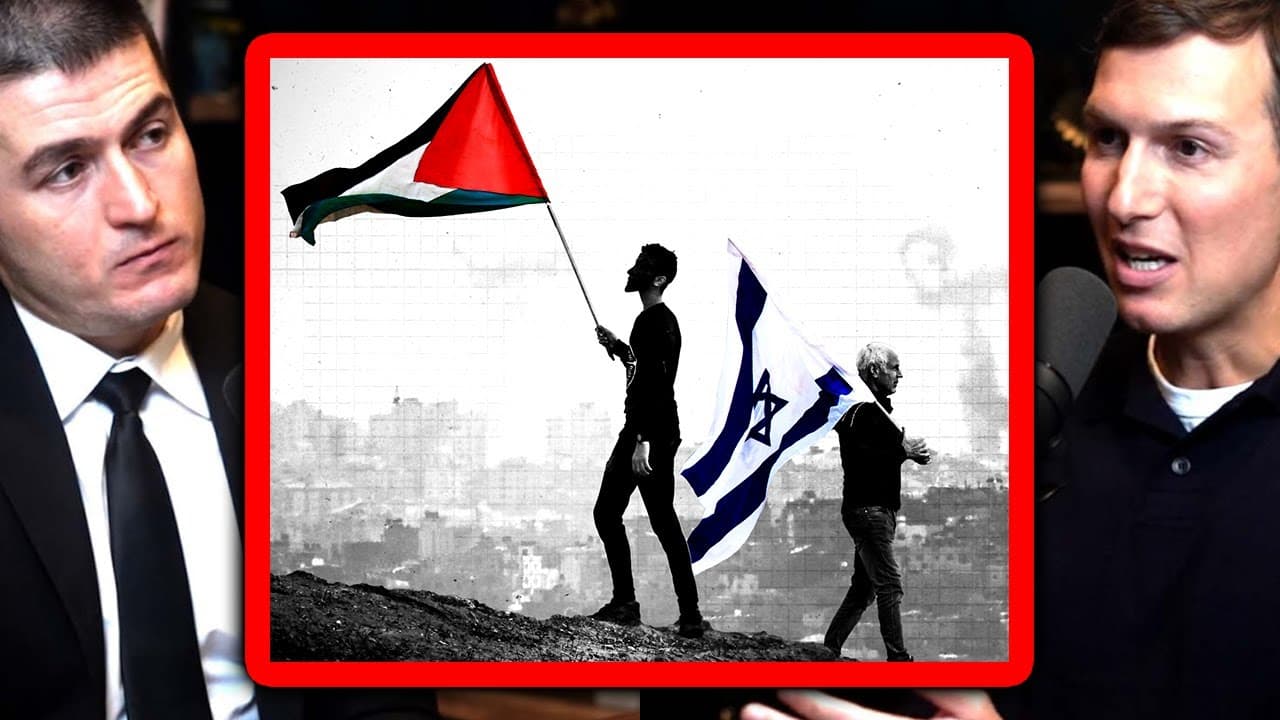
TL;DR
Achieving peace in the Middle East, specifically between Israel and Palestine, has been challenging due to structural issues, corrupt leadership, and a lack of incentive for resolution.
Transcript
if we can go back to the incredible work with Abraham Accords and U Israel in the Middle East first the big question about peace why is it so difficult to achieve peace in this part of the world between Israel and Palestine and between Israel and the other countries in the Middle East or any sort of peace likee agreements if I had to give you the m... Read More
Key Insights
- ✌️ The flawed incentive structure and corrupt leadership have hindered peace negotiations between Israel and Palestine.
- 🇵🇸 Separating the Palestinian-Israeli conflict from the broader Muslim-Israeli conflict is crucial for finding a resolution.
- 🔐 Addressing territorial contiguity, security concerns, and religious site disputes are key components of a potential peace plan.
- 🦻 Transparency and conditions-based aid can ensure that funds reach the Palestinian people and promote economic development.
- ✌️ Normalization of relationships across the Arab world can contribute to peace and economic growth in the region.
- 🆘 Focusing on a future-oriented paradigm and creating opportunities can help overcome entrenched emotions and animosities.
Install to Summarize YouTube Videos and Get Transcripts
Explore YouTube Video Summarizer or Get YouTube Transcript Extractor
Questions & Answers
Q: Why is it challenging to achieve peace in the Middle East, particularly between Israel and Palestine?
Achieving peace in the Middle East is difficult due to structural issues, corrupt leadership, and a flawed incentive structure that rewards failure in negotiations. This has perpetuated the conflict and hindered progress.
Q: What different approach did the author take in proposing a peace plan?
The author focused on pragmatism and practical solutions, separating the Palestinian-Israeli conflict from the broader Muslim-Israeli conflict. They addressed territorial contiguity, security concerns, and religious sites, aiming to provide a fair resolution for both parties.
Q: How can money flow past the leadership ranks in Palestine?
The author suggests making aid conditions-based, promoting transparency, and utilizing institutions other than the Palestinian Authority to ensure that funds reach the people. Reforming the aid system can counter corruption and empower the Palestinian population.
Q: What is the role of normalization of relationships across the Arab world in achieving peace?
The normalization of relationships across the Arab world can create economic opportunities and promote tourism, benefiting the West Bank and Palestine. It can also help reduce hatred and emotion by focusing on a future-oriented paradigm rather than dwelling on the past.
Summary & Key Takeaways
-
Peace negotiations between Israel and Palestine have been hindered by a flawed incentive structure and corrupt leadership, with negotiations resulting in more Israeli settlements and increased funds for Palestinians without benefiting the people.
-
The author proposes a different approach to peace negotiations, focusing on pragmatic solutions instead of historical animosities. This includes addressing territorial contiguity, ensuring security for both Israel and Palestine, and finding a resolution for religious sites.
-
The author highlights the importance of separating the Palestinian-Israeli conflict from the broader Muslim-Israeli conflict and calls for transparency and conditions-based aid to address the shortcomings of Palestinian leadership.
Read in Other Languages (beta)
Share This Summary 📚
Summarize YouTube Videos and Get Video Transcripts with 1-Click
Try YouTube Summary with ChatGPT & Claude or YouTube Transcript Generator
Explore More Summaries from Lex Clips 📚




Summarize YouTube Videos and Get Video Transcripts with 1-Click
Try YouTube Summary with ChatGPT & Claude or YouTube Transcript Generator