NASA Celebrates MESSENGER Mission Prior to Surface Impact on Planet Mercury

TL;DR
NASA celebrates the successful Messenger Mission to Mercury, sharing outstanding science findings and engineering achievements, as well as plans for future data analysis.
Transcript
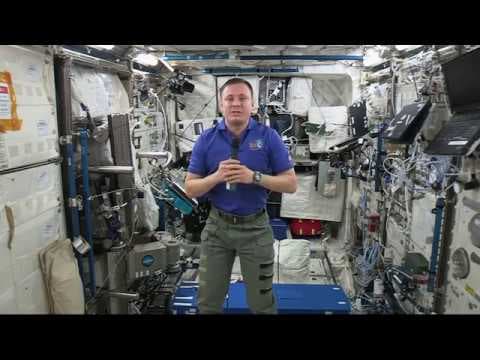
good afternoon welcome to NASA headquarters in Washington DC my name is Dwayne Brown with the office of communications today we celebrate we celebrate one of NASA's most successful science projects NASA's messenger mission to the planet Mercury you will hear some of the outstanding and unprecedented science findings in addition to the engineering a... Read More
Key Insights
- 🎟️ Messenger's successful mission to Mercury showcased innovative technologies and engineering solutions that enabled the spacecraft to survive in the hostile environment.
- 🎟️ The top 10 science results from the mission include discoveries about field-aligned currents, energetic electrons, Mercury's magnetosphere, volcanic deposits, and more.
- 🙂 Messenger's observations of Mercury's volatile-rich bulk composition challenge previous theories and shed light on the planet's origin and evolution.
- 🤗 The discovery of water ice and organic carbonaceous material in the polar deposits of Mercury opens up new possibilities for understanding planetary formation and the delivery of volatile elements.
- 🪐 Future missions to Mercury, such as BepiColombo, will focus on studying the planet's craters, composition, and surface processes in more detail.
Install to Summarize YouTube Videos and Get Transcripts
Explore YouTube Video Summarizer or Get YouTube Transcript Extractor
Questions & Answers
Q: What are field aligned currents, and why are their observations on Mercury surprising?
Field-aligned currents are electrical currents flowing down magnetic field lines. Their presence at Mercury was unexpected, as they were previously only observed at Earth. These currents at Mercury are much weaker than those at Earth but provide insight into the planet's magnetosphere and interior.
Q: How did Messenger measure bursts of energetic electrons on Mercury, and what is currently being studied about these bursts?
Messenger carried a payload to measure bursts of energetic electrons with energies of up to thousands of electron volts. These bursts are seen almost every orbit and are still being studied to understand the mechanisms behind their acceleration to such high energies.
Q: What are some interesting features of Mercury's dynamic magnetosphere?
Mercury's magnetosphere is small and has a magnetic field similar to Earth's. It exhibits rapid and dynamic phenomena, with charge particles being carried through the magnetosphere and down the tail region away from the Sun. The time scale for these phenomena is much faster than on Earth.
Q: What have Messenger's observations revealed about the presence of water ice on Mercury?
Messenger confirmed the presence of water ice at Mercury's poles, which was first detected by Earth-based radar. The observations also revealed the presence of a dark layer covering the ice and the existence of a glowing tail-like structure extending from the planet due to radiation pressure.
Summary & Key Takeaways
-
NASA celebrates the Messenger Mission to Mercury, highlighting its engineering accomplishments and scientific discoveries.
-
The Messenger Mission successfully gathered an unprecedented amount of data during its four years in orbit around Mercury.
-
The top 10 science results from the mission include findings on field aligned currents, energetic electrons, the magnetosphere, volcanic deposits, and more.
Read in Other Languages (beta)
Share This Summary 📚
Summarize YouTube Videos and Get Video Transcripts with 1-Click
Try YouTube Summary with ChatGPT & Claude or YouTube Transcript Generator
Explore More Summaries from NASA 📚

Summarize YouTube Videos and Get Video Transcripts with 1-Click
Try YouTube Summary with ChatGPT & Claude or YouTube Transcript Generator