The Unreasonable Effectiveness of Mathematics
TL;DR
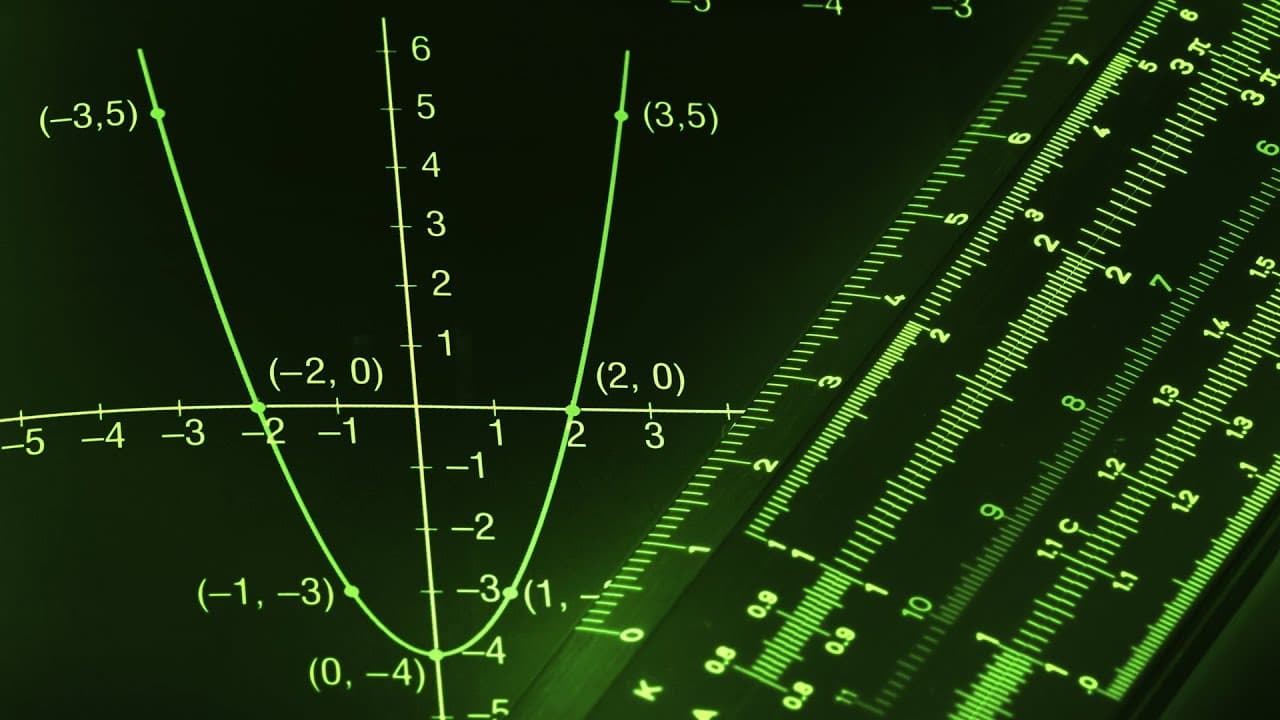
Mathematics has an astonishing ability to accurately explain the physical world, from celestial observations to quantum electrodynamics.
Transcript
one thing I I always feel ignorant about I must say or or find difficult is um what's called the unreasonable effectiveness of mathematics in explaining the world I never quite know why that should be the case can somebody help me sure yeah so uh the phrase by the way was coined by uh Nobel or Eugene vigner the unreasonable effectiveness of mathema... Read More
Key Insights
- ❓ Mathematics has an astonishing ability to accurately describe and predict physical phenomena, even with imprecise observations.
- 🏑 Fields like quantum electrodynamics demonstrate the unrivaled precision that mathematics offers in explaining the behavior of subatomic particles.
- 🈸 The development of theoretical branches of mathematics often finds applications in scientific theories many years later.
Install to Summarize YouTube Videos and Get Transcripts
Explore YouTube Video Summarizer or Get YouTube Transcript Extractor
Questions & Answers
Q: Explain what is meant by the "unreasonable effectiveness of mathematics in the physical sciences."
The unreasonable effectiveness of mathematics refers to the phenomenon where mathematical laws and principles have exceptional predictive power and accuracy in explaining the physical world.
Q: How was Sir Isaac Newton able to develop a highly accurate mathematical law of gravity based on Johannes Kepler's imprecise observations?
Despite the imprecision of Kepler's observations, Newton's mathematical genius allowed him to deduce a universal law of gravity that produced results accurate to better than one part in a million.
Q: What is quantum electrodynamics, and how does it demonstrate the power of mathematics?
Quantum electrodynamics is a highly mathematical theory that explains the behavior of electrons and their magnetic properties. It can calculate the strength of electron magnets to parts per trillion, and experimental results have consistently matched these calculations.
Q: Why does mathematics often develop branches that seem unrelated to real-world applications?
Mathematicians sometimes develop branches of mathematics purely for intellectual curiosity and without immediate real-world applications in mind. However, in the future, these branches can unexpectedly prove to be crucial in understanding and explaining scientific theories.
Summary & Key Takeaways
-
Astronomer Johannes Kepler's imprecise observations led Sir Isaac Newton to develop a highly accurate mathematical law of gravity.
-
Quantum electrodynamics, a highly mathematical theory, can calculate the strength of electron magnets to an astonishing precision of parts per trillion.
-
Mathematics often develops theoretical branches with no immediate application, only to be found useful in future scientific theories like Einstein's general relativity.
Read in Other Languages (beta)
Share This Summary 📚
Summarize YouTube Videos and Get Video Transcripts with 1-Click
Try YouTube Summary with ChatGPT & Claude or YouTube Transcript Generator
Explore More Summaries from World Science Festival 📚



Summarize YouTube Videos and Get Video Transcripts with 1-Click
Try YouTube Summary with ChatGPT & Claude or YouTube Transcript Generator