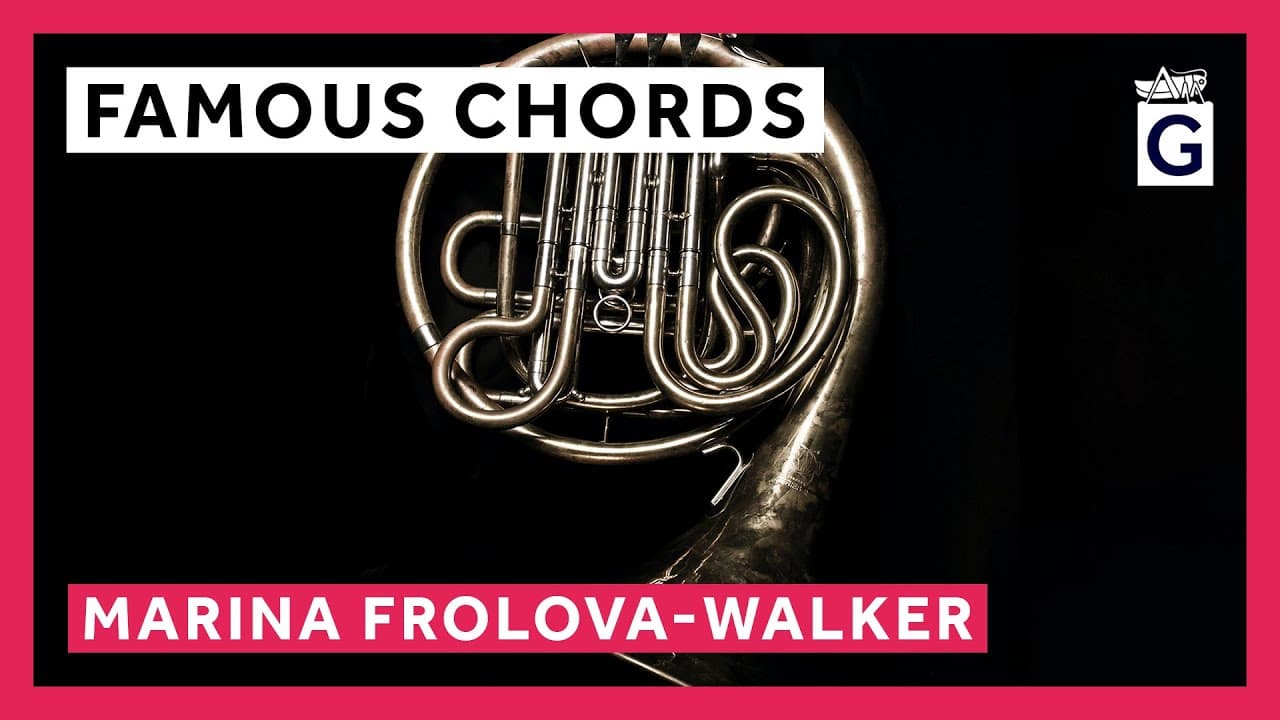
Famous Chords
TL;DR
This comprehensive analysis explores famous chords in music history, including the Neapolitan sixth chord and the Tristan chord, their significance, influences, and parodies.
Transcript
foreign in our series The Life of chords today we are going to talk about famous chords celebrity chords that achieved their status by virtue of acquiring a name and being parodied and quoted imitated from composed to composer and today again at the piano I have Peter Donahoe with me the most wonderful collaborator in this because he is going to pl... Read More
Key Insights
- 🎹 The Neapolitan sixth chord expands the emotional depth of a minor key and is a prominent feature in classical music compositions.
- ❓ The Tristan chord's use of dissonance and lack of resolution challenged traditional tonality and marked a significant shift in music history.
- ❓ The Mystic chord, as used by Scriabin, combines dissonance with cosmic undertones, creating a mystical and spiritual atmosphere.
- ❓ Famous composers like Beethoven, Ravel, Debussy, and Britten have referenced or parodied these iconic chords, demonstrating their enduring influence.
- 🥋 The use of these chords creates meaning, emotion, and provokes reactions in listeners, contributing to the power of music as an abstract art form.
- 🎼 Humorous parodies and imitations of these chords have been explored, showcasing the versatility and adaptability of these musical elements.
Install to Summarize YouTube Videos and Get Transcripts
Explore YouTube Video Summarizer or Get YouTube Transcript Extractor
Questions & Answers
Q: Why is the Neapolitan sixth chord referred to as such?
The term "Neapolitan" was attributed to the chord by English composer William Crotch in 1812. It is believed to have connections to Italian opera, specifically the works of Alessandro Scarlatti.
Q: How is the Neapolitan sixth chord used by various composers and in different musical genres?
The chord appears in classical compositions, such as Mozart's Piano Concerto No. 23 and Chopin's First Ballade. It is also used in Wagner's opera "Tristan and Isolde" to create a sense of unsatisfied desire and is parodied or referenced in other works like Debussy's "Children's Corner" suite.
Q: What is the significance of the Tristan chord?
The Tristan chord, derived from Wagner's opera "Tristan und Isolde," is a dissonant chord that opens the opera. It defies traditional tonality, lacks resolution, and is associated with feelings of unsatisfied desire. It is often quoted, imitated, and parodied in other musical compositions.
Q: How does the Mystic chord by Scriabin differ from the Tristan chord?
The Mystic chord, used by Scriabin in his piece "Prometheus," is a six-note chord that evokes a cosmic and mystical aura. It is distinct from the Tristan chord but shares similarities and influences from Wagner's dissonant chord.
Summary & Key Takeaways
-
The Neapolitan sixth chord, a chromatic chord that adds depth and emotion to a minor key, is widely used in classical music compositions, including Mozart's Piano Concerto No. 23 and Chopin's First Ballade.
-
The chord functions as a pre-cadential chord, leading to the dominant harmony and creating a sense of closure in musical phrases.
-
The Neapolitan sixth chord has historical connections to Naples and Italy, as well as influences from Italian opera and composers like Alessandro Scarlatti and Henry Purcell.
Read in Other Languages (beta)
Share This Summary 📚
Summarize YouTube Videos and Get Video Transcripts with 1-Click
Try YouTube Summary with ChatGPT & Claude or YouTube Transcript Generator
Explore More Summaries from Gresham College 📚

Summarize YouTube Videos and Get Video Transcripts with 1-Click
Try YouTube Summary with ChatGPT & Claude or YouTube Transcript Generator