Croc Fossil Discovered in Cave | National Geographic
TL;DR
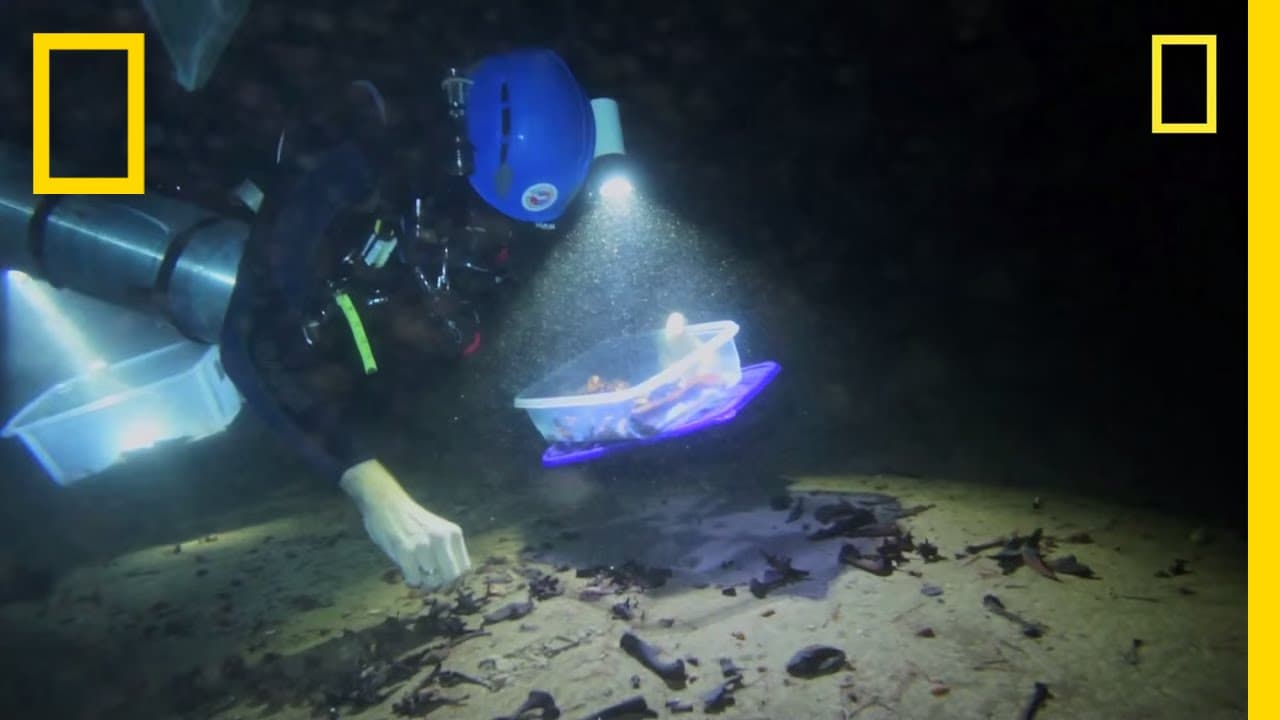
Researchers uncover a diverse range of fossil remains, including crocodile skeletons, in unexplored underwater caves in the Dominican Republic.
Transcript
the Dominican Republic can boast some very interesting finds in some of its freshwater caves that have been mostly unexplored until now research divers recently uncovered an unexpectedly large variety of fossil remains of extinct species of animals in the underground Springs including crocodiles the discoveries may turn a new page in paleontology a... Read More
Key Insights
- 🇩🇴 The caves in the Dominican Republic hold a diverse range of fossil remains, challenging previous knowledge in Caribbean paleontology.
- 🐊 Crocodile skeletons, previously unreported in the region, have been found in excellent condition in the underwater caves.
- ☠️ The preservation of complete and unbroken bones in the caves highlights the extraordinary conditions for paleontological research.
- 🇩🇴 Ongoing research funded by organizations like National Geographic continues to uncover new insights into the prehistoric fauna of the Dominican Republic caves.
- 🧑🔬 Collaboration between scientists, anthropologists, and local organizations is crucial in exploring and documenting the fossil discoveries in the caves.
- 🥺 The remote and water-filled nature of some caves has led to their largely unexplored status until recent research expeditions.
- 🇩🇴 The significant findings in the Dominican Republic caves may open up new avenues for paleontological studies in the Caribbean region.
Install to Summarize YouTube Videos and Get Transcripts
Explore YouTube Video Summarizer or Get YouTube Transcript Extractor
Questions & Answers
Q: What significant discoveries were made in the Dominican Republic caves?
Recent research dives in the Dominican Republic caves have unveiled a treasure trove of fossil remains, including complete crocodile skeletons, which were unexpected and challenge existing knowledge in paleontology.
Q: What is the significance of finding crocodile skeletons in these caves?
The discovery of crocodile skeletons in the caves of the Dominican Republic is particularly significant as crocodiles have never been reported in this part of the island, indicating a new chapter in the study of Caribbean paleontology.
Q: How are the fossil remains preserved in the underwater caves?
The unique underwater environment of the caves in the Dominican Republic provides exceptional preservation conditions for the fossil remains, with complete and unbroken bones preserved in cold water for millennia.
Q: What organizations and institutions are involved in the research expeditions?
The research expeditions in the Dominican Republic caves are supported by funding from the National Geographic Waitt Foundation Grant and collaborations with the Museo del Hombre Dominicano and the Dominican Republic Speleological Society.
Summary & Key Takeaways
-
Unexplored freshwater caves in the Dominican Republic reveal a variety of fossil remains, including crocodile skeletons.
-
The findings, such as complete crocodile skeletons, challenge previous knowledge and offer new insights into Caribbean paleontology.
-
Funding from National Geographic and collaborations support ongoing research on the fossils found in underwater caverns.
Read in Other Languages (beta)
Share This Summary 📚
Summarize YouTube Videos and Get Video Transcripts with 1-Click
Try YouTube Summary with ChatGPT & Claude or YouTube Transcript Generator
Explore More Summaries from National Geographic 📚


Summarize YouTube Videos and Get Video Transcripts with 1-Click
Try YouTube Summary with ChatGPT & Claude or YouTube Transcript Generator