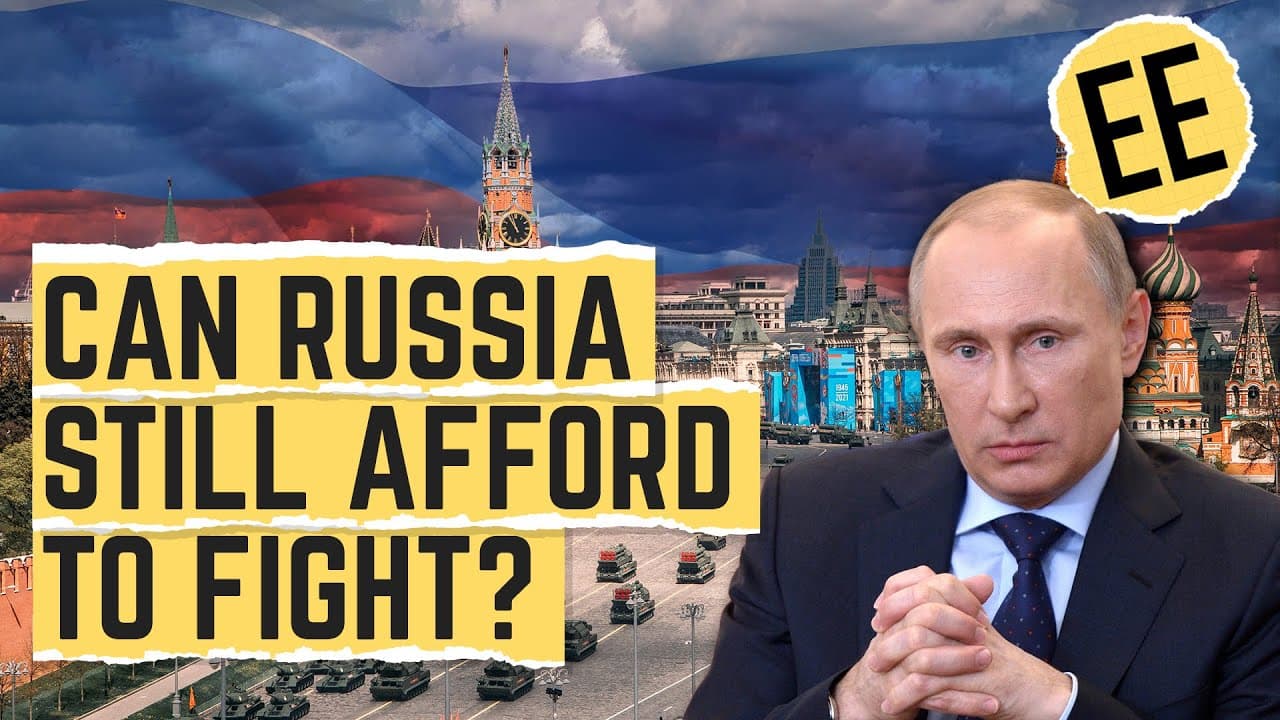
Why Is Russia's Economy Struggling Despite Its Size?
TL;DR
Russia, despite being the largest country and having vast resources, has a surprisingly underwhelming economy due to mismanagement, corruption, and reliance on natural resources. The collapse of the Soviet Union led to privatization mishaps, creating oligarchs who siphoned wealth abroad. Recent conflicts and sanctions further strain its economic stability.
Transcript
this is russia the largest country in the world and the primary belligerent in what may prove to be the most consequential conflict of this century from the get-go i want to stress that i like almost every armchair general on the internet and woefully underqualified to speak about the details of the ongoing invasion of ukraine however this is a con... Read More
Key Insights
- Russia is the largest country by landmass but has an economy smaller than some American states.
- The Soviet Union's collapse led to a power vacuum and economic instability in Russia.
- Privatization in the 1990s was mishandled, enriching a few oligarchs at the country's expense.
- Corruption and capital flight have hindered Russia's economic growth and stability.
- Sanctions imposed after the annexation of Crimea have strained Russia's economy further.
- Russia's economy heavily relies on natural resources, particularly oil and gas exports.
- Wealth inequality in Russia is extreme, with a small elite controlling most of the wealth.
- Economic mismanagement and political decisions have prevented Russia from becoming a prosperous nation.
Install to Summarize YouTube Videos and Get Transcripts
Explore YouTube Video Summarizer or Get YouTube Transcript Extractor
Questions & Answers
Q: How did the collapse of the Soviet Union impact Russia's economy?
The collapse of the Soviet Union led to a power vacuum and economic instability in Russia. The transition to a market economy was mishandled, with privatization enriching a few oligarchs while the general population faced economic hardship. This led to widespread corruption and capital flight, hindering economic growth.
Q: Why is Russia's economy considered underwhelming despite its size?
Russia's economy is considered underwhelming due to mismanagement, corruption, and reliance on natural resources. Despite vast land and resource wealth, the economy has not diversified, and privatization mishaps concentrated wealth among oligarchs, leading to economic inequality and stagnation.
Q: What role do natural resources play in Russia's economy?
Natural resources, particularly oil and gas, play a crucial role in Russia's economy. The country relies heavily on exporting these resources for revenue. However, this reliance makes the economy vulnerable to global market fluctuations and limits diversification into other industries.
Q: How have international sanctions affected Russia's economy?
International sanctions, especially after the annexation of Crimea, have strained Russia's economy by restricting access to technology and financial markets. While Russia has large foreign reserves from oil exports, sanctions have led to inflation, reduced foreign investment, and economic isolation.
Q: What is the impact of wealth inequality on Russia's economy?
Wealth inequality in Russia is significant, with a small elite controlling most of the wealth. This inequality results from privatization mishaps and corruption, leading to capital flight and limited domestic investment. It hampers economic growth and creates social and economic instability.
Q: How did privatization affect the Russian economy in the 1990s?
Privatization in the 1990s was mishandled, leading to the concentration of wealth among a few oligarchs. This process was marred by corruption, with state assets sold off cheaply to well-connected individuals, resulting in capital flight and a lack of domestic investment, hindering economic growth.
Q: Why does Russia have a high level of economic instability?
Russia's economic instability stems from its reliance on natural resources, corruption, and political decisions. The economy is vulnerable to global market fluctuations, and sanctions have further strained financial stability. Mismanagement and a lack of diversification contribute to ongoing instability.
Q: What challenges does Russia face in achieving economic growth?
Russia faces challenges in achieving economic growth due to corruption, reliance on natural resources, and political decisions. Privatization mishaps and wealth inequality limit domestic investment. International sanctions and economic isolation further hinder growth, making diversification and reform crucial.
Summary & Key Takeaways
-
Russia's vast size and resource wealth contrast with its underwhelming economic performance. After the Soviet Union's collapse, privatization mishaps led to oligarchs accumulating wealth while the general population struggled. This inequality, coupled with corruption and capital flight, hindered economic growth.
-
Sanctions following the annexation of Crimea further strained Russia's economy. Despite large foreign reserves from oil and gas exports, Russia struggles with economic mismanagement and instability. The economy remains reliant on natural resources, with little diversification into other industries.
-
The Russian economy's reliance on natural resources and political decisions have led to a stagnant growth trajectory. Wealth inequality remains extreme, and the economy's future is uncertain amid ongoing conflicts and international sanctions, making Russia's economic prospects bleak.
Read in Other Languages (beta)
Share This Summary 📚
Summarize YouTube Videos and Get Video Transcripts with 1-Click
Try YouTube Summary with ChatGPT & Claude or YouTube Transcript Generator
Explore More Summaries from Economics Explained 📚


Summarize YouTube Videos and Get Video Transcripts with 1-Click
Try YouTube Summary with ChatGPT & Claude or YouTube Transcript Generator