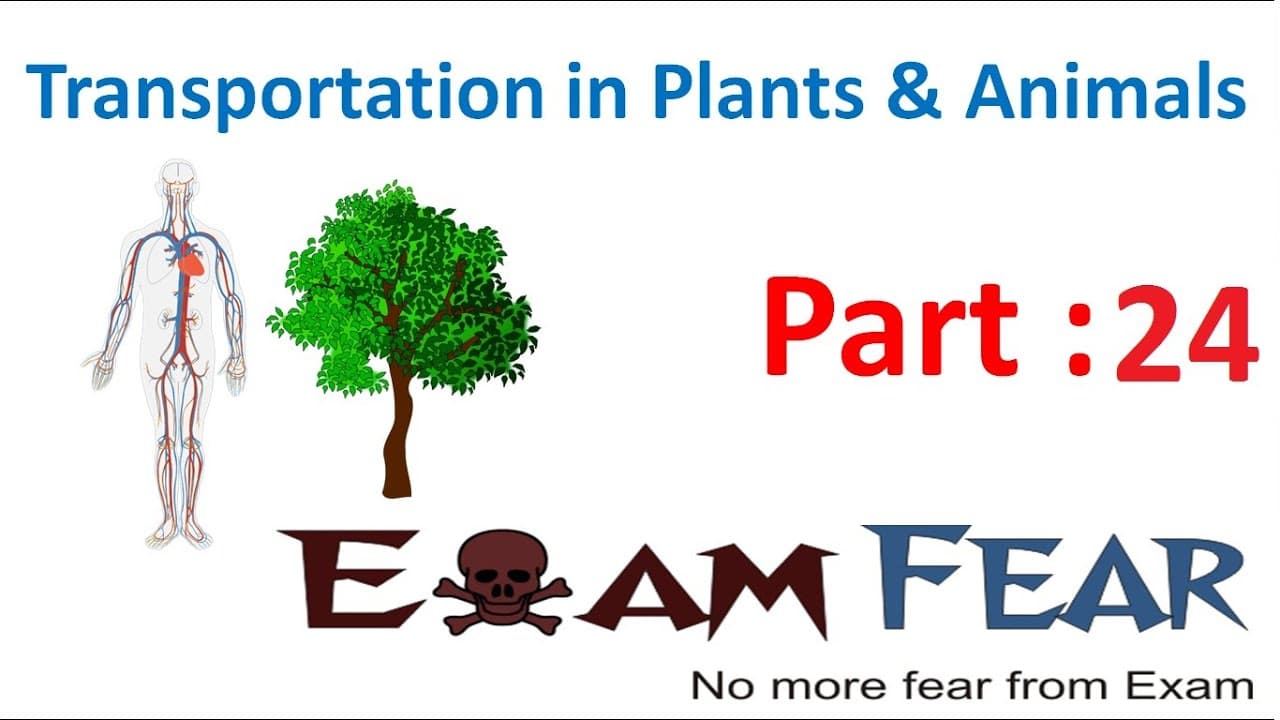
Biology Transport in Plants Animals Part 24 (Transpiration Pull) Class 7 VII
TL;DR
Transpiration pull is the mechanism through which water is pulled upwards in plants, against gravity, due to the loss of water through stomata on the leaves.
Transcript
hello friends this video on transport in plants and animals part 24 is brought to you by example.com no more fear from exam and the third mechanism that we are going to discuss is transpiration pull so what kind of pull is this now before even before we talk about transpiration pull we have to understand what is transpiration now here what happens ... Read More
Key Insights
- 🚾 Transpiration is the process through which water is lost from plant leaves via the stomata, leading to an upward movement of water through the xylem.
- 💱 Stomata are essential for gas exchange and water vapor exchange between the plant and the atmosphere.
- 💂 Guard cells control the opening and closing of stomata, regulating transpiration.
- 🙂 Factors such as light, temperature, and gas concentrations influence stomatal movement and, consequently, transpiration.
- 🥳 Transpiration not only transports water but also dissolved minerals to different parts of the plant, aiding in growth and photosynthesis.
- 🤽 Diffusion and the concentration gradient play a role in the movement of water through xylem vessels.
- 🚾 Transpiration pull is the mechanism by which water is pulled upwards, with each water molecule lost from stomata causing the movement of another water molecule upward.
Install to Summarize YouTube Videos and Get Transcripts
Explore YouTube Video Summarizer or Get YouTube Transcript Extractor
Questions & Answers
Q: What is transpiration and how does it lead to the upward movement of water in plants?
Transpiration is the loss of water from plant leaves through stomata. When water is lost from leaves, the plant pulls water from below, creating an upward pull known as transpiration pull. The movement of water happens through the xylem vessels, driven by diffusion and the concentration gradient.
Q: What is the role of stomata in transpiration?
Stomata are tiny pores on the leaves of plants that facilitate the exchange of gases, such as oxygen and carbon dioxide, as well as water vapor between the plant and the atmosphere. Water loss during transpiration occurs through these stomata.
Q: How do guard cells regulate the opening and closing of stomata?
Guard cells, which surround stomata, control their opening and closing. When the two guard cells come close together, the stomatal opening closes, and when they move away from each other, the opening is created. The opening and closing of stomata determine the occurrence of transpiration.
Q: What factors can affect the movement of stomata?
Various factors influence the movement of stomata, including light, temperature, carbon dioxide and oxygen concentration, availability of water, and the concentration of potassium ions. These factors can affect the opening and closing of stomata, thus impacting transpiration.
Summary & Key Takeaways
-
Transpiration is the loss of water from plant leaves through stomata by evaporation, resulting in the upward movement of water through the xylem.
-
Stomata are tiny pores on the leaves that allow for the exchange of gases and water vapor between the plant and the external atmosphere.
-
Guard cells surrounding the stomata control their opening and closing, determining the occurrence of transpiration.
Read in Other Languages (beta)
Share This Summary 📚
Summarize YouTube Videos and Get Video Transcripts with 1-Click
Try YouTube Summary with ChatGPT & Claude or YouTube Transcript Generator
Explore More Summaries from LearnoHub - Class 11, 12 📚



Summarize YouTube Videos and Get Video Transcripts with 1-Click
Try YouTube Summary with ChatGPT & Claude or YouTube Transcript Generator