Armature Reaction | Waveform shapes | DC machines | Lec-33
TL;DR
An overview of armature reaction effects in generators and motors.
Transcript
hello everyone in the last session we will discuss about the armature reaction there so in that we are discussing the armature reaction and main field flux and we discussed about what is cross magnetizing and demagnetizing and we are already discussed about the gna and mnea and what are the effects we are discussed today and now we we have to discu... Read More
Key Insights
- 🥺 Armature reaction significantly affects the performance of electrical machines, leading to variations in magnetic behavior between motors and generators.
- 🏑 Understanding the waveforms associated with magnetic fields improves predictive capabilities in machine design and operation.
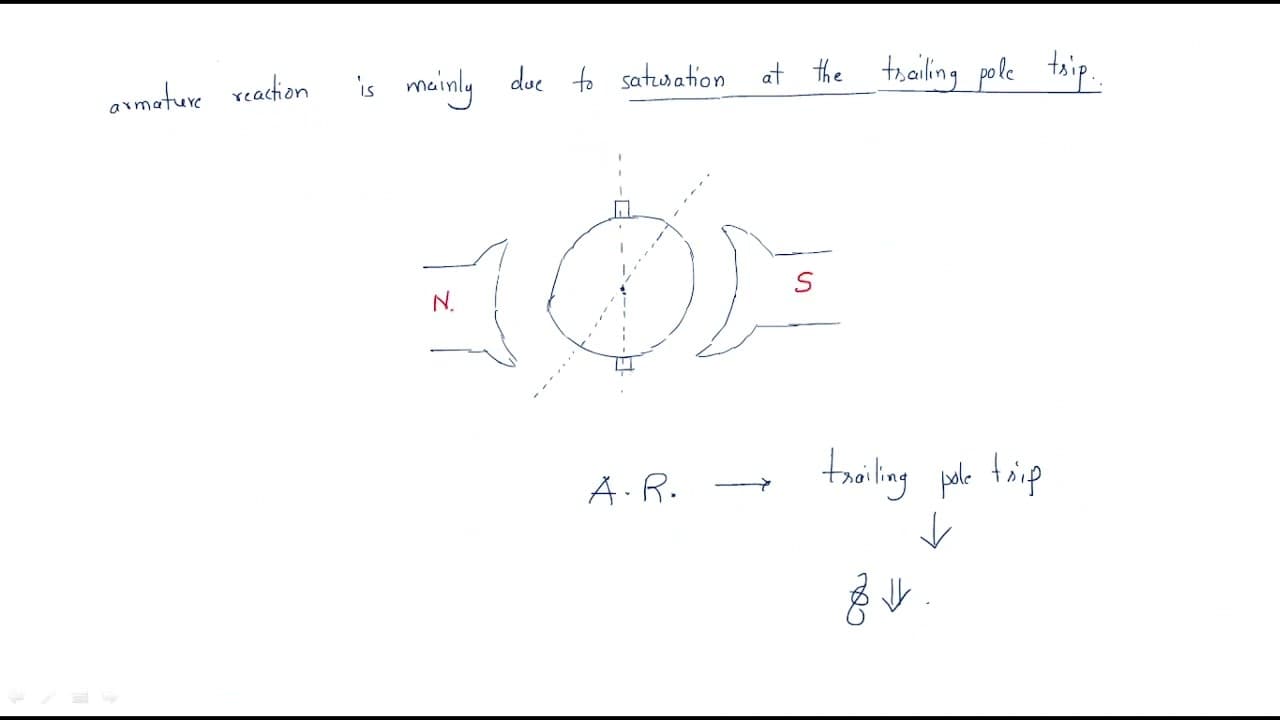
- 🥺 Leading and trailing actions play integral roles in magnetization and demagnetization, with distinct impacts on magnetic flux levels.
- 🦻 The examination of various waveform shapes aids in recognizing and addressing potential inefficiencies during operation.
- 🫓 Main field flux is typically flat top in shape, implying a steady magnetic distribution, vital for consistent machine functionality.
- 🥡 Armature MMF takes a triangular shape, highlighting its varying strength as the machine operates under different load conditions.
- 👱 The characteristics of the armature flux and air gap flux shapes serve as indicators of performance stability and magnetic interaction efficacy.
Install to Summarize YouTube Videos and Get Transcripts
Explore YouTube Video Summarizer or Get YouTube Transcript Extractor
Questions & Answers
Q: What is armature reaction, and why is it significant in electrical machines?
Armature reaction refers to the impact of the magnetic field created by the armature current on the overall magnetic field in generators and motors. It's significant because it alters the performance characteristics of the machine, affecting efficiency and whether the machine experiences magnetization or demagnetization during operation.
Q: How do leading and trailing actions differ between generators and motors?
In generators, leading action results in demagnetization, meaning the effective magnetic flux decreases. Conversely, in motors, leading action leads to magnetization, enhancing the resultant flux. Trailing actions yield opposite effects, reinforcing the importance of understanding these differences in design and operation.
Q: What are the characteristics of the main field flux waveform?
The main field flux typically exhibits a flat top wave or trapezoidal shape, indicative of a steady state in the magnetic field distribution. This wave shape highlights the consistent presence of magnetic field strength, key for maintaining effective machine performance over various operational conditions.
Q: Can you explain the various flux waveforms observed in electrical machines?
The main field flux shows a flat top or trapezoidal wave, whereas armature MMF displays a triangular wave. Additionally, the armature flux has a saddle shape, while the air gap flux presents a peaky waveform. Each shape signifies distinct characteristics affecting how machines operate under different loads and conditions.
Q: What is the relationship between armature MMF and armature flux?
While they are related, armature MMF, representing the magnetomotive force, is often depicted with a triangular waveform. In contrast, armature flux can take on a saddle shape. Understanding this relationship is essential for comprehending how variations in current affect magnetic interactions in machines.
Q: What is meant by magnetization and demagnetization in this context?
Magnetization refers to the increase in magnetic flux, resulting from the addition of armature and main field flux in motors. Demagnetization, on the other hand, occurs when the armature flux reduces the main field flux, particularly evident in generators when operating in leading action.
Q: How does understanding armature reaction help in machine design?
Knowledge of armature reaction allows engineers to optimize the design of generators and motors by predicting how the machines will behave under specific conditions, ultimately enhancing performance, efficiency, and durability of the machines in operational applications.
Q: What is the importance of the air gap flux waveform in electrical machines?
The air gap flux waveform, characterized as peaky, plays a critical role in determining the overall magnetic field strength and stability within the machine. Fluctuations in this waveform can significantly affect the performance and efficiency of the machine, influencing design considerations.
Summary & Key Takeaways
-
The discussion centers on armature reaction, detailing the concepts of magnetization and demagnetization, which produce different effects in generators and motors when leading or trailing.
-
Various waveforms related to the armature reaction, main field flux, and armature MMF (magnetomotive force) are introduced, explaining their unique shapes and implications for machine operation.
-
Key aspects addressed include the flat top wave characteristic of main field flux, triangular wave for armature MMF, and the saddle shape and peaky wave of the armature and air gap flux respectively.
Read in Other Languages (beta)
Share This Summary 📚
Summarize YouTube Videos and Get Video Transcripts with 1-Click
Try YouTube Summary with ChatGPT & Claude or YouTube Transcript Generator