Will You Hold My Joey? | National Geographic
TL;DR
A team in Australia works to save endangered black-footed rock wallabies through a unique breeding program.
Transcript
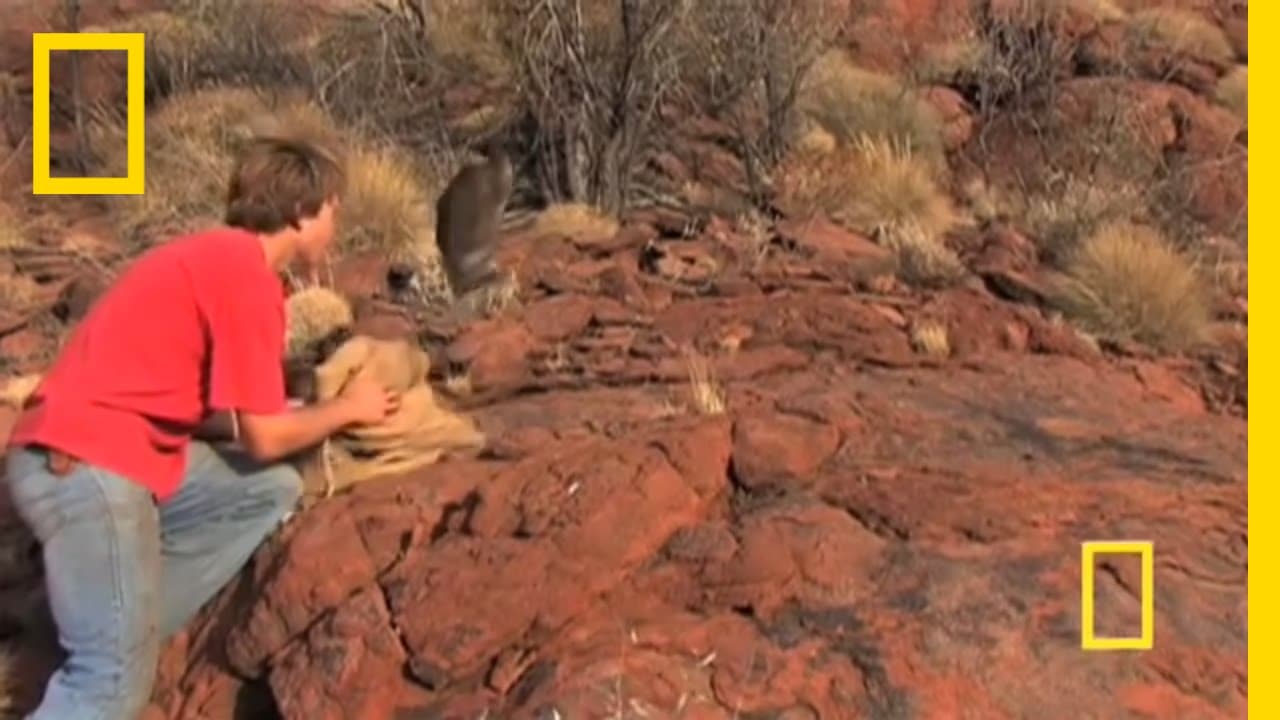
it's early in the morning in australia's apy land and national geographic grantee laura royce and her team are on the move from the 4x4 to the trail to steep rocky cliffs thereafter the black-footed rock wallaby or waru south australia's most endangered mammal these small marsupials were once common throughout the ranges of central australia but no... Read More
Key Insights
- 😀 The black-footed rock wallabies face extinction due to introduced predators, hunting, and habitat changes.
- 😵 The accelerated breeding program with cross-fostering is a unique strategy to increase the population of the endangered wallabies.
- 🖤 Indigenous Australians, biologists, zookeepers, and vets collaborate to save the black-footed rock wallabies from extinction.
- 🤩 Capturing female wallabies with joeys, transferring them to surrogate mothers, and releasing young wallabies back into the wild are key steps in the conservation efforts.
- 🖤 The hope is to establish a captive-bred generation of black-footed rock wallabies that can eventually be reintroduced into the wild.
- ❓ National Geographic's support contributes to the success of the conservation program.
Install to Summarize YouTube Videos and Get Transcripts
Explore YouTube Video Summarizer or Get YouTube Transcript Extractor
Questions & Answers
Q: What are the main threats to the black-footed rock wallabies in Australia?
The main threats to the black-footed rock wallabies in Australia are introduced predators, habitat changes, and hunting, leading to a drastic decrease in their population.
Q: How does the accelerated breeding program with cross-fostering work?
The accelerated breeding program involves transferring young black-footed rock wallabies to closely related surrogate species like the yellow-footed rock wallabies to increase reproductive rates and population numbers.
Q: Why is it important to save the black-footed rock wallabies from extinction?
Saving the black-footed rock wallabies is crucial as they are one of South Australia's most endangered mammals, and their extinction could disrupt the ecosystem and biodiversity in the region.
Q: What role do indigenous Australians play in the conservation efforts for the black-footed rock wallabies?
Indigenous Australians are an integral part of the conservation efforts, with some being part of the Wadu Recovery Team dedicated to saving the imperiled black-footed rock wallabies.
Summary & Key Takeaways
-
Laura Royce and her team work in Australia's APY Land to save the endangered black-footed rock wallabies from extinction due to introduced predators and habitat changes.
-
The team uses a unique accelerated breeding program, utilizing cross-fostering with surrogate species to increase the population of the black-footed rock wallabies.
-
Their efforts involve capturing female wallabies with joeys, transferring them to surrogate mothers, and ultimately releasing the young wallabies back into the wild.
Read in Other Languages (beta)
Share This Summary 📚
Summarize YouTube Videos and Get Video Transcripts with 1-Click
Try YouTube Summary with ChatGPT & Claude or YouTube Transcript Generator
Explore More Summaries from National Geographic 📚


Summarize YouTube Videos and Get Video Transcripts with 1-Click
Try YouTube Summary with ChatGPT & Claude or YouTube Transcript Generator