The 2014 Nobel Prize in Chemistry - Periodic Table of Videos
TL;DR
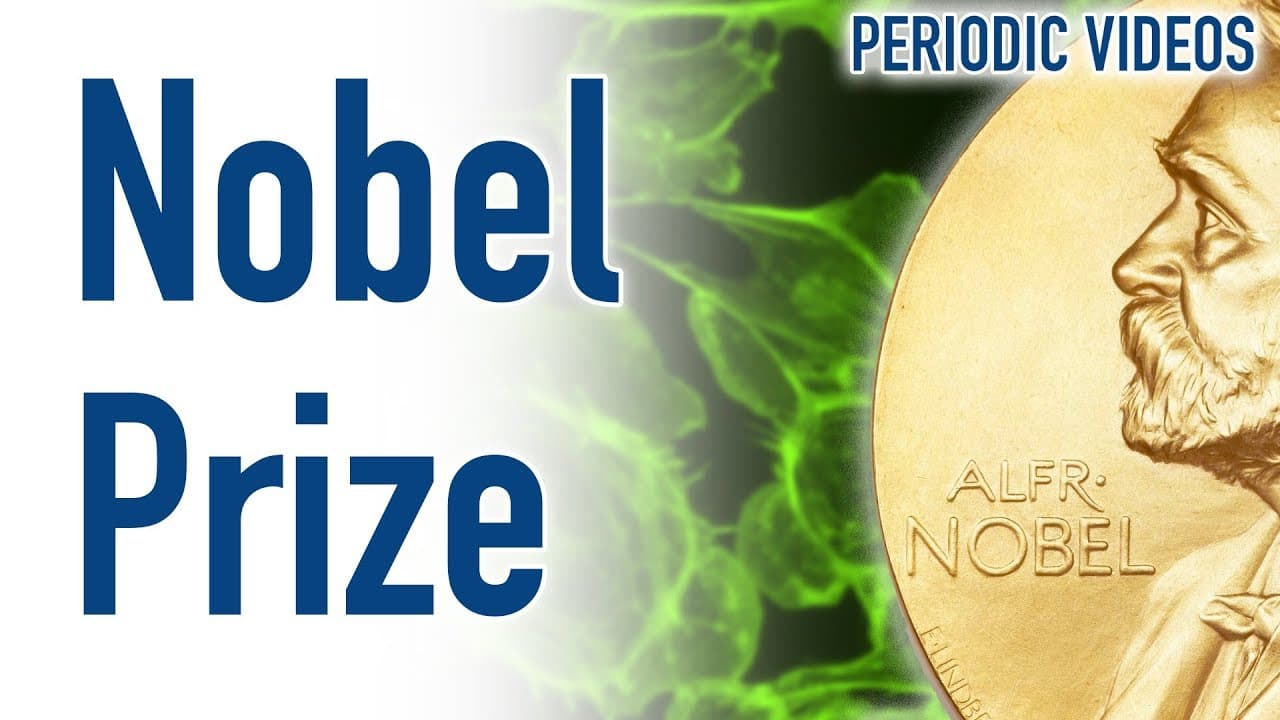
Nobel Prize awarded for innovative microscopy techniques allowing imaging inside living cells with high detail.
Transcript
the 2014 Nobel Prize for chemistry is a bit unusual this year if you're a regular viewer of our videos you're probably used to the fact that the chemistry Nobel Prize can sometimes be a bit more biological than chemical but this Nobel Prize is really using almost physics to study biology but with a chemical twist to it the idea of the prize is that... Read More
Key Insights
- ✋ Nobel Prize awarded for microscopy techniques blending physics and chemistry for high-resolution cell imaging.
- ❓ Limitations of traditional microscopy overcome using lasers and fluorescent proteins.
- 🧑🔬 Breakthroughs by American and German scientists revolutionize imaging inside living cells.
- 👻 Techniques allow observation of cellular processes with incredible detail.
- ❓ Importance of fluorescence and laser combinations in enhancing resolution.
- 🖐️ Green fluorescent proteins play a crucial role in the development of advanced microscopy.
- ❓ Combination of lasers suppresses fluorescence from surrounding areas to increase image sharpness.
Install to Summarize YouTube Videos and Get Transcripts
Explore YouTube Video Summarizer or Get YouTube Transcript Extractor
Questions & Answers
Q: What are the limitations of traditional microscopy in viewing small objects in biological cells?
Traditional microscopy with lenses is limited by the wave nature of light, making objects smaller than the wavelength of light appear blurry or invisible.
Q: How do the Nobel Prize-winning techniques involving lasers and fluorescent proteins improve cell imaging?
By using lasers with specific wavelengths and fluorescent proteins, researchers can enhance resolution and see inside living cells with remarkable detail.
Q: What were the key breakthroughs by the Nobel Prize-winning scientists in their microscopy techniques?
The scientists utilized specific wavelengths of light, fluorescent proteins that fluoresce multiple times, and innovative laser combinations to achieve high-resolution imaging inside living cells.
Q: Why were the microscopy techniques recognized with a Nobel Prize in Chemistry?
The innovative techniques allow researchers to observe cellular processes in unprecedented detail within living cells, bridging the gap between physics and biology.
Summary & Key Takeaways
-
2014 Nobel Prize in Chemistry awarded for microscopy techniques combining physics with a chemical twist to view inside living cells.
-
Traditional microscopy limitations overcome by using lasers and fluorescent proteins to enhance resolution.
-
Breakthrough techniques by scientists in America and Germany revolutionize cell imaging with unprecedented detail.
Read in Other Languages (beta)
Share This Summary 📚
Summarize YouTube Videos and Get Video Transcripts with 1-Click
Try YouTube Summary with ChatGPT & Claude or YouTube Transcript Generator
Explore More Summaries from Periodic Videos 📚


Summarize YouTube Videos and Get Video Transcripts with 1-Click
Try YouTube Summary with ChatGPT & Claude or YouTube Transcript Generator