Evolution of Transistor Innovation | Intel Technology
TL;DR
The transistor is a small but powerful invention that has revolutionized computing, and its evolution continues to push the boundaries of technology.
Transcript
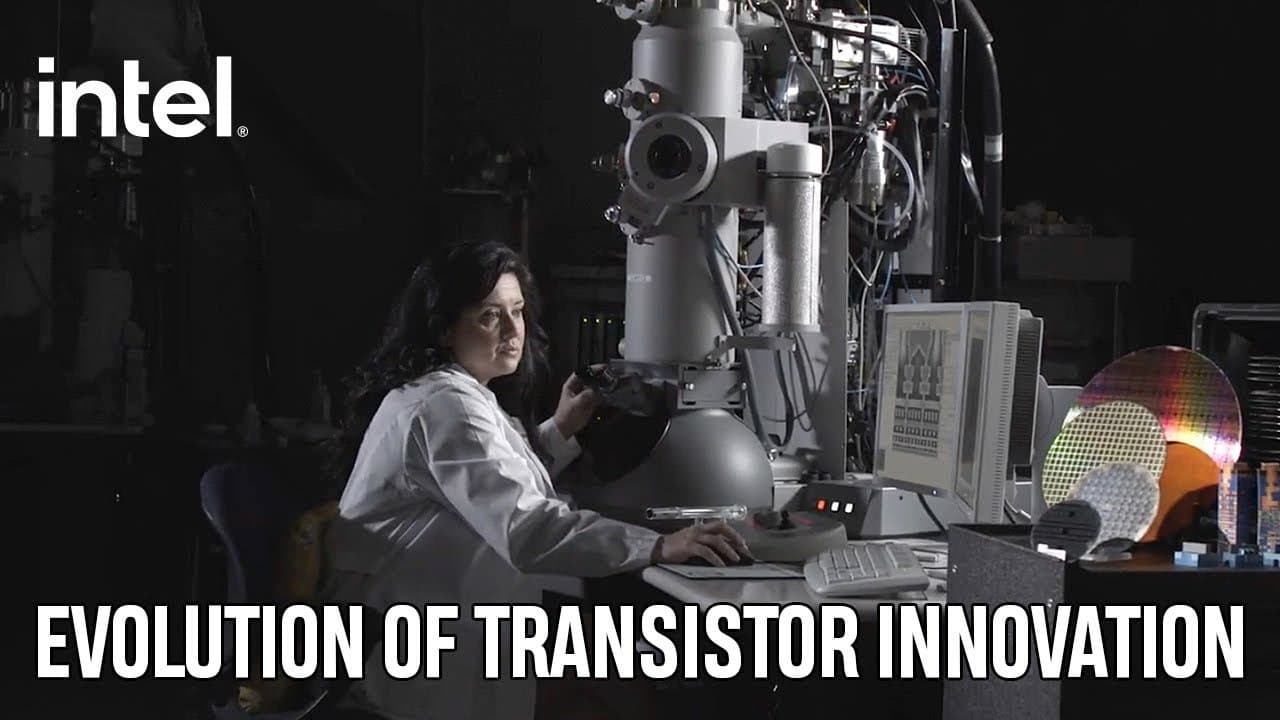
my first job at high tech was operating one of these investigating the transistor the microscopic invention that has powered computing for decades it is here that i learned to truly appreciate how incredible this technology is when you can see for yourself just how tiny they really are learn how they work and how they are made and watch how much th... Read More
Key Insights
- 🪄 The transistor is a remarkable invention that has revolutionized computing and is often described as indistinguishable from magic.
- 👶 Shrinking dimensions and adding new layers have been crucial for improving transistor performance and efficiency over time.
- 👶 Material changes, such as introducing copper wires and new gate structures, have further enhanced transistor functionality.
- 👻 Water immersion and finfet design are notable innovations that have allowed for continued transistor scaling.
- 🫷 The demand for smaller transistors has pushed the need for new printing techniques and materials, driving ongoing innovation in the field.
- ❓ The journey of the transistor is a story of continuous evolution and technological advancement.
- ❓ The transistor's impact on computing cannot be overstated, and its importance in modern technology is immense.
Install to Summarize YouTube Videos and Get Transcripts
Explore YouTube Video Summarizer or Get YouTube Transcript Extractor
Questions & Answers
Q: What is the significance of the transistor in computing?
The transistor is considered the greatest invention of the 20th century as it acts as a switch, controlling the flow of current and enabling the creation of electronic circuits. It is the fundamental building block of modern computers.
Q: How have transistors evolved over time?
Initially, transistors were measured based on the distance electrons had to travel. Advancements included shrinking dimensions, adding new layers, using smaller wavelengths of light for printing smaller gates, and introducing trench isolation. Copper wires replaced aluminum, and new materials were added to increase efficiency and speed.
Q: How did stress and material changes improve transistor performance?
By straining the crystal structure of silicon, electrons could move faster through the channel, increasing transistor speed. Material changes, such as introducing a metal high k gate structure and a new insulating material, helped limit leakage and improve overall transistor performance.
Q: What are some challenges faced in shrinking transistors?
As transistors became smaller, the laser light source used for printing reached its limits. Water immersion techniques were introduced to allow finer printing, and radical innovations like the finfet design transformed transistors from 2D to 3D. Complex patterning techniques became necessary to fabricate these minuscule devices.
Key Insights:
- The transistor is a remarkable invention that has revolutionized computing and is often described as indistinguishable from magic.
- Shrinking dimensions and adding new layers have been crucial for improving transistor performance and efficiency over time.
- Material changes, such as introducing copper wires and new gate structures, have further enhanced transistor functionality.
- Water immersion and finfet design are notable innovations that have allowed for continued transistor scaling.
- The demand for smaller transistors has pushed the need for new printing techniques and materials, driving ongoing innovation in the field.
- The journey of the transistor is a story of continuous evolution and technological advancement.
- The transistor's impact on computing cannot be overstated, and its importance in modern technology is immense.
- Companies like Intel are at the forefront of transistor innovation, constantly pushing the boundaries of what is possible.
Summary & Key Takeaways
-
The transistor, a microscopic invention, powers computing and has undergone significant changes and advancements over the years.
-
Improvements in shrinking dimensions, adding new layers, and using different wavelengths of light have resulted in faster and more efficient transistors.
-
Innovations like trench isolation, copper wires, and new materials have further enhanced transistor performance and energy efficiency.
Read in Other Languages (beta)
Share This Summary 📚
Summarize YouTube Videos and Get Video Transcripts with 1-Click
Try YouTube Summary with ChatGPT & Claude or YouTube Transcript Generator
Explore More Summaries from Intel Technology 📚




Summarize YouTube Videos and Get Video Transcripts with 1-Click
Try YouTube Summary with ChatGPT & Claude or YouTube Transcript Generator