Can Cellular Automata Explain the Universe?
TL;DR
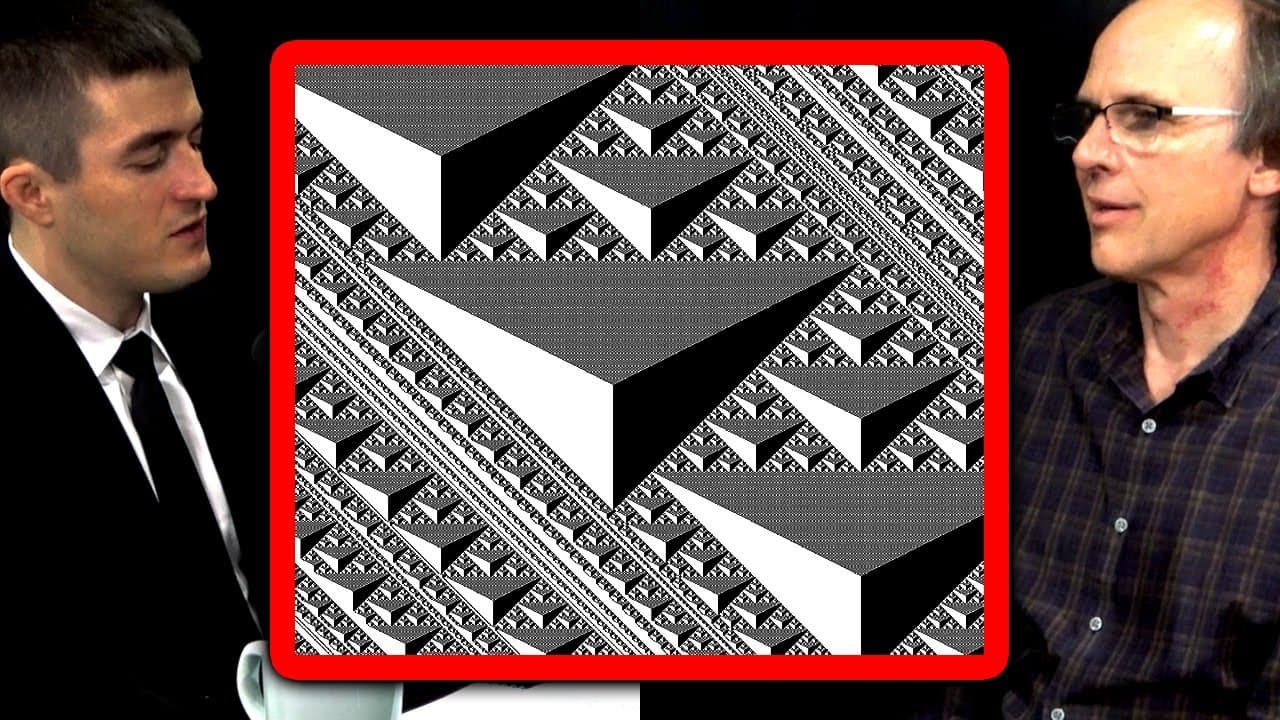
Cellular automata may not provide a viable theory of everything, as some scientists argue that fundamental concepts of physics and mathematics are not adequately addressed by this approach. While the exploration of complex systems raises intriguing questions, significant breakthroughs may require advanced computational tools that go beyond current human capabilities.
Transcript
uh i got to ask you at a few different attempts at the theory of everything especially recently uh so i've been for many years a big fan of cellular automata of complex systems and obviously if because of that a fan of stephen wolfram's work on in that space but he's recently been talking about a theory of everything through his physics project ess... Read More
Key Insights
- 😀 Stephen Wolfram's theory of a discrete theory of everything through cellular automata receives mixed reviews and faces skepticism from other scientists.
- 🙈 Quantum mechanics is seen as mathematically simple and already aligned with fundamental mathematical concepts, distinguishing it from cellular automata.
- ❓ Understanding the behavior of complex systems remains a challenging problem, with no definitive answers or mathematical explanations.
Install to Summarize YouTube Videos and Get Transcripts
Explore YouTube Video Summarizer or Get YouTube Transcript Extractor
Questions & Answers
Q: What is Stephen Wolfram's theory of everything, and how does it differ from other approaches in physics?
Wolfram's theory suggests that the universe is composed of discrete elements governed by simple rules, as demonstrated by cellular automata. This approach contradicts the idea of a unification of math and physics based on geometric principles.
Q: Why do some scientists doubt the validity of a discrete theory of everything?
The skeptics argue that the complex and beautiful ideas in math and physics developed over the years cannot simply be a mirage emerging from simple cellular automata. They emphasize the need for substantial evidence to support such claims.
Q: Can quantum mechanics emerge from smaller computational systems like cellular automata?
From a mathematical standpoint, quantum mechanics is already considered mathematically simple. Quantum theories deal with fundamental objects that align with the deepest levels of mathematical understanding. Cellular automata, on the other hand, do not fit into this framework.
Q: Are cellular automata and hypergraphs capable of solving the problem of understanding complex systems?
While cellular automata and hypergraphs pose intriguing questions about complex system behavior, there is no satisfactory mathematical or physical explanation to date. The understanding of complex systems may require computational tools beyond human capabilities, which could be years or decades away.
Summary & Key Takeaways
-
Stephen Wolfram's theory proposes that a discrete universe emerges from simple rules and objects on hypergraphs, but other scientists express skepticism and argue for a different approach.
-
Quantum mechanics is considered mathematically simple and aligns with fundamental objects in mathematics, while cellular automata and hypergraphs are seen as separate concepts.
-
The behavior of complex systems remains a fascinating and challenging problem, with no definitive answers or mathematical explanations.
-
The potential breakthroughs in understanding complex systems may require computational tools beyond human capabilities and could be decades away.
Read in Other Languages (beta)
Share This Summary 📚
Summarize YouTube Videos and Get Video Transcripts with 1-Click
Try YouTube Summary with ChatGPT & Claude or YouTube Transcript Generator
Explore More Summaries from Lex Clips 📚


Summarize YouTube Videos and Get Video Transcripts with 1-Click
Try YouTube Summary with ChatGPT & Claude or YouTube Transcript Generator