CINEPOETICS: Reading by Jorie Graham & Screening of “Leviathan”
TL;DR
The film Leviathan challenges traditional documentary conventions, blurring the line between human and non-human perspectives, and evoking a range of emotions from the viewer.
Transcript
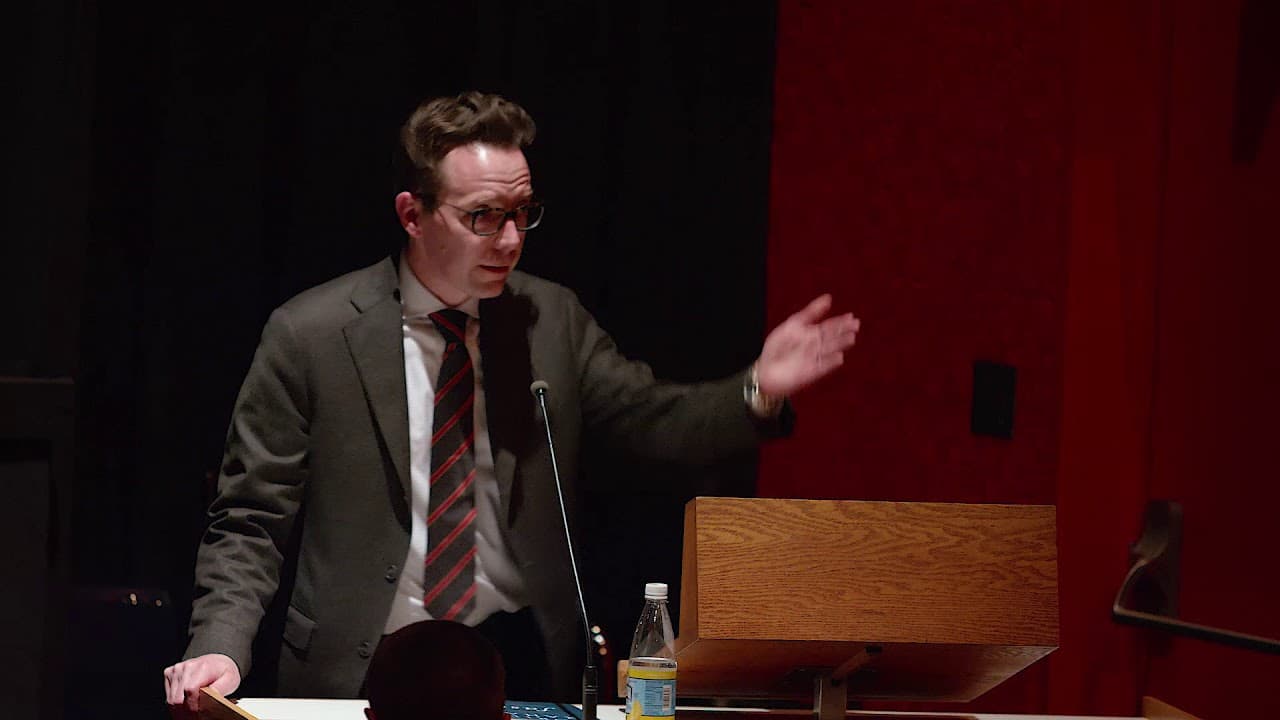
Good evening, ladies and gentlemen. I want to thank you for being here tonight. I want to thank you for your patience. We had such an impressive turnout, we needed to set up the overflow room next door. And that was the reason for the delay. This event is being live streamed into that space. I'm very pleased tonight to welcome two filmmakers who ar... Read More
Key Insights
- 🫥 The film Leviathan challenges traditional documentary conventions, blurring the line between human and non-human perspectives.
- 😒 The filmmakers use innovative camera techniques and immersive sound and visuals to transport the viewer into the world of the fishing industry and the ocean.
Install to Summarize YouTube Videos and Get Transcripts
Explore YouTube Video Summarizer or Get YouTube Transcript Extractor
Questions & Answers
Q: What was the filmmakers' intention in challenging traditional documentary conventions?
The filmmakers wanted to push the boundaries of nonfiction cinema and explore new ways of representing reality. They sought to break away from the typical logocentric approach of documentary filmmaking, instead embracing a sensory and experiential approach.
Q: How does the film evoke a different perspective on the relationship between humans and the natural world?
By using innovative camera techniques and capturing footage from non-human perspectives, the filmmakers challenge the viewer's preconceived notions of the human-nature relationship. The film blurs the line between human and non-human, highlighting the interconnectedness of all beings.
Q: How do the filmmakers create an immersive viewing experience for the audience?
The filmmakers use unconventional camera angles and techniques, such as attaching cameras to human bodies and capturing footage underwater, to provide a unique and immersive viewing experience. The visuals and sounds of the film are designed to transport the viewer into the world of the fishing industry and the ocean.
Q: What was the response of the film's subjects to seeing the film?
The subjects of the film, including the fishermen, were shown the film and had the opportunity to provide feedback. They were also involved in the editing process and had input on the final cut. The filmmakers wanted to collaborate with the subjects and ensure that their voices and experiences were accurately represented in the film.
Summary & Key Takeaways
-
The filmmakers, Verena Paravel and Lucien Castaing-Taylor, have created an unconventional form of nonfiction cinema that combines elements of ethnographic and anthropological film with art cinema.
-
The film Leviathan explores the political and ecological aspects of the fishing industry, as well as the connection between humans and the ocean.
-
The filmmakers use innovative camera techniques, including attaching cameras to human bodies and capturing footage underwater, to provide a unique and immersive viewing experience.
Read in Other Languages (beta)
Share This Summary 📚
Summarize YouTube Videos and Get Video Transcripts with 1-Click
Try YouTube Summary with ChatGPT & Claude or YouTube Transcript Generator
Explore More Summaries from Harvard University 📚




Summarize YouTube Videos and Get Video Transcripts with 1-Click
Try YouTube Summary with ChatGPT & Claude or YouTube Transcript Generator