What Led to the Economic Struggles of Communist China?
TL;DR
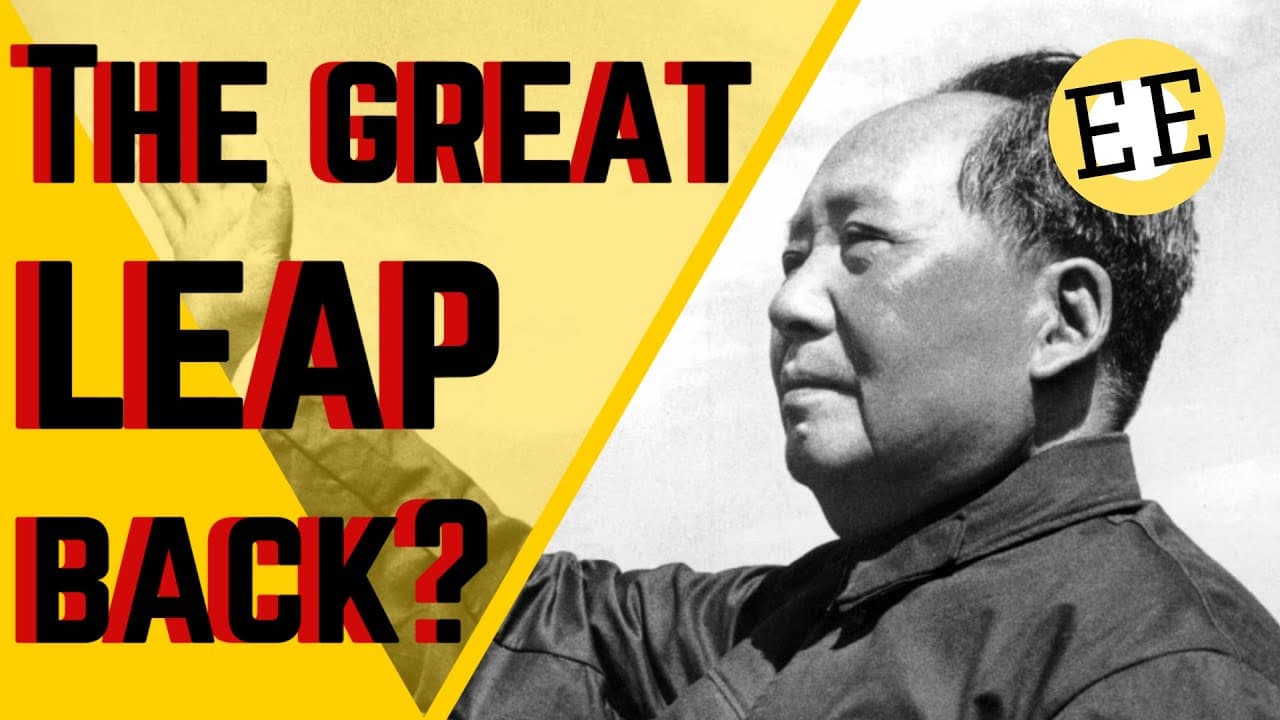
China, once the world's wealthiest nation, faced significant economic struggles after WWII due to war damage and foreign exploitation. Mao Zedong's efforts to industrialize under a centralized Soviet-style model initially seemed successful but failed to address agricultural needs, leading to disastrous policies like the Great Leap Forward. Reforms under Deng Xiaoping later recognized the need for individual incentive, paving the way for China's economic revival.
Transcript
this is China in 1949 he was a nation ravaged by years and years of war and Exploited by its allies at the time namely America and the Soviet Union this nation was once the wealthiest in the world and now it was struggling to feed itself it was these kinds of conditions that gave rise to the political system that would go on to define China in the ... Read More
Key Insights
- China was once the wealthiest nation, but wars and exploitation led to economic struggles by the mid-20th century.
- Mao Zedong's establishment of the People's Republic of China aimed to restore China's economic power through industrialization.
- The Soviet-style centralized economic model initially helped China but eventually showed inefficiencies, especially in agriculture.
- The Great Leap Forward was an ambitious yet flawed plan that prioritized industrial output over agricultural productivity.
- Policies during Mao's era often lacked incentives for individual hard work, stifling economic growth and innovation.
- The backyard furnace experiment exemplified poor planning, leading to resource wastage and further agricultural decline.
- Deng Xiaoping's reforms post-Mao shifted towards recognizing individual contributions, marking a turning point for China's economy.
- China's economic history is a study of balancing ideology with practical economic policies to achieve growth.
Install to Summarize YouTube Videos and Get Transcripts
Explore YouTube Video Summarizer or Get YouTube Transcript Extractor
Questions & Answers
Q: Why was China struggling economically by the mid-20th century?
China's economic struggles in the mid-20th century were due to years of war, foreign exploitation, and a failure to modernize its economy. Once the wealthiest nation, China fell behind as other countries industrialized, and its reliance on manpower and outdated agricultural techniques couldn't sustain its population or compete globally.
Q: What was the impact of Mao Zedong's establishment of the People's Republic of China?
Mao Zedong established the People's Republic of China in 1949, aiming to transform China into a socialist economic powerhouse. His policies focused on centralizing economic control and industrializing the nation, which initially led to some industrial growth but also introduced inefficiencies and imbalances, especially in agriculture.
Q: How did the Soviet-style economic model influence China's development?
The Soviet-style economic model influenced China's development by centralizing control over resources and production, focusing heavily on industrial growth. While this approach initially boosted industrial output, it also led to inefficiencies, particularly in agriculture, and stifled innovation and individual incentives, ultimately hindering sustainable economic growth.
Q: What were the goals and outcomes of the Great Leap Forward?
The Great Leap Forward aimed to rapidly transform China into an industrial and agricultural powerhouse through ambitious production targets. However, the plan's reliance on increased labor without technological advancement and poor execution, such as the backyard furnace experiment, resulted in economic disaster, agricultural decline, and widespread famine.
Q: Why did Mao's policies lack incentives for individual hard work?
Mao's policies lacked incentives for individual hard work due to the communist ideology prioritizing collective equality over individual achievement. The fear of being labeled a 'class enemy' deterred workers from excelling, as outperforming peers was discouraged, leading to reduced productivity and economic stagnation.
Q: What was the backyard furnace experiment, and why did it fail?
The backyard furnace experiment was an initiative to produce steel locally to boost agricultural mechanization. It failed due to the use of poor-quality materials, inadequate technology, and the diversion of labor from farming. The resulting steel was unusable, and the experiment caused environmental damage and worsened agricultural productivity.
Q: How did Deng Xiaoping's reforms change China's economic direction?
Deng Xiaoping's reforms shifted China's economic direction by introducing policies that recognized and rewarded individual contributions, moving away from strict central planning. This approach encouraged innovation, increased productivity, and laid the groundwork for China's transition to a market economy, ultimately leading to significant economic growth and modernization.
Q: What lessons can be learned from China's economic history?
China's economic history teaches the importance of adapting economic policies to balance ideological goals with practical needs. The shift from rigid central planning to recognizing individual incentives under Deng Xiaoping illustrates how flexibility and innovation can drive sustainable growth. This historical context highlights the need for policies that support both collective and individual development.
Summary & Key Takeaways
-
China, once a global economic leader, faced dire economic conditions post-World War II due to prolonged conflicts and foreign exploitation. Mao Zedong's leadership aimed to restore its economic prowess through industrialization, marking the beginning of China's socialist economic journey.
-
The centralized Soviet-style economic model initially helped China industrialize but soon revealed its inefficiencies, particularly in agriculture. The Great Leap Forward, an ambitious plan for rapid industrial and agricultural growth, failed due to unrealistic expectations and poor execution.
-
Post-Mao reforms led by Deng Xiaoping recognized the need for individual incentives, marking a shift in China's economic policies. These changes laid the foundation for China's remarkable economic transformation into a global powerhouse, illustrating the importance of adaptable economic strategies.
Read in Other Languages (beta)
Share This Summary 📚
Summarize YouTube Videos and Get Video Transcripts with 1-Click
Try YouTube Summary with ChatGPT & Claude or YouTube Transcript Generator
Explore More Summaries from Economics Explained 📚



Summarize YouTube Videos and Get Video Transcripts with 1-Click
Try YouTube Summary with ChatGPT & Claude or YouTube Transcript Generator