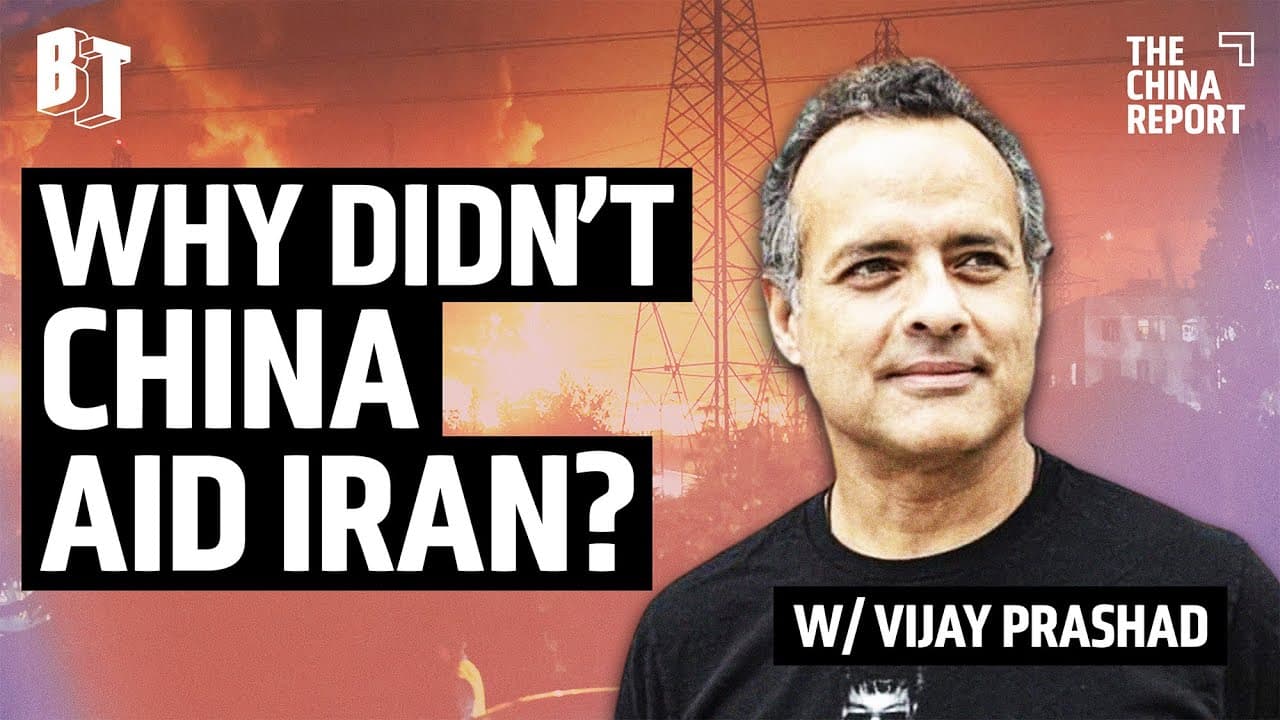
Why Didn't China Intervene in Israel-Iran Conflict?
TL;DR
China's cautious approach during the Israel-Iran conflict highlights its strategic preference for non-intervention, aiming to maintain economic ties and avoid military confrontations. Despite expectations, China chose diplomacy over direct involvement, reflecting its long-term strategy of leveraging economic influence rather than military power in international relations.
Transcript
12 days of war between Israel and Iran have ended in a fragile ceasefire. Some have criticized China's cautiousness in directly supporting Iran during the attacks, while others claimed the war exposed the limits of Beijing's foreign policy. We'll discuss this and more on this week's China Report. Welcome to the China Report made in collaboration wi... Read More
Key Insights
- China favors non-intervention and diplomatic solutions over military involvement in international conflicts.
- Iran's historical pride and self-reliance may have influenced its decision not to seek Chinese military support.
- China's economic ties with the West and strategic investments in the Middle East influence its cautious foreign policy.
- The geopolitical landscape is shifting, with multipolarity challenging traditional Western dominance.
- BRICS nations, despite their potential, face internal contradictions and differing political systems.
- The US's military overextension may contribute to its decline, as economic competition with China intensifies.
- China's foreign policy emphasizes economic and political tools over military intervention.
- The fragile ceasefire between Israel and Iran risks collapse, with potential nuclear proliferation in the region.
Install to Summarize YouTube Videos and Get Transcripts
Explore YouTube Video Summarizer or Get YouTube Transcript Extractor
Questions & Answers
Q: Why didn't China intervene in the Israel-Iran conflict?
China opted for a cautious approach during the Israel-Iran conflict, prioritizing diplomatic solutions and economic ties over military intervention. This decision aligns with China's long-standing policy of non-intervention, avoiding direct confrontations that could jeopardize its strategic interests and relationships with Western countries and Gulf states.
Q: How does China's foreign policy differ from Western military strategies?
China's foreign policy emphasizes economic and political tools rather than military intervention. Unlike Western strategies that often rely on military dominance, China seeks to maintain influence through economic partnerships and diplomatic engagements, reflecting its strategic discipline and focus on long-term development goals.
Q: What role does Iran's national pride play in its foreign relations?
Iran's national pride and historical self-reliance significantly influence its foreign relations, often leading the country to rely on its own capabilities rather than seeking external military support. This sense of pride may contribute to Iran's decision to manage conflicts independently, as seen in its response to the Israel-Iran conflict.
Q: What challenges do BRICS nations face in challenging Western dominance?
BRICS nations face internal contradictions and differing political systems that hinder their ability to effectively challenge Western dominance. Despite their economic potential, these countries struggle with varying political agendas and priorities, complicating efforts to present a unified front against traditional Western powers.
Q: How might the geopolitical landscape change in the coming years?
The geopolitical landscape is shifting towards a more balanced international order, with multipolarity challenging traditional Western dominance. This change emphasizes multilateralism and cooperation among diverse global powers, potentially leading to a more equitable distribution of influence and decision-making in international affairs.
Q: What are the implications of the US's military overextension?
The US's military overextension may contribute to its decline, as resources are stretched thin across multiple global engagements. This situation highlights the challenges of maintaining military dominance while competing economically with rising powers like China, which prioritizes strategic discipline and economic influence over military interventions.
Q: What are the potential consequences of nuclear proliferation in the Middle East?
Nuclear proliferation in the Middle East could destabilize the region, increasing the risk of conflict and escalating tensions among rival states. Countries like Iran may pursue nuclear capabilities as a deterrent, following the examples of North Korea, which could lead to a regional arms race and complicate international diplomatic efforts.
Q: How does China's economic strategy influence its global role?
China's economic strategy, focusing on trade partnerships and infrastructure development, enhances its global role by leveraging economic influence over military power. This approach allows China to build strategic relationships and expand its reach without direct military confrontations, positioning itself as a key player in shaping the future of international relations.
Summary & Key Takeaways
-
China's cautious response in the Israel-Iran conflict underscores its strategic preference for non-intervention, prioritizing economic ties and avoiding military confrontations. This approach reflects China's long-term strategy of leveraging economic influence over military power in international relations.
-
Internal contradictions within BRICS and differing political systems hinder their ability to effectively challenge Western hegemony. Despite this, the geopolitical landscape is shifting towards a more balanced international order, emphasizing multilateralism over unipolarity.
-
The US's military overextension and economic challenges highlight its potential decline, as China continues to compete effectively through strategic discipline and economic influence. This dynamic underscores the evolving nature of global power structures and the challenges of maintaining dominance.
Read in Other Languages (beta)
Share This Summary 📚
Summarize YouTube Videos and Get Video Transcripts with 1-Click
Try YouTube Summary with ChatGPT & Claude or YouTube Transcript Generator
Explore More Summaries from BreakThrough News 📚



Summarize YouTube Videos and Get Video Transcripts with 1-Click
Try YouTube Summary with ChatGPT & Claude or YouTube Transcript Generator