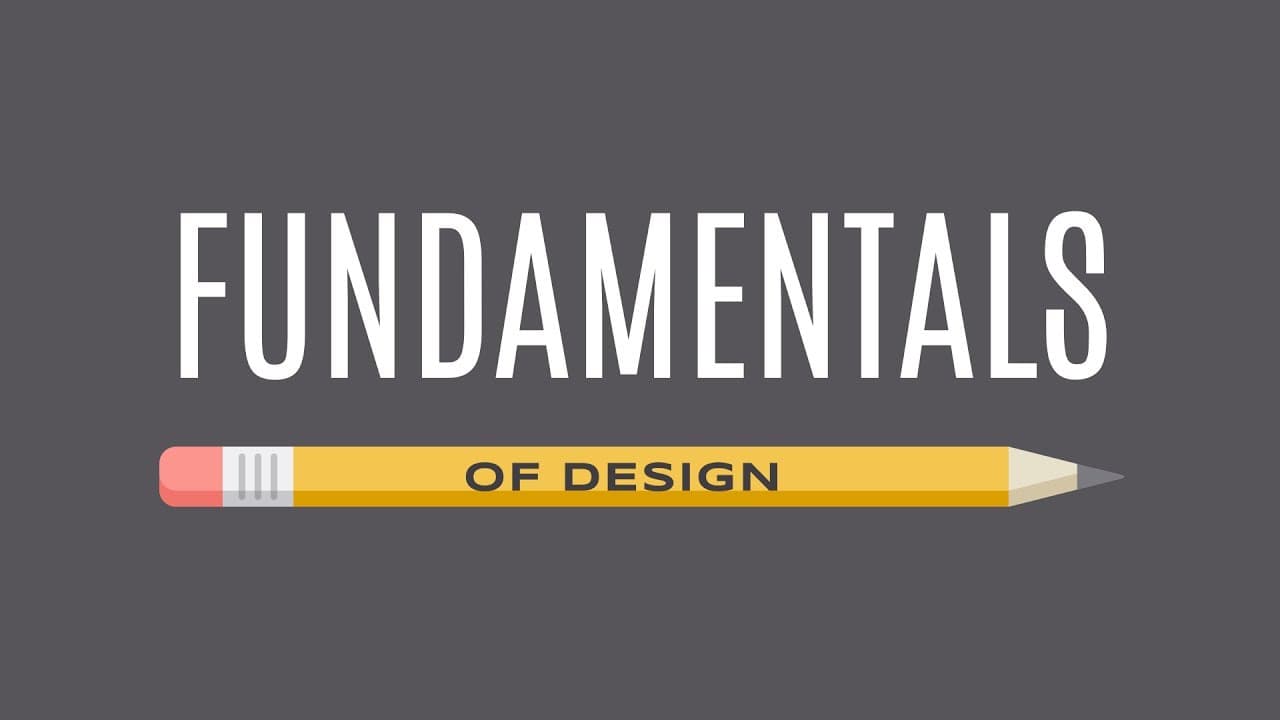
Beginning Graphic Design: Fundamentals
TL;DR
Learn about the basic elements of design - line, shape, form, texture, and balance - and how they are crucial in creating visuals.
Transcript
The fundamentals of design are the basis of every visual medium, from fine art… to modern web design… even small details, like the fonts that make up most compositions. What do these examples have in common? Some very basic elements, including line, shape, form, texture, and balance. They might not seem like much on their own, but together… they're... Read More
Key Insights
- 🫥 The fundamentals of design, including line, shape, form, texture, and balance, are essential in various visual mediums.
- 🫥 Lines have diverse applications in design, from illustrations to text compositions.
- 🪜 Shapes are crucial for communication and can be used in organizing content, creating illustrations, and adding interest.
- 💁 Form creates the illusion of depth in both 2D and 3D designs, giving them a touch of realism.
- 🫓 Texture adds depth and tactility to flat images, but it should be used in moderation to avoid overwhelming the design.
- 👾 Balance can be achieved through factors like color, size, and negative space, with different techniques like symmetry, asymmetry, and the rule of thirds.
Install to Summarize YouTube Videos and Get Transcripts
Explore YouTube Video Summarizer or Get YouTube Transcript Extractor
Questions & Answers
Q: What are the fundamental elements of design?
The fundamental elements of design are line, shape, form, texture, and balance. These elements play a crucial role in creating visuals and communicating ideas.
Q: How do lines contribute to design?
Lines can add emphasis, divide or organize content, and guide the viewer's eye in design. Different line qualities, such as weight, color, texture, and style, can significantly impact the perception of a design.
Q: What is the importance of shapes in design?
Shapes help organize and separate content, create simple illustrations, and add interest to designs. They are also the foundation of many visual elements, from street signs to abstract art.
Q: How does form contribute to 2D design?
In 2D design, form is used to create the illusion of realism and depth. It can be achieved through techniques like light, shadow, and perspective, bringing a touch of realism even to flat designs.
Q: How does texture enhance design?
Texture adds depth and tactility to flat images, making them more visually interesting. It can be used as a background image or applied to elements like fonts and icons.
Q: What is balance in design?
Balance refers to the equal distribution of visual weight in a design. It can be achieved through various factors like color, size, number, and negative space. Different types of balance include symmetrical, asymmetrical, and the rule of thirds.
Key Insights:
- The fundamentals of design, including line, shape, form, texture, and balance, are essential in various visual mediums.
- Lines have diverse applications in design, from illustrations to text compositions.
- Shapes are crucial for communication and can be used in organizing content, creating illustrations, and adding interest.
- Form creates the illusion of depth in both 2D and 3D designs, giving them a touch of realism.
- Texture adds depth and tactility to flat images, but it should be used in moderation to avoid overwhelming the design.
- Balance can be achieved through factors like color, size, and negative space, with different techniques like symmetry, asymmetry, and the rule of thirds.
- Understanding the fundamentals of design can enhance various projects, whether creating graphics or enhancing existing work.
Summary & Key Takeaways
-
Design fundamentals, such as line, shape, form, texture, and balance, are the building blocks of visual mediums.
-
Lines are versatile and can be used to add emphasis or guide the viewer's eye.
-
Shapes help organize content, create illustrations, and add interest to designs.
-
Forms bring depth to 2D designs and make objects appear realistic.
-
Texture adds depth and tactility to flat images.
-
Balance involves the equal distribution of visual weight, achieved through symmetry, asymmetry, or the rule of thirds.
Read in Other Languages (beta)
Share This Summary 📚
Summarize YouTube Videos and Get Video Transcripts with 1-Click
Try YouTube Summary with ChatGPT & Claude or YouTube Transcript Generator
Explore More Summaries from GCFLearnFree 📚




Summarize YouTube Videos and Get Video Transcripts with 1-Click
Try YouTube Summary with ChatGPT & Claude or YouTube Transcript Generator