Basically Every Mammal Is Good at Swimming... Except Us
TL;DR
Many mammals, including moose, elephants, armadillos, camels, kangaroos, sloths, and even proboscis monkeys, are surprisingly skilled swimmers, utilizing their unique adaptations for survival and resource acquisition.
Transcript
This episode is brought to you by the Music for Scientists album, now available on all streaming services. [♪ INTRO] We humans like to think we’re pretty good swimmers. But… any prowess we have is learned. Most other mammals don’t need lessons! For them, swimming is instinctual. And that includes the mammals you’d least expect to be at home in t... Read More
Key Insights
- 🤑 Moose swim to find plants rich in salt, which is essential for their antler growth.
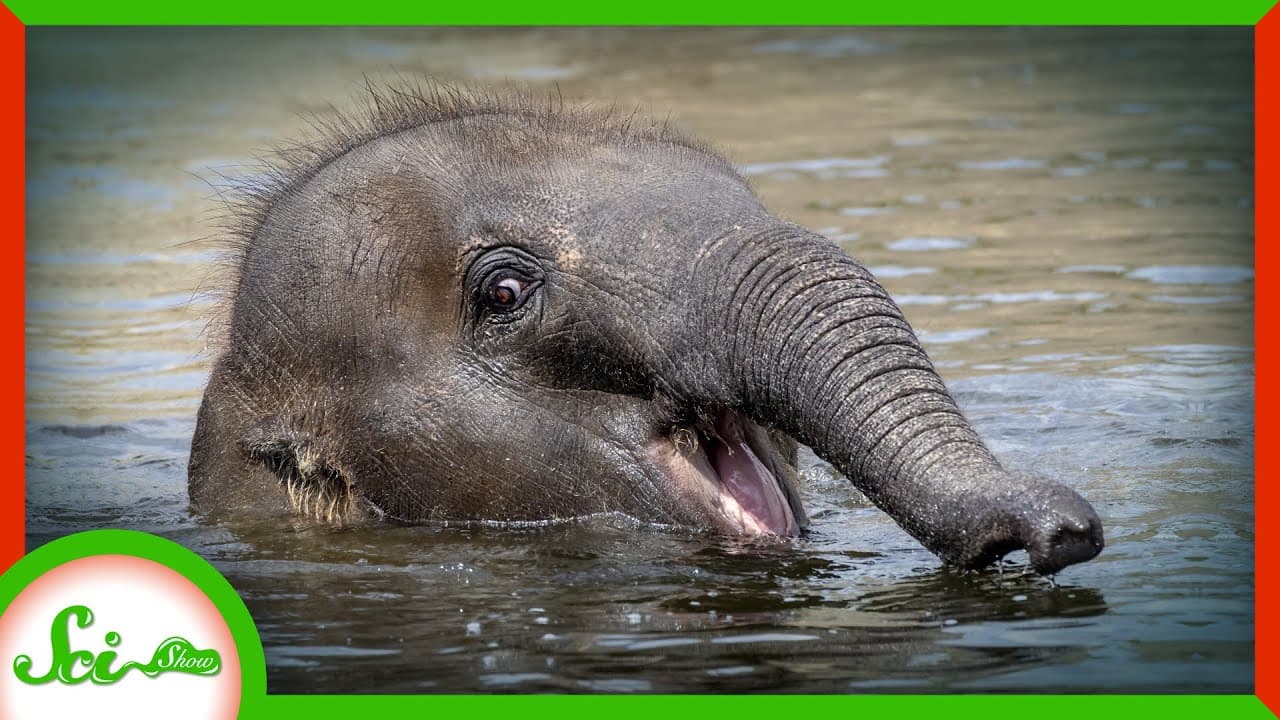
- 😒 Elephants are surprisingly buoyant due to their large size and have adapted to use their swimming abilities for various purposes.
- 🏊 Armadillos have innate swimming abilities and can swim short and long distances by utilizing different techniques.
- 😀 Camels, particularly the Kharai breed, have a history of swimming to access salty plants but face habitat loss and declining numbers.
- 🏊 Kangaroos can swim and may use their swimming ability to evade predators or traverse water bodies.
- 🫢 Sloths are adept swimmers, with their long arms and gas-filled stomachs providing buoyancy and efficient movement in water.
- 🙈 Proboscis monkeys have developed swimming skills as a strategy to escape predators and access necessary nutrients from aquatic habitats.
Install to Summarize YouTube Videos and Get Transcripts
Explore YouTube Video Summarizer or Get YouTube Transcript Extractor
Questions & Answers
Q: How do moose prevent water from getting into their nostrils while swimming?
Moose have long and flappy snouts that act as valves, keeping water out of their nostrils while they paddle in water.
Q: What might be the reasons for elephants' swimming abilities?
Elephants' swimming abilities might have helped their ancestors find new food sources and reduce competition, and they may use swimming to keep their bodies cool in certain environments.
Q: Why do armadillos gulp air before swimming?
Armadillos gulp air to inflate their stomach and small intestine, increasing their buoyancy and allowing them to swim more efficiently.
Q: What is the reason behind proboscis monkeys' fondness for water?
Proboscis monkeys are skilled swimmers because being near water allows them to escape tree-dwelling predators and access salt and nutrients from aquatic plants.
Summary & Key Takeaways
-
Moose, known for their massive size, are adept swimmers and submerge themselves in water to feed on plants rich in salt.
-
Elephants, despite their size, are buoyant and can swim long distances, which may have helped their ancestors colonize offshore islands.
-
Armadillos use various strategies, such as gulping air to increase buoyancy, to swim across short and long distances.
-
Camels, particularly the Kharai breed, are natural swimmers and swim several kilometers to reach salty plants.
-
Kangaroos have innate swimming abilities, possibly used to escape predators or traverse rivers and lakes.
-
Sloths, both two-toed and three-toed, can swim efficiently due to their long arms and gas-filled stomachs.
-
Proboscis monkeys are unique among primates as skilled swimmers, using diving and cannonball techniques to escape predators.
Read in Other Languages (beta)
Share This Summary 📚
Summarize YouTube Videos and Get Video Transcripts with 1-Click
Try YouTube Summary with ChatGPT & Claude or YouTube Transcript Generator
Explore More Summaries from SciShow 📚
Summarize YouTube Videos and Get Video Transcripts with 1-Click
Try YouTube Summary with ChatGPT & Claude or YouTube Transcript Generator