Nietzsche: Arguing Is for the Weak
TL;DR
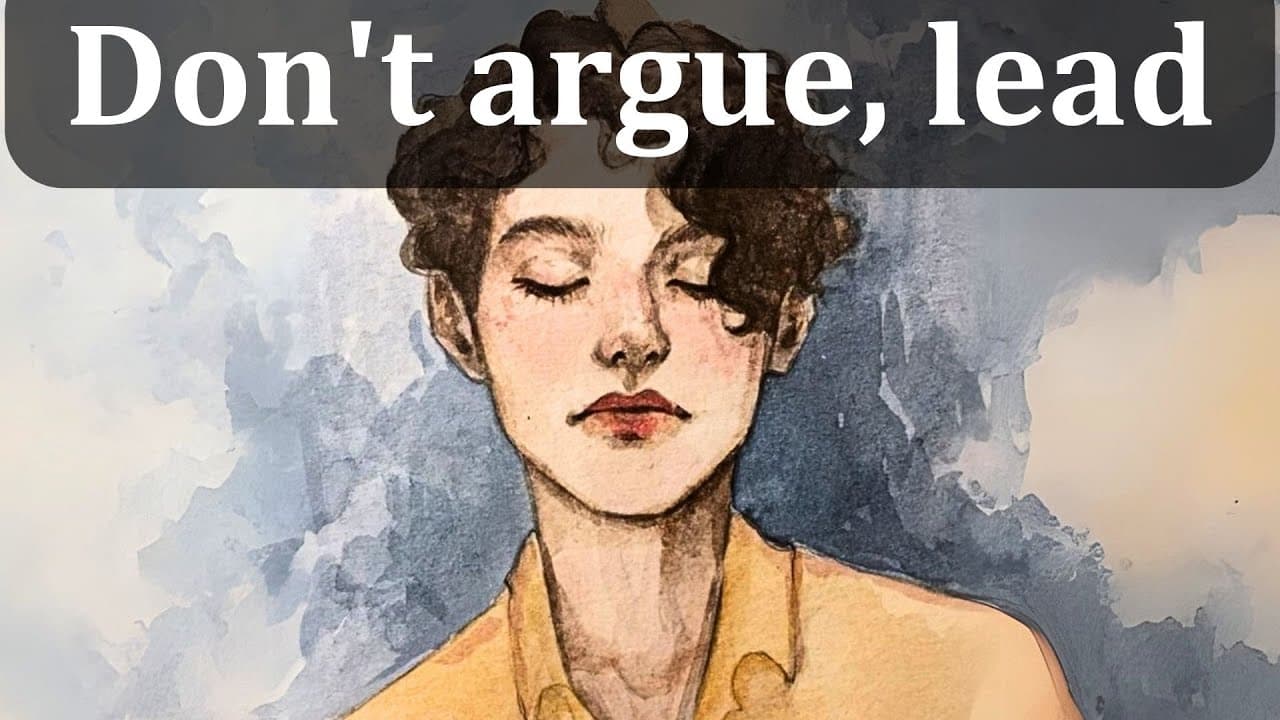
Nietzsche sees debate as a mask for insecurity, valuing instinct over argument.
Transcript
have you ever stopped to think about why we argue so much n has suggested that the obsession with debate might be the biggest sign of weakness there is shocking isn't it after all we live in a world where arguing seems to be the Pinnacle of intelligence but what if it's just a facade a mask for insecurity disguised as rationality no... Read More
Key Insights
- Nietzsche challenges the notion that debate is the pinnacle of intelligence, suggesting it often masks insecurity and a lack of power.
- Socrates' emphasis on reason can become a tyrant, leading to overthinking and paralysis instead of clarity and action.
- Instinct and intuition play a vital role in decision-making, often leading to better outcomes than overanalyzing every detail.
- Nietzsche's concept of the 'Übermensch' emphasizes self-sufficiency and creating one's values, rather than seeking external validation.
- Modern morality often makes us doubt our instincts, leading to guilt and insecurity over natural, instinctive actions.
- Justice is frequently manipulated by the powerful to maintain control, challenging its perception as a neutral, universal concept.
- Excessive debate, especially on social media, can be a sign of cultural decline, focusing on words over meaningful action.
- Nietzsche advocates for a balance between reason and instinct, integrating both to act with courage and authenticity.
Install to Summarize YouTube Videos and Get Transcripts
Explore YouTube Video Summarizer or Get YouTube Transcript Extractor
Questions & Answers
Q: Why does Nietzsche view debate as a sign of weakness?
Nietzsche perceives debate as a sign of weakness because it often serves as a facade for insecurity and a lack of real power. In his view, people engage in debates not to exchange ideas but to compensate for their inability to act. He suggests that true strength lies in instinctive action rather than in endless arguments.
Q: How does Nietzsche's view of reason differ from Socrates'?
While Socrates saw reason as a guiding light that illuminates ignorance, Nietzsche believed that an overemphasis on reason can lead to overthinking and paralysis. He argues that reason, when overused, becomes a burden, preventing action and leading to doubt and insecurity. Nietzsche advocates for a balance between reason and instinct.
Q: What is the 'Übermensch' and how does it relate to instinct?
The 'Übermensch' is a concept in Nietzsche's philosophy representing an individual who transcends societal values and creates their own. This figure embodies self-sufficiency and instinctive confidence, acting without the need for external validation. The 'Übermensch' relies on inner strength and intuition, carving out new paths rather than following inherited ones.
Q: How does modern morality affect our instincts, according to Nietzsche?
Nietzsche argues that modern morality often makes us doubt our instincts, leading to feelings of guilt and insecurity over natural actions. He believes that societal values and inherited moral codes constrain our instincts, forcing us to justify even the simplest actions. This results in a disconnect from our natural impulses and a reliance on external validation.
Q: What role does justice play in Nietzsche's philosophy?
Nietzsche views justice as a construct often manipulated by the powerful to maintain control. He challenges the notion of justice as a neutral, universal concept, suggesting it is frequently used to impose the will of the strong over the weak. Justice, in Nietzsche's view, is not impartial but is shaped by those with power and influence.
Q: Why does Nietzsche criticize excessive debate on social media?
Nietzsche criticizes excessive debate on social media as a sign of cultural decline, where words take precedence over meaningful action. He argues that constant debate serves as a distraction, consuming energy that could be used for real transformation. In Nietzsche's view, this focus on dialogue often masks an inability to act and create change.
Q: How does Nietzsche propose we balance reason and instinct?
Nietzsche proposes that we integrate reason and instinct to act with courage and authenticity. He suggests that while reason provides clarity, instinct offers the power to act. By finding a balance between the two, individuals can transcend the limitations of excessive logic and impulsiveness, leading to a fuller, more authentic life.
Q: What is the ultimate challenge Nietzsche presents to individuals?
Nietzsche challenges individuals to take control of their choices without seeking external validation. He invites us to live beyond societal conventions, creating our own values and acting from inner strength. This involves trusting our instincts and intuition, rejecting the need for justification, and embracing the responsibility to define what is good and bad in our lives.
Summary & Key Takeaways
-
Nietzsche critiques the modern obsession with debate, suggesting it often masks insecurity and a lack of real power. He emphasizes the importance of instinct and intuition in decision-making, which can often lead to better outcomes than overanalyzing every detail. The video explores how integrating logic and instinct can lead to a more authentic life.
-
The concept of the 'Übermensch' is central to Nietzsche's philosophy, emphasizing self-sufficiency and the creation of one's values without seeking external validation. Nietzsche criticizes modern morality for making us doubt our instincts, leading to guilt and insecurity over natural, instinctive actions.
-
Nietzsche challenges the perception of justice as a neutral, universal concept, suggesting it is often manipulated by the powerful to maintain control. He critiques the excessive debate on social media, viewing it as a sign of cultural decline. He advocates for a balance between reason and instinct, integrating both to act with courage and authenticity.
Read in Other Languages (beta)
Share This Summary 📚
Summarize YouTube Videos and Get Video Transcripts with 1-Click
Try YouTube Summary with ChatGPT & Claude or YouTube Transcript Generator