Should We Grow Human Organs In Pigs?
TL;DR
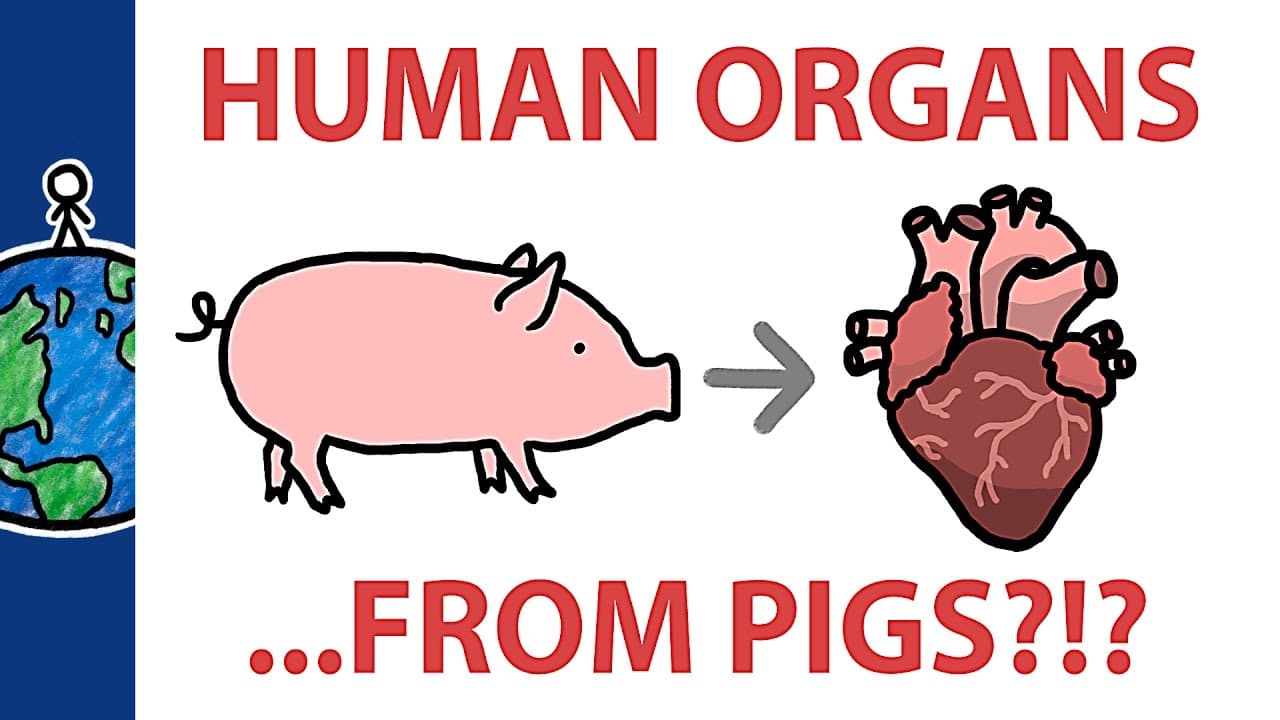
Due to the shortage of human organs for transplants, scientists are exploring the possibility of using pig organs, either by modifying them to be more compatible or by growing human organs inside pigs. However, ethical concerns and uncertainties remain.
Transcript
Hi - this is Kate from MinuteEarth. In the United States alone, 22 people die every day waiting for a kidney, liver, heart, or lung transplant. There simply aren’t enough donated human organs to go around, and we can’t just go around stealing them out of random healthy people. But pigs’ organs have roughly the same structure and proportions as huma... Read More
Key Insights
- 🥺 The shortage of human organs for transplants leads scientists to explore using pig organs, which have similar structures.
- 🐷 Pig organs are rejected due to immune system responses, but genetically engineered pigs could eliminate rejections.
- 💗 An ongoing experiment involves growing human organs inside genetically modified pig embryos.
- 🐷 Experiments with human stem cells have been limited due to ethical concerns and potential development of other human organs within pigs.
- 💗 In addition to kidneys, the same technology could potentially grow human hearts, spinal cords, and brains inside pigs.
- 🗯️ Ethical questions arise regarding part-human pigs and determining their rights and treatment.
- 🐷 The possibility of using pig organs raises the need to define when a pig is no longer considered a pig.
Install to Summarize YouTube Videos and Get Transcripts
Explore YouTube Video Summarizer or Get YouTube Transcript Extractor
Questions & Answers
Q: Why can't we use pig organs for human transplants?
Pig organs are considered foreign by our immune systems due to specific sugar molecules on their cells. This triggers rejection. However, scientists have been genetically modifying pigs to eliminate these molecules and increase compatibility.
Q: How can we grow human organs inside pigs?
By modifying pig embryos, researchers can disable the pig's ability to develop specific organs, such as kidneys. They then inject the embryos with human stem cells, which grow into healthy organs made from the patient's own cells.
Q: Have experiments with pig-human embryos been successful so far?
While experiments have shown success with pig embryos injected with stem cells from other pigs, experiments with human stem cells have only been conducted for four weeks due to ethical concerns surrounding potential development of other human organs within the pigs.
Q: What are the ethical concerns surrounding pig-human organ farming?
Ethical questions arise regarding the rights and treatment of part-human pigs, especially if they are capable of producing multiple human organs. The issue of determining when a pig stops being a pig also emerges.
Summary & Key Takeaways
-
Every day in the US, 22 people die waiting for organ transplants due to the scarcity of donated human organs.
-
Pig organs have similar structures to human organs, but they are often rejected due to immune system responses.
-
Scientists have been able to genetically modify pigs to eliminate certain rejection-inducing traits in their organs, and they are also experimenting with growing human organs inside pigs.
Read in Other Languages (beta)
Share This Summary 📚
Summarize YouTube Videos and Get Video Transcripts with 1-Click
Try YouTube Summary with ChatGPT & Claude or YouTube Transcript Generator
Explore More Summaries from MinuteEarth 📚






Summarize YouTube Videos and Get Video Transcripts with 1-Click
Try YouTube Summary with ChatGPT & Claude or YouTube Transcript Generator