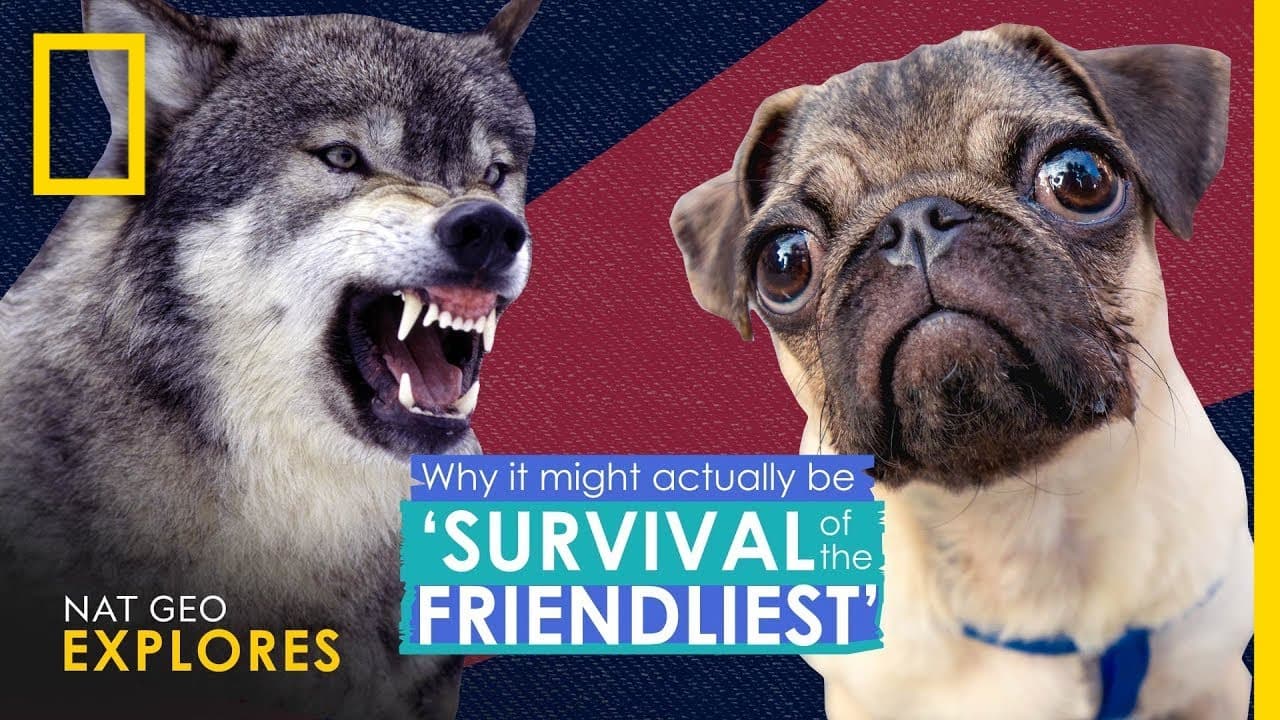
Why It Actually Might Be 'Survival of the Friendliest' | Nat Geo Explores
TL;DR
Friendliness, not dominance, leads to evolutionary success in animals and humans alike.
Transcript
it's a dog-eat-dog world winner takes all survival of the fittest but is it really if the biggest and baddest always win how come there are so many more of them than them strength is helpful but friendliness might actually be the key to evolutionary success they're hugging i think dogs are exhibit a for the survival of the friendliest meet dr brian... Read More
Key Insights
- 🥺 Friendliness, rather than dominance, can lead to evolutionary success in animals.
- ❓ Domestication selects for traits like friendliness in animals.
- 👻 In-group relationships allowed early humans to expand social networks and cooperate.
- 😊 Bonobos demonstrate pro-social behavior without lethal aggression.
- 😵 Humans' ability to form cross-group friendships can combat dehumanization.
- 🧑⚕️ Egosystem vs. ecosystem motivations impact mental health and well-being.
- 🥺 Responding to others' needs can lead to improved self-esteem and reduced anxiety.
Install to Summarize YouTube Videos and Get Transcripts
Explore YouTube Video Summarizer or Get YouTube Transcript Extractor
Questions & Answers
Q: How does friendliness contribute to evolutionary success?
Friendliness, rather than dominance, has been shown to be a successful evolutionary strategy in animals and humans. Through cooperation and forming social bonds, individuals can thrive and pass on their genes.
Q: What role does domestication play in human-animal relationships?
Domestication is a process of selecting for friendliness, leading to strong bonds between humans and animals. This mutual relationship has been crucial for both species' survival and success.
Q: How do in-group relationships impact human evolution?
In-group relationships allowed early humans to expand their social networks and cooperate with a larger group. This led to cultural innovation and contributed to our evolutionary success as a species.
Q: What is the impact of egosystem vs. ecosystem motivations on personal well-being?
Egosystem motivation focuses on self-worth, while ecosystem motivation considers the well-being of others. Research shows that being responsive to others' needs can lead to better mental health and self-esteem.
Summary & Key Takeaways
-
Evolutionary success is not solely based on dominance, but also on friendliness towards others.
-
Animals, like dogs and bonobos, exhibit friendliness as a successful survival strategy.
-
Humans' ability to form social connections and cooperate led to our evolutionary success.
Read in Other Languages (beta)
Share This Summary 📚
Summarize YouTube Videos and Get Video Transcripts with 1-Click
Try YouTube Summary with ChatGPT & Claude or YouTube Transcript Generator
Explore More Summaries from National Geographic 📚



Summarize YouTube Videos and Get Video Transcripts with 1-Click
Try YouTube Summary with ChatGPT & Claude or YouTube Transcript Generator