How Does Postwar Economy Compare to 1970s?
TL;DR
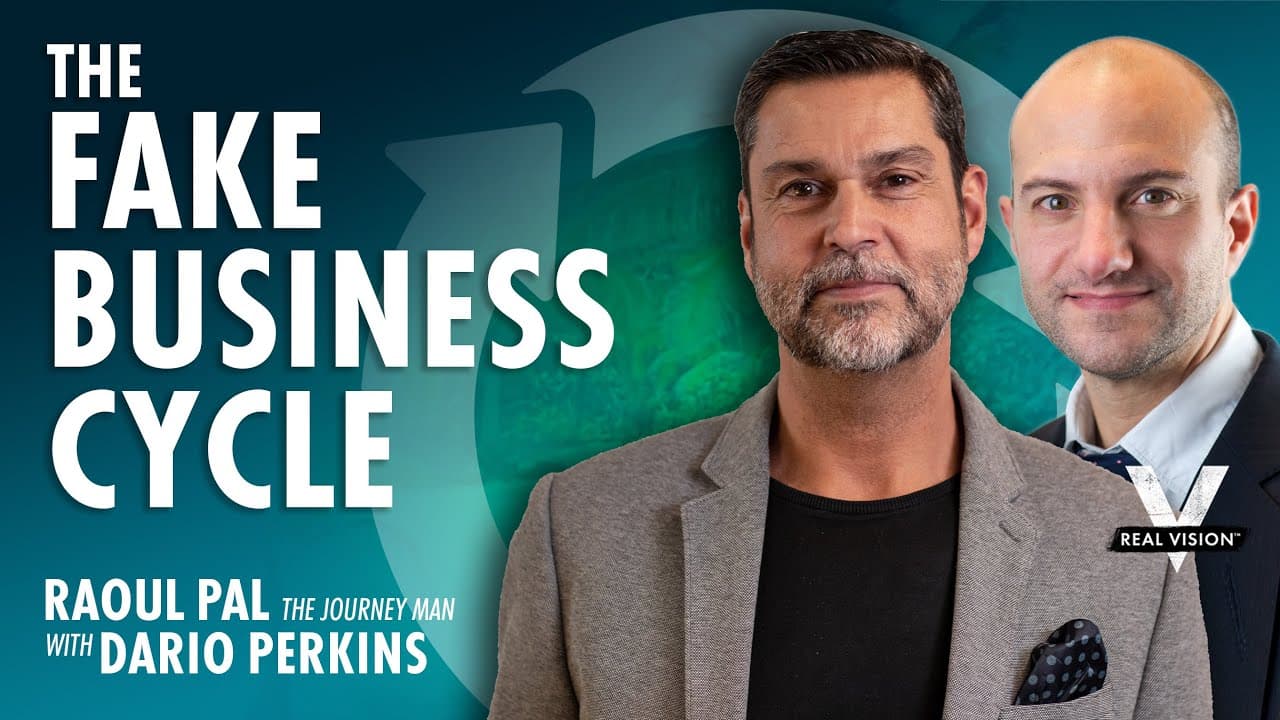
The global economy's current state is more akin to the post-World War II era than the 1970s. This period saw inflationary pressures due to pent-up demand and supply chain disruptions, but these pressures subsided without aggressive monetary tightening. The coming decade may feature higher, more volatile inflation and a shift towards a tangible economy, driven by factors like green technology investment.
Transcript
dario fantastic to get you on real vision it's been a long time coming right yeah i think we've been we've been kind of twitter friends for years haven't we i know um listen it's a really big confusing macro backdrop and you've got some really interesting thoughts so love to let you kind of first let's just go through your career and who you are ju... Read More
Key Insights
- The current economic environment resembles the post-World War II era more than the 1970s.
- Inflation is likely to be higher and more volatile in the coming decade.
- Central banks are concerned about repeating the mistakes of the 1970s.
- Green technology and housing are new secular growth drivers.
- The tangible economy will replace the intangible economy of the 2010s.
- Higher nominal growth and inflation will lead to higher interest rates.
- The U.S. economy is less likely to enter a recession compared to Europe and China.
- Central banks may overreact to current inflation data, risking economic stability.
Install to Summarize YouTube Videos and Get Transcripts
Explore YouTube Video Summarizer or Get YouTube Transcript Extractor
Questions & Answers
Q: How does the current economic environment resemble the post-World War II era?
The current economic environment resembles the post-World War II era due to pent-up demand and supply chain disruptions, leading to inflationary pressures. During the 1940s, inflation surged but subsided without aggressive monetary tightening. Dario Perkins suggests this period is a better framework for understanding today's economy, as opposed to the 1970s, which was characterized by a wage-price spiral and prolonged inflation.
Q: What are the new secular growth drivers mentioned by Dario Perkins?
Dario Perkins identifies green technology investment and housing as new secular growth drivers for the coming decade. He suggests that significant public and private investment in green technologies will drive economic growth. Additionally, changes in work patterns, such as remote work, are expected to boost housing demand, particularly in the U.S., where demographic trends support a strong housing market.
Q: Why does Dario Perkins believe central banks might overreact to current inflation data?
Dario Perkins believes central banks might overreact to current inflation data due to fears of repeating the 1970s' mistakes, where inflation spiraled out of control. He argues that the current inflation is more akin to the post-World War II period, which resolved without aggressive monetary policy. Central banks' focus on maintaining credibility and avoiding high inflation could lead to premature or excessive tightening, risking economic stability.
Q: What is the 'tangible economy' that Dario Perkins refers to?
The 'tangible economy' refers to a shift from the intangible assets that dominated the 2010s, such as growth stocks, to real assets and sectors like commodities, housing, and green technology. This shift is driven by higher inflation and interest rates, encouraging investment in physical and productive sectors. Perkins suggests this transition will define the 'tangible 20s,' characterized by higher nominal growth and a reconfiguration of global supply chains.
Q: How does Dario Perkins view the probability of recession in different regions?
Dario Perkins views the probability of recession as higher in Europe and China compared to the U.S. Europe faces a significant squeeze on consumer spending due to high inflation and low wage growth, while China is dealing with a property slump and lockdowns. In contrast, the U.S. has a lower recession probability, around 20%, due to a strong labor market and resilient balance sheets, though future inflation levels remain a critical factor.
Q: What role does inflation volatility play in Perkins' economic outlook?
Inflation volatility is a key aspect of Perkins' economic outlook. He expects inflation to be more volatile due to factors like climate change, supply chain reconfiguration, and green technology transitions. This volatility contrasts with the stable inflation of the past two decades, requiring central banks and investors to adapt to a more dynamic economic environment. Perkins argues that understanding this volatility is crucial for navigating the tangible 20s.
Q: How does Dario Perkins suggest investors should approach asset allocation in the current environment?
Dario Perkins suggests that investors should adopt a defensive approach in the current environment, focusing on cash and defensive sectors of the stock market. He emphasizes the importance of being cautious due to the immediate growth scare and potential recession narratives. Looking beyond the short-term risks, Perkins advocates for exposure to the real economy, including commodities, gold, and value stocks, to capitalize on the tangible 20s' growth drivers.
Q: What is the significance of the 'tangible 20s' in Perkins' analysis?
The 'tangible 20s' signifies a decade characterized by a shift towards tangible assets and sectors, driven by higher inflation, interest rates, and real economic growth. This period will see increased investment in commodities, housing, and green technologies, moving away from the intangible assets that dominated the 2010s. Perkins believes this shift will reshape economic dynamics, offering new investment opportunities and challenges in navigating a more volatile inflation landscape.
Summary & Key Takeaways
-
The current economic situation is more similar to the post-World War II era than the 1970s. During the 1940s, inflation was driven by pent-up demand and supply disruptions but subsided without aggressive monetary tightening. Dario Perkins argues that this is the right framework to understand today's economy.
-
Perkins predicts that the next decade will feature higher and more volatile inflation, with a shift towards a tangible economy driven by green technology investment and housing. He believes that central banks are overly concerned with repeating the mistakes of the 1970s, which could lead to policy overreactions.
-
The U.S. economy is better positioned than Europe or China, with a lower probability of recession. However, central banks' actions will be crucial in determining whether inflation remains transitory or becomes entrenched. The tangible 20s will see a reconfiguration of global supply chains and increased public and private investment.
Read in Other Languages (beta)
Share This Summary 📚
Summarize YouTube Videos and Get Video Transcripts with 1-Click
Try YouTube Summary with ChatGPT & Claude or YouTube Transcript Generator
Explore More Summaries from Real Vision 📚



Summarize YouTube Videos and Get Video Transcripts with 1-Click
Try YouTube Summary with ChatGPT & Claude or YouTube Transcript Generator