Flaws in GDP as a measure of productivity | Erik Brynjolfsson and Lex Fridman
TL;DR
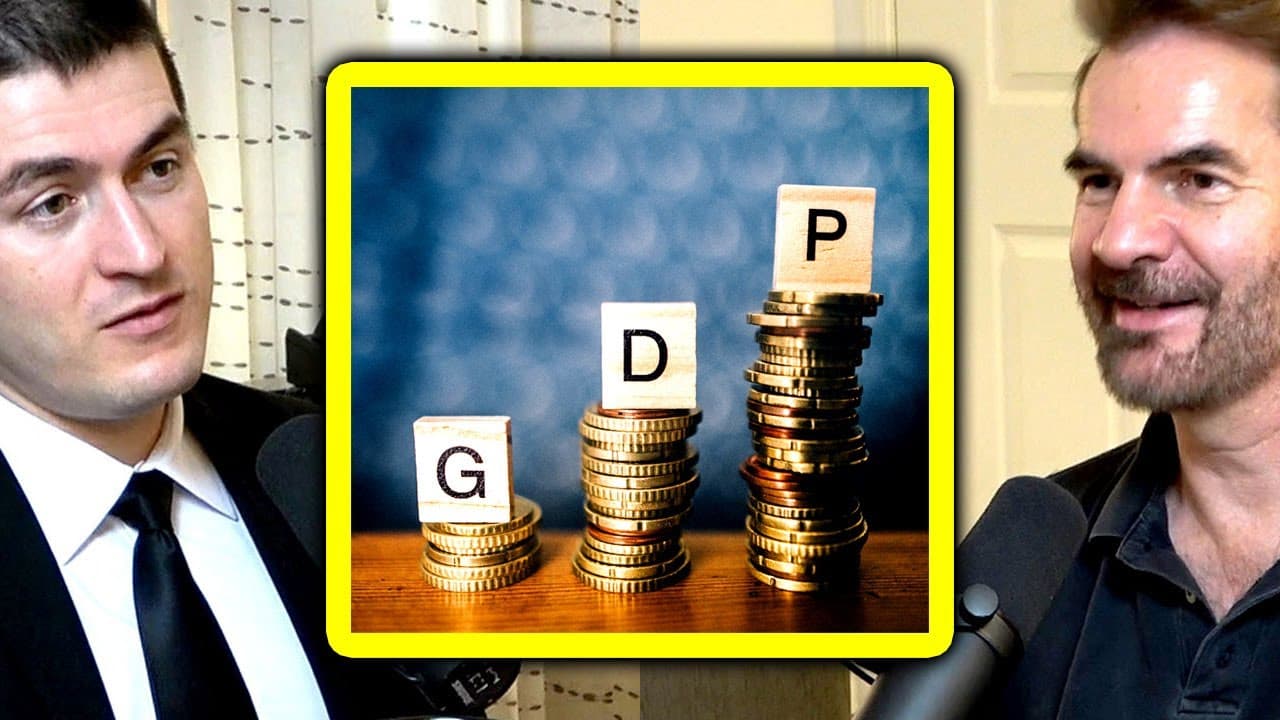
The content discusses the value of digital goods, their absence in GDP calculations, and the need for a new set of metrics to measure their benefits.
Transcript
what would you place your biggest hope for productivity increases on because you kind of said at a high level ai but if i were to think about what has been so revolutionary in the last 10 years i would have 15 years and thinking about the internet i would say things like uh hopefully i'm not saying anything ridiculous but everything from wikipedia ... Read More
Key Insights
- 💁 Connectivity between people and access to information on websites like Wikipedia and Twitter have had a revolutionary impact in the past decade.
- 👋 Digital goods like Wikipedia, Facebook, and Twitter have a price of zero, which means they are not accounted for in GDP calculations.
- 👋 GDP, as a measure of production, fails to capture the value and benefits derived from digital goods, necessitating the development of new metrics like GDP-b.
- 👋 Measuring the value of digital goods for GDP-b is challenging but can be done through online choice experiments that assess individuals' willingness to pay or give up certain digital goods.
- 🤕 Different people place different values on digital goods, with factors like gender and age influencing these preferences.
- 💦 The speaker is working on publishing research papers on this topic, including one already published in the proceedings of the National Academy of Sciences.
Install to Summarize YouTube Videos and Get Transcripts
Explore YouTube Video Summarizer or Get YouTube Transcript Extractor
Questions & Answers
Q: How do digital goods like Wikipedia and Facebook, which have a price of zero, impact GDP?
Since GDP is based on the price and quantity of goods bought and sold, digital goods with a price of zero, like Wikipedia and Facebook, do not contribute to GDP. However, they do create value for users, highlighting a mismatch between GDP and the value generated by digital goods.
Q: How do economists currently view GDP and productivity?
Economists tend to view GDP and productivity as measures of well-being and welfare, rather than just production. However, these measures do not capture the full value individuals derive from digital goods, leading to the need for new metrics that include the benefits received.
Q: How is GDP-b different from traditional GDP?
GDP-b, or GDP-benefits, is a new metric that aims to measure the benefits individuals receive from digital goods and other non-physical products. It takes into account the value and utility people derive, even if they pay zero for these goods. Unlike GDP, it focuses on measuring benefits rather than costs.
Q: How is the value of digital goods determined for the purpose of developing GDP-b?
The value of digital goods is determined through massive online choice experiments. By asking individuals how much they would demand to give up certain digital goods or services, researchers can collect data on price preferences and derive estimates of the value people place on these goods.
Summary & Key Takeaways
-
The speaker believes that while AI may contribute to productivity increases, the connectivity between people and access to information on websites like Wikipedia and Twitter have been more revolutionary.
-
Digital goods like Wikipedia, Facebook, and Twitter have a price of zero, which means they do not contribute to GDP, despite creating value for users.
-
GDP, being a measure of production rather than well-being, does not capture the benefits people derive from digital goods, necessitating the development of a new metric called GDP-b, which measures benefits regardless of cost.
Read in Other Languages (beta)
Share This Summary 📚
Summarize YouTube Videos and Get Video Transcripts with 1-Click
Try YouTube Summary with ChatGPT & Claude or YouTube Transcript Generator
Explore More Summaries from Lex Clips 📚





Summarize YouTube Videos and Get Video Transcripts with 1-Click
Try YouTube Summary with ChatGPT & Claude or YouTube Transcript Generator