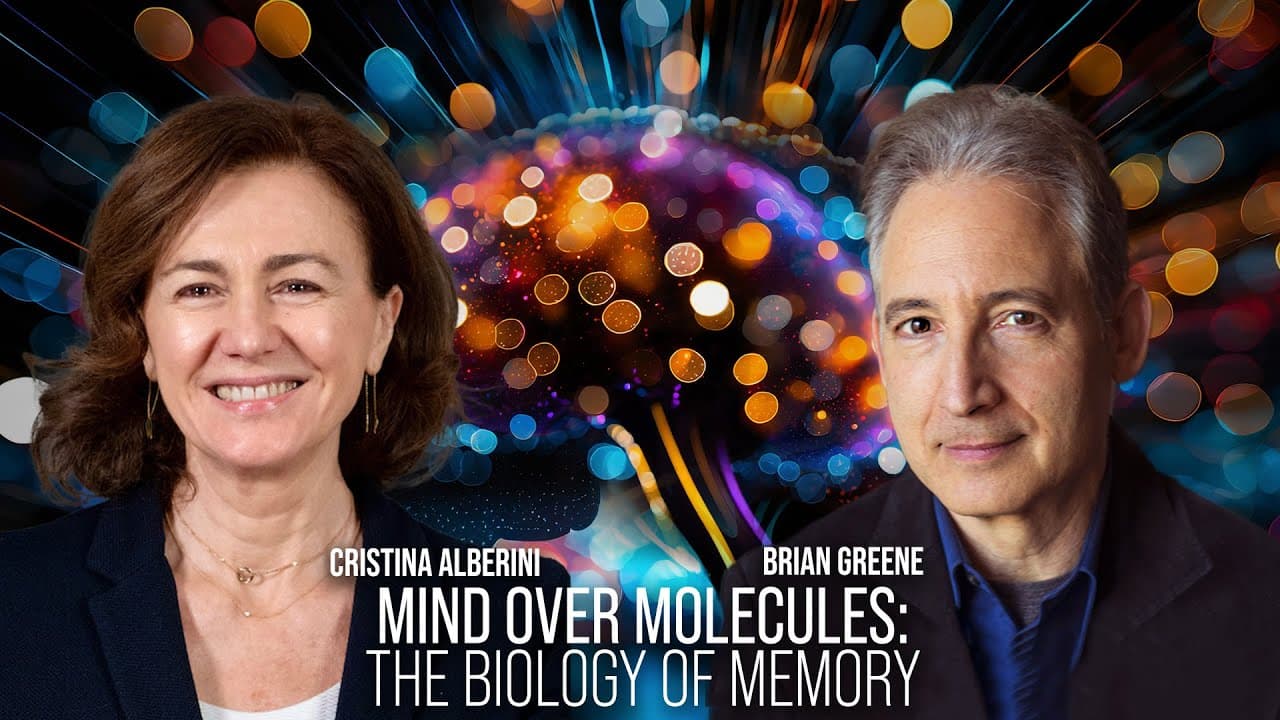
Mind Over Molecules: The Biology of Memory
TL;DR
Memory is a multifaceted process that involves different types of memories, memory systems, and biological mechanisms. Scientists are exploring the pathways in the brain by which memories are formed, consolidated, and retrieved, and the impact of emotions on memory. They are also investigating the possibility of manipulating memories and the interplay between conscious and unconscious memories.
Transcript
our memories Define us they shape who we are they guide how we Act they connect us to the world but how well do we understand the Pathways in the brain by which memories are imprinted Consolidated and later retrieved how does emotion affect the things we remember and will science ever gain the capacity to Tinker with our memories implanting new one... Read More
Key Insights
- 🍉 Memory classification involves considering duration (short-term vs long-term) and memory systems (implicit vs explicit).
- 😑 The formation of long-term memories involves gene expression, transcription, and translation, leading to biological changes in the brain.
- 🪡 Recall can make memories fragile again, triggering the need for reconsolidation and transcription and translation processes.
- 🤩 Emotion, arousal, attention, sleep, and context play key roles in memory formation and consolidation.
- ❓ Manipulating memories is a topic of interest for potential therapeutic interventions in memory disorders.
- ⌛ Memories can be inaccurate and change over time due to the consolidation process and repeated recall.
- ❓ The study of memory extends to infancy, with evidence of critical periods for learning and memory development.
Install to Summarize YouTube Videos and Get Transcripts
Explore YouTube Video Summarizer or Get YouTube Transcript Extractor
Questions & Answers
Q: How is memory classified based on duration?
Memory can be classified into short-term memories, which last for a few seconds or minutes, and long-term memories, which can span from days to a lifetime.
Q: What are implicit and explicit memory systems?
Implicit memory systems involve memories that are recalled automatically without consciousness, such as knowing how to tie shoes. Explicit memory systems involve consciously recalled memories, like remembering events or learning concepts.
Q: How do gene expression and biological changes in the brain contribute to long-term memory formation?
Long-term memory formation involves processes like gene transcription and translation, leading to the production of proteins that affect the structure and function of the memory system in the brain.
Q: How does recall impact memory formation and stability?
Recall can make memories fragile again for a limited period, during which memories require transcription and translation to stabilize. This process is known as reconsolidation and strengthens memories.
Summary & Key Takeaways
-
Memory can be classified based on duration, with short-term memories lasting a few seconds or minutes and long-term memories lasting for days, weeks, months, or a lifetime.
-
Memories can also be classified based on memory systems, such as implicit and explicit memory systems. Explicit memories are consciously recalled, while implicit memories are recalled automatically without consciousness.
-
The formation of long-term memories involves processes like gene expression, transcription, and translation, which lead to biological changes in the brain.
-
Recall of memories can make them fragile again for a limited period, during which transcription and translation are required for reconsolidation.
-
Emotion and arousal play a role in memory formation, and factors like sleep and attention can affect memory consolidation.
Read in Other Languages (beta)
Share This Summary 📚
Summarize YouTube Videos and Get Video Transcripts with 1-Click
Try YouTube Summary with ChatGPT & Claude or YouTube Transcript Generator
Explore More Summaries from World Science Festival 📚


Summarize YouTube Videos and Get Video Transcripts with 1-Click
Try YouTube Summary with ChatGPT & Claude or YouTube Transcript Generator