Why Are Giant Pandas So Hard to Save?
TL;DR
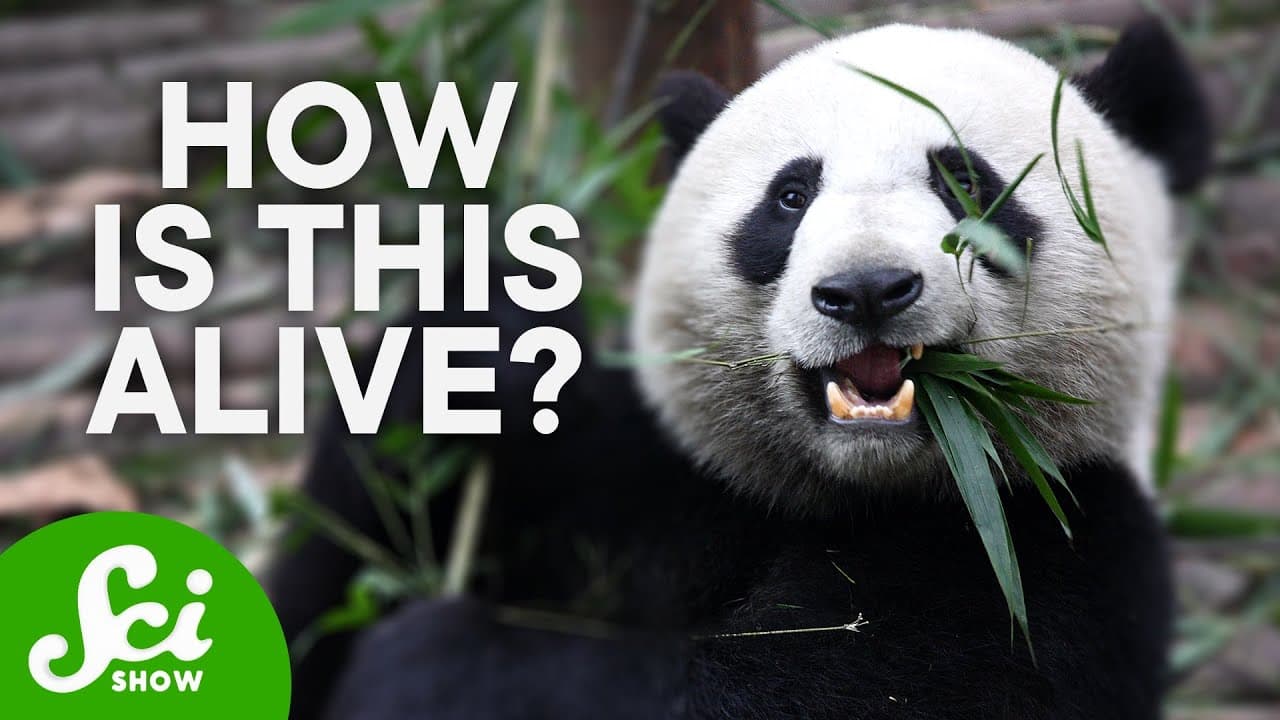
Despite human intervention, giant pandas are still endangered due to habitat loss. They have a unique and complex diet that mainly consists of bamboo, which poses challenges for their reproduction.
Transcript
Thanks to massive conservation efforts and tens of millions of dollars spent over the last 40 years, humans are probably the only reason giant pandas haven’t gone extinct yet. Of course -- as we take up more and more of its native habitat in China -- we’re also the reason that they’re in trouble in the first place. So, saving them seems like the le... Read More
Key Insights
- 🐼 Human conservation efforts have been crucial in preventing the extinction of giant pandas.
- 🐼 Giant pandas have a specialized diet of bamboo, but their digestive systems resemble those of carnivores.
- 🥳 Their dietary strategy involves adapting their taste for different parts and species of bamboo throughout the year to ensure nutrient intake.
- 🐼 Reproduction is challenging for pandas due to limited fertility windows and nutrient deficiencies.
- 🛩️ Newborn pandas are significantly smaller and lighter than other bear cubs.
- 🐼 Pandas have evolved to be cute, which has helped garner human support and conservation efforts.
- 🐼 Human activities, such as habitat loss, have contributed to the challenges faced by giant pandas.
Install to Summarize YouTube Videos and Get Transcripts
Explore YouTube Video Summarizer or Get YouTube Transcript Extractor
Questions & Answers
Q: Why are giant pandas in danger of extinction?
Giant pandas are in danger due to habitat loss caused by human activities. As humans continue to occupy their native habitat in China, pandas face challenges in finding suitable food and living spaces.
Q: What do giant pandas eat?
Giant pandas primarily eat bamboo, which makes up 99% of their diet. However, they are classified as bears and have a carnivorous digestive system. Despite being able to consume meat, they have evolved to rely on bamboo.
Q: How do giant pandas survive on their bamboo diet?
Researchers have discovered that giant pandas have a complicated dietary strategy. They adapt their tastes for different parts and species of bamboo throughout the year, ensuring they obtain necessary nutrients like nitrogen, phosphorous, and calcium.
Q: Why is reproduction difficult for pandas?
Female giant pandas only ovulate once a year and have a very short window of fertility, lasting only one to three days. Additionally, their inconsistent and nutrient-poor diet makes reproduction and fetal development challenging.
Summary & Key Takeaways
-
Humans have played a significant role in preventing the extinction of giant pandas by conservation efforts and investing millions of dollars.
-
There are approximately 1,600 giant pandas in the wild and an additional 300 in zoos worldwide.
-
Giant pandas' diet primarily consists of bamboo, making up 99% of their diet, but their digestive systems resemble carnivores rather than herbivores.
Read in Other Languages (beta)
Share This Summary 📚
Summarize YouTube Videos and Get Video Transcripts with 1-Click
Try YouTube Summary with ChatGPT & Claude or YouTube Transcript Generator
Explore More Summaries from SciShow 📚


Summarize YouTube Videos and Get Video Transcripts with 1-Click
Try YouTube Summary with ChatGPT & Claude or YouTube Transcript Generator