Game of Theories: The Monetarists
TL;DR
Monetarism emphasizes money supply's impact on economic cycles.
Transcript
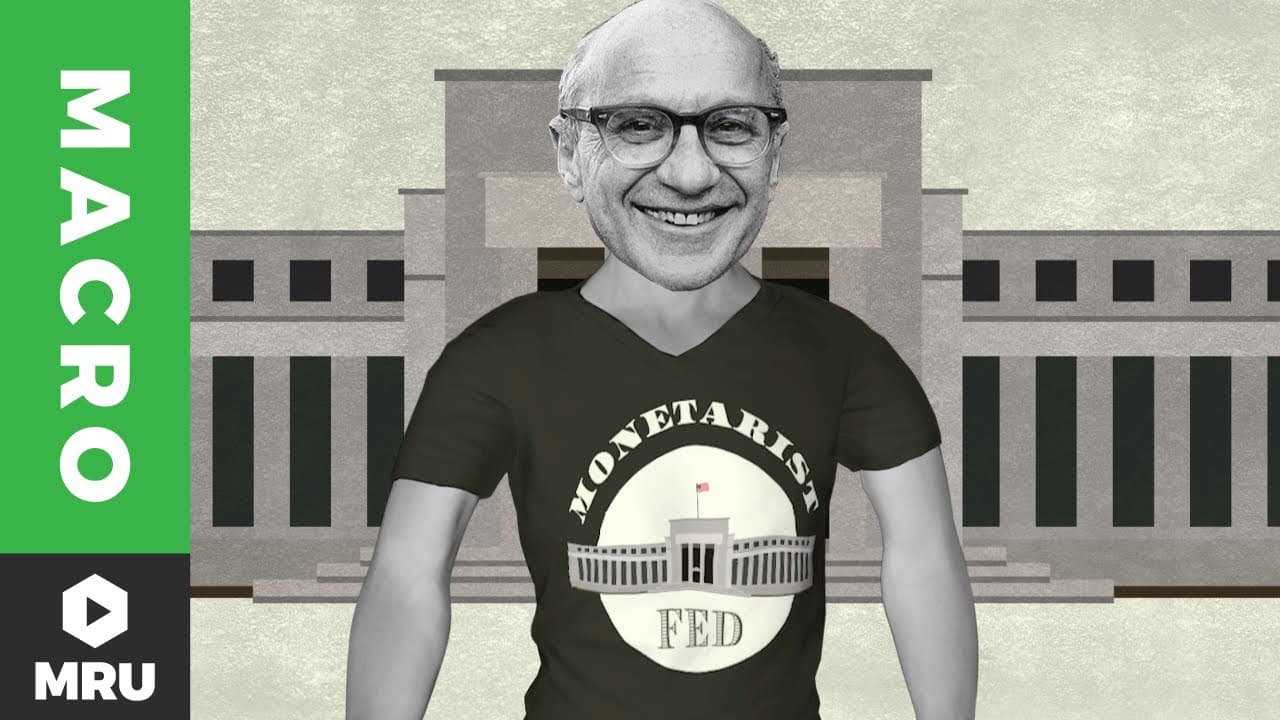
♪ [music] ♪ - [Tyler] Monetarism is another framework for thinking about business cycles. Nobel laureate Milton Friedman of the University of Chicago -- he was the most famous proponent of monetarism. And, as the name suggests, monetarism emphasizes the importance of the money supply, and it emphasizes the decisions central banks make about what to... Read More
Key Insights
- Monetarism, proposed by Milton Friedman, focuses on the role of money supply in influencing business cycles and economic stability.
- The theory is based on the quantity theory of money, suggesting that in the long run, money supply doesn't affect real output or employment.
- Monetarism identifies two primary dangers: excessive inflation and insufficient inflation, both affecting economic stability.
- In the 1970s, monetarism gained popularity by explaining high inflation rates due to excessive money creation by the Federal Reserve.
- Monetarists advocate for a steady money supply growth, typically 2-3%, to avoid economic instability caused by inflation fluctuations.
- Monetarism has limitations, including its narrow focus on money supply and inability to address issues like credit market problems or real shocks.
- The theory assumes a singular, well-defined money supply, but in reality, multiple measures exist, complicating stabilization efforts.
- Monetarism's rigid rules may hinder central banks' ability to respond to external shocks like oil price hikes or interest rate volatility.
Install to Summarize YouTube Videos and Get Transcripts
Explore YouTube Video Summarizer or Get YouTube Transcript Extractor
Questions & Answers
Q: What is the core premise of monetarism?
Monetarism, primarily associated with Milton Friedman, is a macroeconomic theory that emphasizes the role of governments in controlling the amount of money in circulation. The core premise is that variations in the money supply have major influences on national output in the short run and the price level over longer periods. Monetarists advocate for a controlled, steady expansion of the money supply to maintain economic stability.
Q: How did monetarism explain the high inflation rates in the 1970s?
Monetarism explained the high inflation rates in the 1970s by attributing them to the Federal Reserve's excessive creation of new money. According to monetarists, this increase in money supply led to rising prices, as too much money chased too few goods. This distorted the allocation of economic resources and contributed to economic instability, challenging the Keynesian acceptance of higher inflation rates at the time.
Q: What are the potential dangers identified by monetarism?
Monetarism identifies two primary dangers: excessive inflation and insufficient inflation. Excessive inflation can distort economic resource allocation and reduce economic stability, while insufficient inflation or deflation can lead to low aggregate demand, causing economic downturns. Monetarists advocate for a balanced approach to money supply growth to avoid these extremes and maintain economic stability.
Q: Why do monetarists prefer a steady growth rate of money supply?
Monetarists prefer a steady growth rate of money supply, often around 2-3%, to prevent economic instability caused by inflation fluctuations. This 'Goldilocks' approach aims to avoid the extremes of too much or too little inflation, which can distort economic activities and lead to either overheating or recession. By maintaining a consistent money supply growth, monetarists believe economic stability can be achieved.
Q: What are some criticisms of monetarism?
Monetarism faces criticisms for its narrow focus on money supply and its inability to address broader economic issues like credit market problems, real shocks, or the bursting of bubbles. Additionally, the theory assumes a singular, well-defined money supply, which is unrealistic given the multiple measures available. Its rigid rules also limit central banks' flexibility in responding to external economic shocks, sparking debates on its applicability.
Q: How does monetarism view the role of central banks?
Monetarism views central banks as crucial in controlling the money supply to manage economic cycles. However, it advocates for constraining central banks through rules rather than discretion, as monetarists distrust the ability of central banks to make complex decisions quickly. They emphasize long and variable lags in policy effects and prefer a stable rule to prevent excessive inflation or deflation.
Q: What is the relationship between monetarism and Keynesian economics?
While monetarism and Keynesian economics differ in their approaches, they share some common ground, particularly regarding low inflation or deflation. Both schools of thought agree that low inflation can lead to low aggregate demand and economic downturns. However, monetarists focus on controlling the money supply, while Keynesians emphasize fiscal policy and government intervention to manage economic cycles.
Q: What is market monetarism or nominal GDP targeting?
Market monetarism or nominal GDP targeting is an offshoot of traditional monetarism. It starts with the monetarist framework but allows for more flexibility in response to changes in money velocity. This approach suggests that central banks should target nominal GDP rather than strictly adhering to a fixed money supply growth rate, enabling them to better respond to economic shocks and maintain stability.
Summary & Key Takeaways
-
Monetarism, developed by Milton Friedman, emphasizes the importance of the money supply and central bank decisions in managing economic cycles. It suggests maintaining a steady money supply growth to avoid inflation-related instabilities, although it faces criticisms for its narrow focus and inability to address broader economic issues.
-
The theory gained traction in the 1970s by explaining high inflation rates in the US due to excessive money creation. Monetarists propose a 'Goldilocks' approach, advocating for stable money supply growth to prevent both excessive and insufficient inflation, aiming for economic stability.
-
Despite its impact, monetarism is considered incomplete as it primarily focuses on money supply, overlooking other factors like credit market issues and real shocks. The theory's rigid rules may limit central banks' flexibility in responding to external economic shocks, sparking debates on its applicability.
Read in Other Languages (beta)
Share This Summary 📚
Summarize YouTube Videos and Get Video Transcripts with 1-Click
Try YouTube Summary with ChatGPT & Claude or YouTube Transcript Generator
Explore More Summaries from Marginal Revolution University 📚


Summarize YouTube Videos and Get Video Transcripts with 1-Click
Try YouTube Summary with ChatGPT & Claude or YouTube Transcript Generator