How to Make Someone Believe in God (According to Science)
TL;DR
By utilizing credibility enhancing displays and understanding the impact of war, trauma, and poverty on religiosity, one can effectively convince someone to believe in a God or participate in a particular religion.
Transcript
in the Western World a common approach to convincing someone to join your religion consists of telling stories and making arguments these are especially created to emotionally or intellectually convict others of your religion's truth value this seems to work some of the time but is there a more effective way to get someone to practice your religion... Read More
Key Insights
- 💁 Credibility enhancing displays, where individuals act as if religious ideas are true, can enhance the credibility of religious propositions and influence belief formation.
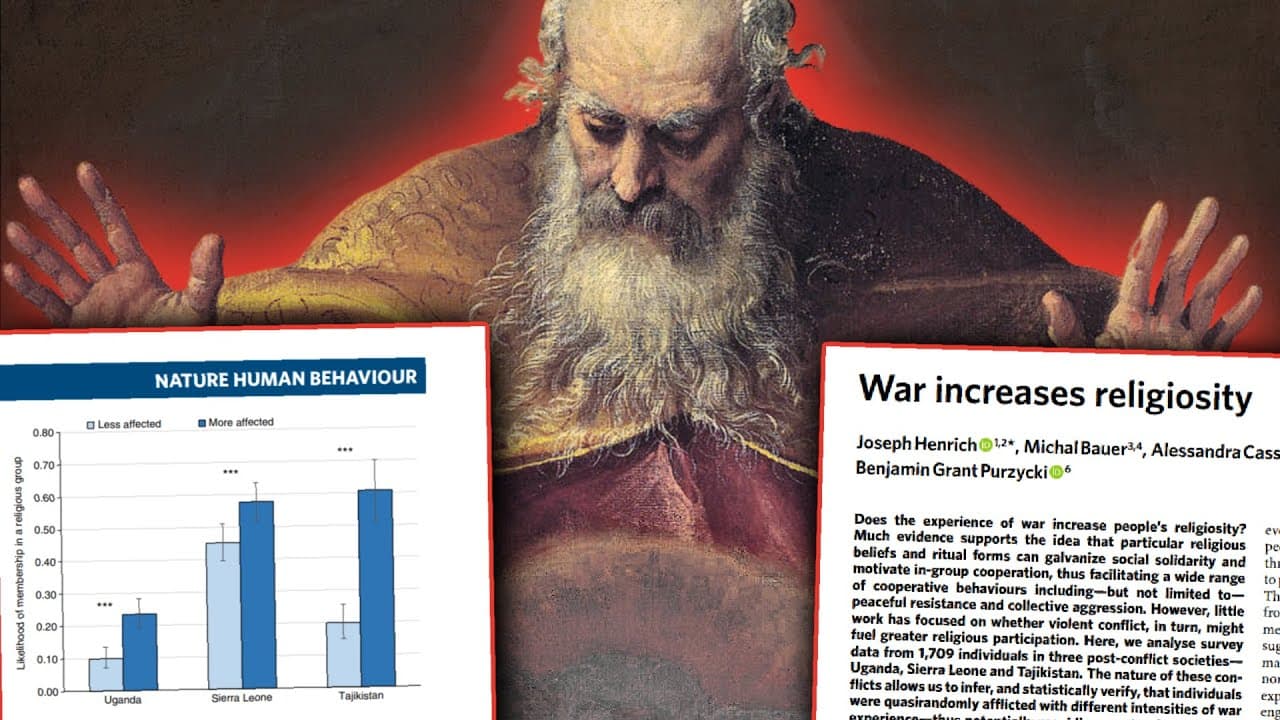
- 😀 Individuals facing war, trauma, and poverty are more likely to participate in religious activities as religion serves as a coping mechanism.
- 🧑⚕️ Religion is a social technology that involves actions, social ties, and mental health benefits, making it more impactful to show religious beliefs rather than solely explain them.
- 😀 Poverty predicts religiosity, with the poorest countries being the most religious and religion offering a sense of well-being and control in the face of existential threats.
- 👯 Religion becomes less important in more affluent societies as people's lives become less vulnerable to constant threats.
- 🙊 Actions speak louder than words when it comes to belief formation, and social influence plays a significant role in adopting religious beliefs.
- 🈸 Spread of religion through philosophical argument alone is often ineffective without highlighting the social applications and benefits of religious practices.
Install to Summarize YouTube Videos and Get Transcripts
Explore YouTube Video Summarizer or Get YouTube Transcript Extractor
Questions & Answers
Q: How do credibility enhancing displays impact religious belief?
Credibility enhancing displays involve individuals acting as if religious ideas are true, which increases the perceived credibility of these beliefs and influences others to adopt them. This can be seen in religious communities where displays of spiritual warfare and demon manipulation enhance the credibility of these beliefs.
Q: How does war and trauma affect religiosity?
Studies have shown that individuals who have experienced war and trauma are more likely to continuously participate in religious activities. This is because religion serves as a coping mechanism and source of comfort for those facing existential threats.
Q: What role does poverty play in religious practice?
Poverty predicts religiosity, as individuals in the poorest countries are often the most religious. Religion acts as a tool to cope with existential threats, and as individuals' lives become more secure and comfortable, their interest in religious values and practices decreases.
Q: Why are actions more impactful than explanations in belief formation?
Belief formation is primarily influenced by social influence and actions rather than rational processes. Showing a person what you believe through credibility enhancing displays and actions is more convincing than merely explaining why one should believe it.
Key Insights:
- Credibility enhancing displays, where individuals act as if religious ideas are true, can enhance the credibility of religious propositions and influence belief formation.
- Individuals facing war, trauma, and poverty are more likely to participate in religious activities as religion serves as a coping mechanism.
- Religion is a social technology that involves actions, social ties, and mental health benefits, making it more impactful to show religious beliefs rather than solely explain them.
- Poverty predicts religiosity, with the poorest countries being the most religious and religion offering a sense of well-being and control in the face of existential threats.
- Religion becomes less important in more affluent societies as people's lives become less vulnerable to constant threats.
- Actions speak louder than words when it comes to belief formation, and social influence plays a significant role in adopting religious beliefs.
- Spread of religion through philosophical argument alone is often ineffective without highlighting the social applications and benefits of religious practices.
- The decline of religion in a society does not indicate sickness or degeneration, but rather a shift towards prosperity and decreased existential threats.
Summary & Key Takeaways
-
Credibility enhancing displays, where individuals act as if religious ideas are true, enhance the credibility of the religious proposition and can influence belief formation.
-
War, trauma, and poverty are factors that contribute to increased religiosity, as individuals facing existential threats seek solace and coping mechanisms in religious practices.
-
Religion is a social technology that primarily involves actions and social ties, making it more impactful to show rather than explain religious beliefs.
Read in Other Languages (beta)
Share This Summary 📚
Summarize YouTube Videos and Get Video Transcripts with 1-Click
Try YouTube Summary with ChatGPT & Claude or YouTube Transcript Generator
Explore More Summaries from Genetically Modified Skeptic 📚



Summarize YouTube Videos and Get Video Transcripts with 1-Click
Try YouTube Summary with ChatGPT & Claude or YouTube Transcript Generator