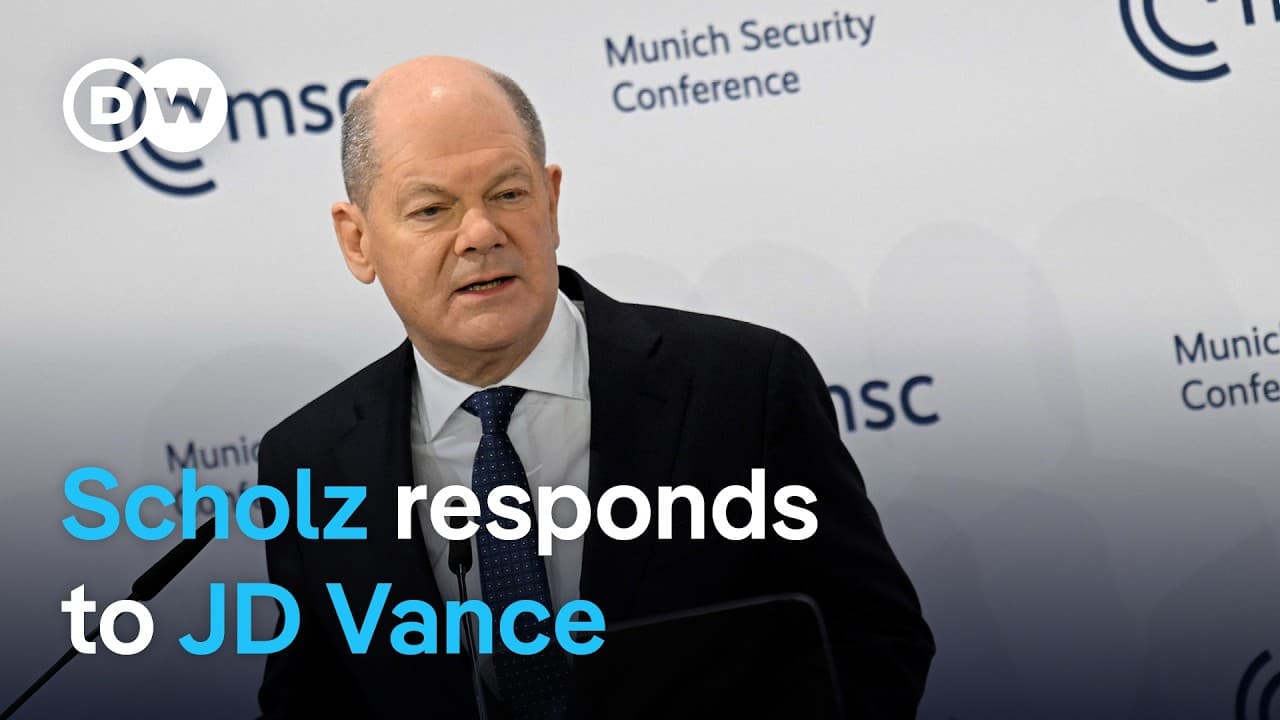
Scholz rebukes JD Vance, reaffirms support for Ukraine | DW News
TL;DR
Chancellor Scholz strongly opposes AfD and external election influence.
Transcript
bundes councellor excellencies ladies and gentlemen let me welcome you to the second day of the Munich security conference we all had a very interesting first day I hope you all digested it today we have on our agenda the Euro Atlantic security we have Regional challenges on the stage and behind closed doors including Russia's war on Ukrain... Read More
Key Insights
- Chancellor Olaf Scholz emphasized Germany's commitment to democracy, rejecting any external influence on its elections, particularly from the US.
- Scholz criticized far-right ideologies, underscoring the importance of learning from history and preventing the rise of fascism and racism.
- He highlighted the transatlantic relationship's foundation on defending democracy against authoritarianism, urging continued adherence to this principle.
- The Chancellor reaffirmed Germany's support for Ukraine, emphasizing the need for a just peace and the importance of Ukraine's sovereignty.
- Scholz called for increased defense spending in Germany, proposing reforms to the debt break to support this initiative.
- He advocated for stronger European defense capabilities, suggesting exemptions in EU fiscal rules for defense investments.
- The speech included a critique of US figures supporting the AfD, emphasizing that Germany's democratic decisions should remain free from foreign intervention.
- Scholz stressed the significance of maintaining a united front in Europe and the transatlantic alliance to counter Russian aggression.
Install to Summarize YouTube Videos and Get Transcripts
Explore YouTube Video Summarizer or Get YouTube Transcript Extractor
Questions & Answers
Q: What was the main focus of Chancellor Olaf Scholz's speech?
Chancellor Olaf Scholz's speech primarily focused on condemning far-right ideologies and emphasizing Germany's commitment to democracy. He highlighted the importance of learning from history to prevent the resurgence of fascism and racism. Scholz also rejected external influences on German elections, particularly from the US, and reaffirmed Germany's support for Ukraine.
Q: How did Scholz address the issue of defense spending?
Scholz addressed defense spending by calling for increased financial commitments in Germany. He proposed reforms to the debt break to support this initiative, emphasizing the necessity of meeting NATO's 2% GDP defense spending target. Scholz advocated for stronger European defense capabilities and suggested exemptions in EU fiscal rules for defense investments.
Q: What stance did Scholz take regarding external influences on German elections?
Chancellor Scholz took a firm stance against external influences on German elections, particularly criticizing US figures who support the AfD. He emphasized that Germany's democratic decisions should remain free from foreign intervention, stressing that such interference is inappropriate, especially among friends and allies.
Q: What was Scholz's message regarding the transatlantic relationship?
Scholz's message regarding the transatlantic relationship emphasized its foundation on defending democracy against authoritarianism. He urged continued adherence to this principle, highlighting the importance of maintaining a united front in Europe and the transatlantic alliance to counter Russian aggression and support Ukraine's sovereignty.
Q: How did Scholz propose to strengthen Europe's defense capabilities?
Scholz proposed strengthening Europe's defense capabilities by advocating for a strong European defense industry and permanent production of essential ammunition and weapons. He suggested combining orders at the European level and proposed exemptions in EU fiscal rules for defense investments that exceed NATO's 2% GDP target, emphasizing the need for a united European approach.
Q: What was Scholz's position on the situation in Ukraine?
Scholz reaffirmed Germany's support for Ukraine, emphasizing the need for a just peace and the importance of Ukraine's sovereignty. He criticized Russia's aggression and highlighted the necessity of maintaining a strong Ukrainian army, supported by Europe and the transatlantic alliance, to ensure Ukraine's security and prevent future conflicts.
Q: How did Scholz address the historical context of Germany's commitment to democracy?
Scholz addressed the historical context by underscoring the lessons learned from Germany's past, particularly the horrors of National Socialist terror. He emphasized that the defense of democracy against fascism and authoritarianism is a central lesson from history, and it remains a fundamental principle of Germany's political stance and the transatlantic relationship.
Q: What did Scholz say about the potential impact of external intervention in German elections?
Scholz warned against the potential impact of external intervention in German elections, stating that it is inappropriate and unacceptable, especially among friends and allies. He emphasized that Germany's democratic decisions should be free from foreign influence, particularly criticizing US figures who support the AfD, and reaffirmed Germany's commitment to maintaining its democratic integrity.
Summary & Key Takeaways
-
Chancellor Olaf Scholz delivered a speech at the Munich Security Conference, condemning far-right ideologies and emphasizing Germany's commitment to democracy. He rejected external influences on German elections, particularly from the US, and highlighted the importance of learning from history to prevent the resurgence of fascism.
-
Scholz reaffirmed Germany's support for Ukraine, calling for a just peace and emphasizing the need for Ukraine's sovereignty. He proposed reforms to Germany's debt break to increase defense spending and advocated for stronger European defense capabilities, suggesting exemptions in EU fiscal rules for defense investments.
-
The Chancellor criticized US figures supporting the AfD and stressed the importance of a united front in Europe and the transatlantic alliance to counter Russian aggression. Scholz underscored the foundation of the transatlantic relationship on defending democracy against authoritarianism, urging continued adherence to this principle.
Read in Other Languages (beta)
Share This Summary 📚
Summarize YouTube Videos and Get Video Transcripts with 1-Click
Try YouTube Summary with ChatGPT & Claude or YouTube Transcript Generator
Explore More Summaries from DW News 📚



Summarize YouTube Videos and Get Video Transcripts with 1-Click
Try YouTube Summary with ChatGPT & Claude or YouTube Transcript Generator