How Can We Rapidly Lower Earth's Temperature by Reducing Methane?
TL;DR
The fastest way to lower Earth's temperature is by reducing methane emissions, which are significantly more potent than CO2 in the short term. Recently passed EU regulations require global oil and gas companies to cut methane emissions to gain market access, supported by advanced monitoring technologies like MethaneSAT. Over 50 companies and 150 countries have pledged to achieve substantial methane reductions, showcasing a global commitment to addressing climate change swiftly.
Transcript
(Spanish) Este es una historia de esperanza. (English) This is a story about hope. I grew up in Mexico City, and as a little kid, I had no clue about global climate change, the problem I'm working on in Europe today. But I did know air pollution. The smog was so thick back then that you could literally see the air you were breathing. Today, Mexico... Read More
Key Insights
- Methane is a potent greenhouse gas, more effective than CO2 at trapping heat in the atmosphere in the short term.
- Mexico City successfully reduced air pollution through data-driven policy, demonstrating the potential for similar strategies in climate change.
- The EU's ambitious climate neutrality goal by 2050 includes reducing methane emissions from imported products.
- New technologies, such as MethaneSAT, enable real-time global monitoring of methane emissions from oil and gas production.
- The International Methane Emissions Observatory plays a crucial role in verifying emissions data to hold companies accountable.
- Over 50 companies have committed to reducing methane emissions by 90% by the end of the decade.
- The EU's methane policy could serve as a model for other regions, potentially extending to other pollutants and industries.
- Cutting methane emissions offers an immediate impact on slowing global warming, complementing long-term CO2 reduction efforts.
Install to Summarize YouTube Videos and Get Transcripts
Explore YouTube Video Summarizer or Get YouTube Transcript Extractor
Questions & Answers
Q: Why is methane considered a significant contributor to global warming?
Methane is a significant contributor to global warming because it is more than 80 times more potent than carbon dioxide at trapping heat in the atmosphere over a short period. Despite being present in smaller quantities than CO2, its high heat-trapping ability makes it a critical target for immediate climate action to slow down global warming.
Q: What role did data and policy play in reducing air pollution in Mexico City?
Data and policy played a crucial role in reducing air pollution in Mexico City by implementing vehicle inspections, using cleaner fuels, and improving energy efficiency. These measures were based on data-driven insights, demonstrating how informed policy-making can lead to significant environmental improvements, serving as a model for addressing larger global issues like climate change.
Q: How does the EU's methane policy aim to reduce global methane emissions?
The EU's methane policy aims to reduce global methane emissions by requiring oil and gas companies to cut their emissions to access the European market. This policy sets a standard for methane intensity, ensuring that companies comply with emission reduction targets. The policy's success relies on accurate monitoring and verification of emissions data through advanced technologies like satellites.
Q: What technological advancements are aiding in methane emissions monitoring?
Technological advancements such as MethaneSAT and other satellite-based sensors are aiding in methane emissions monitoring. These tools provide accurate, real-time data on methane emissions from oil and gas production sites globally. This capability allows for effective tracking and verification of emissions, ensuring companies adhere to reduction commitments and facilitating informed policy-making.
Q: What is the International Methane Emissions Observatory, and what is its function?
The International Methane Emissions Observatory is a global data hub hosted by the UN Environment Programme. It aggregates data from various satellites and monitoring tools to measure, monitor, report, and verify methane emissions from oil and gas producers. Its function is to provide consistent and transparent data to hold companies accountable for their emissions, supporting global methane reduction efforts.
Q: How does the EU's methane policy serve as a blueprint for other regions?
The EU's methane policy serves as a blueprint for other regions by demonstrating how data-driven regulations can effectively reduce emissions. Its focus on market access conditions based on emissions standards can be adapted to other regions and industries, encouraging global cooperation and accountability in reducing greenhouse gases beyond methane, such as in cement and steel production.
Q: What are the potential benefits of cutting methane emissions?
Cutting methane emissions offers the potential benefits of rapidly slowing global warming due to methane's high heat-trapping ability. It provides immediate climate benefits, complements long-term CO2 reduction efforts, and can lead to improved air quality. These actions help mitigate climate change impacts and create a healthier environment for future generations, as demonstrated by Mexico City's success.
Q: Why is methane reduction considered a fast way to impact climate change?
Methane reduction is considered a fast way to impact climate change because methane is a short-lived but highly potent greenhouse gas. Reducing its emissions can quickly lower atmospheric warming rates, providing immediate climate benefits. This approach complements longer-term strategies focused on CO2, offering a comprehensive solution to mitigating global warming and achieving climate goals more rapidly.
Summary & Key Takeaways
-
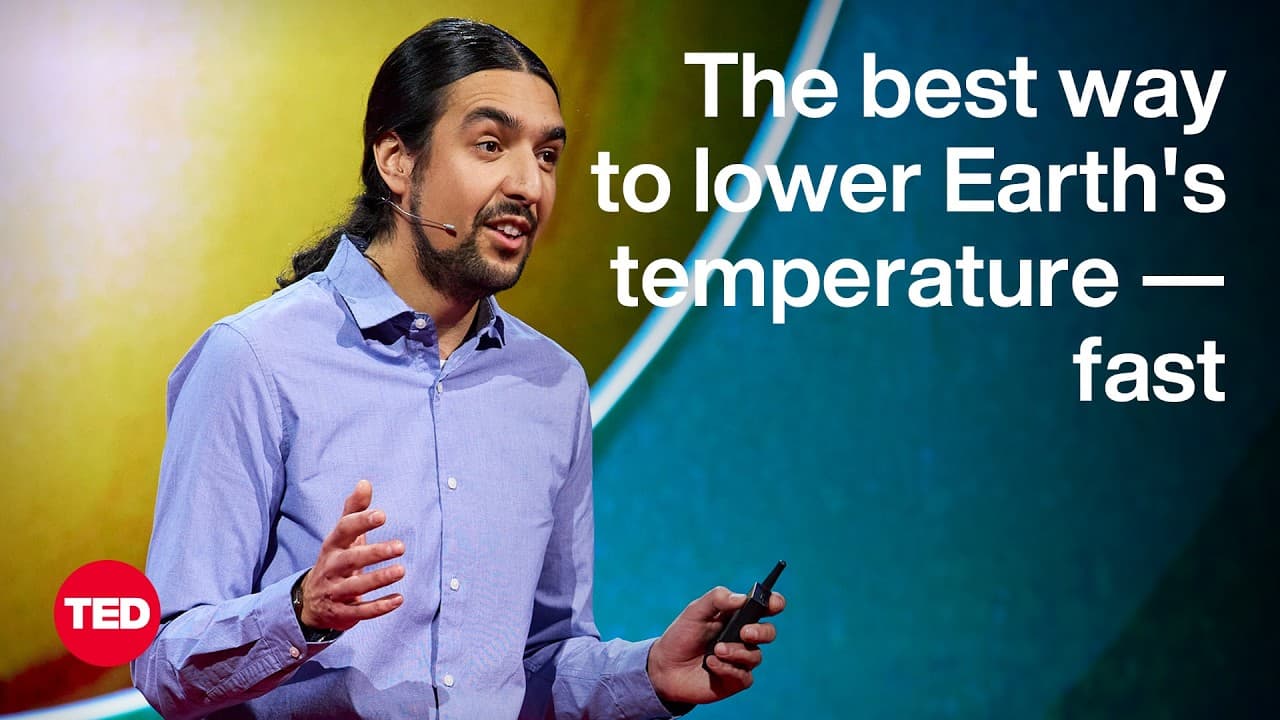
Daniel Zavala-Araiza's TED Talk highlights the urgent need to address methane emissions, a potent greenhouse gas that significantly contributes to global warming. He shares insights from his experience in Mexico City, where data-driven policies successfully reduced air pollution, and discusses the potential for similar approaches to tackle methane emissions globally.
-
The European Union's ambitious climate goals include a focus on reducing methane emissions from imported oil and gas. New technologies, such as MethaneSAT, enable accurate monitoring of emissions, ensuring companies worldwide are held accountable. Zavala-Araiza emphasizes the importance of data and policy in driving effective climate action.
-
With over 50 companies and 150 countries committed to reducing methane emissions, Zavala-Araiza sees hope in the global effort to slow climate change. He advocates for the EU's methane policy as a blueprint for other regions, highlighting the immediate benefits of methane reduction in complementing long-term CO2 reduction strategies.
Read in Other Languages (beta)
Share This Summary 📚
Summarize YouTube Videos and Get Video Transcripts with 1-Click
Try YouTube Summary with ChatGPT & Claude or YouTube Transcript Generator
Explore More Summaries from TED 📚





Summarize YouTube Videos and Get Video Transcripts with 1-Click
Try YouTube Summary with ChatGPT & Claude or YouTube Transcript Generator