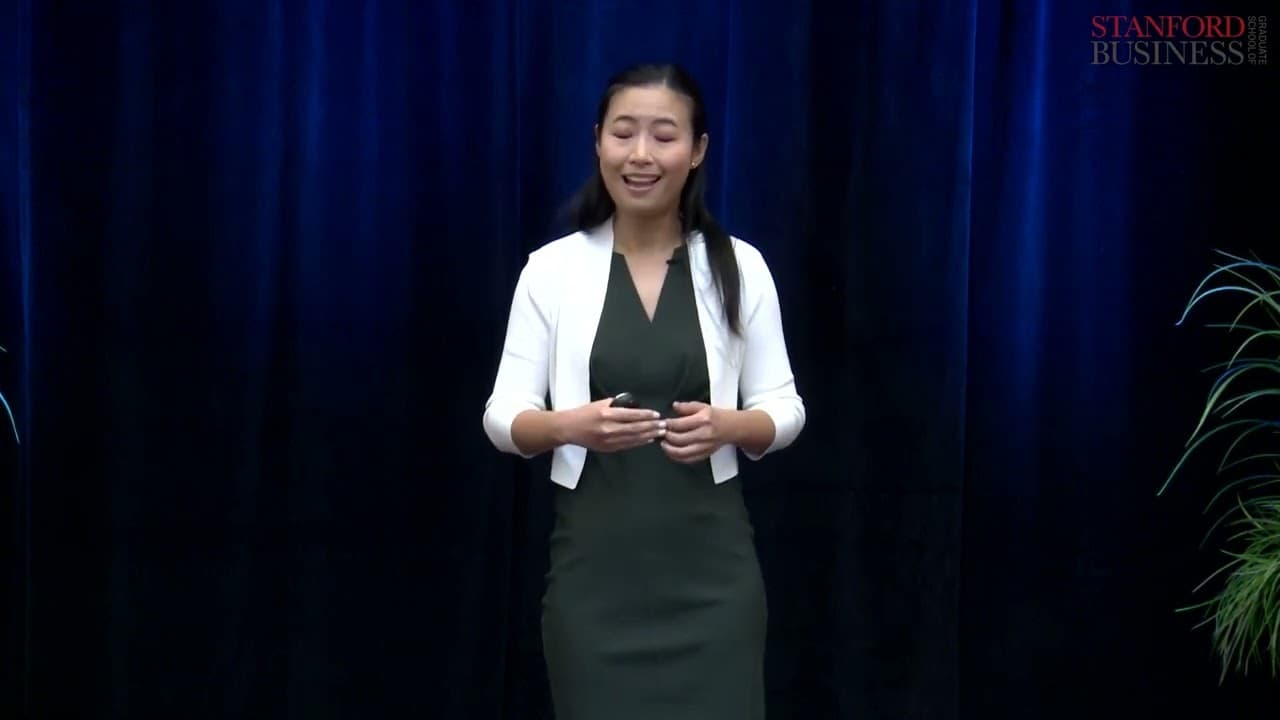
Lessons from the Ice King: Investing in the Future of the Cold Chain | Christina Wang, MBA ’23
TL;DR
The cold chain, responsible for transporting perishable goods, faces disruption and contributes to CO2 emissions, but investing in infrastructure can lead to a more resilient, sustainable, and equitable food system.
Transcript
[MUSIC] It is September 13, 1833, in the Northeastern Indian port city of Kolkata. It is 90 degrees outside and the air is humid. You're in a crowd anxiously waiting, unsure if you're about to see a historical feat of human ingenuity or an elaborate prank. Then slowly and steadily off the horizon, a brig named Tuscany approaches. In it, 100 tons of... Read More
Key Insights
- 🥶 The cold chain, from transporting ice to perishable goods, has evolved over centuries and plays a crucial role in the modern food system.
- 🥶 Disruptions in the cold chain can lead to revenue loss, environmental concerns, and the need for innovative solutions.
- 🥶 The cold chain contributes significantly to CO2 emissions, highlighting the importance of sustainability and finding greener solutions.
- 🥶 Nearshoring, although appealing, is not a straightforward solution due to the complexity of the cold chain.
- 😋 Investing in infrastructure, such as cold storage, is essential for a resilient, sustainable, and equitable food system.
- 😋 Improved cold storage infrastructure benefits businesses with fresher produce, decreased food loss, and more reliable supplies.
- 😋 Investing in cold storage infrastructure also has significant social benefits, providing better access to food, drugs, and vaccines.
Install to Summarize YouTube Videos and Get Transcripts
Explore YouTube Video Summarizer or Get YouTube Transcript Extractor
Questions & Answers
Q: What is the cold chain and why is it important?
The cold chain refers to the temperature-controlled supply chain involved in transporting perishable goods. It is crucial as it enables the availability of diverse food choices and removes seasonality and distances from food.
Q: How does the cold chain contribute to CO2 emissions?
According to the UN, the food cold chain accounts for about 1.2 gigatons of CO2 emissions annually, approximately 1% of global annual emissions. The cold chain relies heavily on fossil fuels and consumes significant energy.
Q: Can simplifying the supply chain by nearshoring be a solution?
Nearshoring, shortening distances and sourcing locally, seems like a simple and sustainable solution. However, the cold chain is complex and disentangling even a small portion is challenging. It requires considering the entire ecosystem and investing in infrastructure.
Q: What are the benefits of investing in cold storage infrastructure?
Investing in cold storage infrastructure at the point of harvest leads to fresher, higher quality produce, decreased food loss, and more predictable supplies. It saves money, promotes sustainability, and benefits communities by providing better access to food, drugs, and vaccines.
Summary & Key Takeaways
-
The cold chain, pioneered by Frederic Tudor, revolutionized the transportation of ice and eventually expanded to include perishable goods.
-
The modern cold chain is complex, involving numerous steps and players, and plays a crucial role in providing diverse food choices.
-
Disruptions in the cold chain have led to revenue loss, environmental concerns, and the need for innovative solutions.
Read in Other Languages (beta)
Share This Summary 📚
Summarize YouTube Videos and Get Video Transcripts with 1-Click
Try YouTube Summary with ChatGPT & Claude or YouTube Transcript Generator
Explore More Summaries from Stanford Graduate School of Business 📚





Summarize YouTube Videos and Get Video Transcripts with 1-Click
Try YouTube Summary with ChatGPT & Claude or YouTube Transcript Generator